


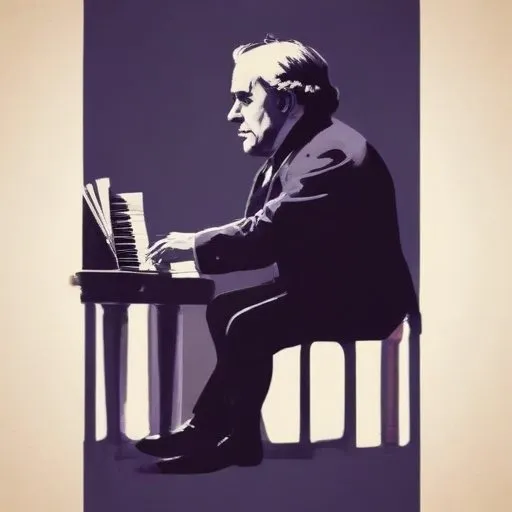
A renowned Baroque-era musician, he was a master of the harpsichord and composed numerous works for the instrument, leaving a lasting impact on the musical landscape.
Hermann Raupach, born on December 21, 1728, in Stralsund, Germany, was an 18th-century German composer known for his operas, particularly Alceste, which is regarded as the second Russian opera after Arajas' Tsefal i Prokris. His groundbreaking work in the field of opera earned him recognition as a Kapellmeister and court composer at the Russian Imperial Court Orchestra in Saint Petersburg.
Raupach was born into a family of musicians. His father, Christoph Raupach, was a composer and organist, and his uncle, Bernhard Raupach, was a Lutheran church historian. Hermann received his early music training from his father and later became a skilled harpsichordist.
Raupach's operas not only entertained the Russian aristocracy but also helped establish opera as a popular art form in Russia. His work paved the way for future generations of composers, including Dmitry Bortniansky and Yevstigney Fomin, who were among his pupils at the Academy of Fine Arts in St. Petersburg.
Hermann Raupach's contributions to the world of opera and music are undeniable. Although his work was initially overshadowed by that of more famous composers, recent discoveries have shed new light on his talent and innovative style. Today, Raupach is recognized as an important figure in the development of Russian opera and a pioneer in the field of classical music.
Hermann Raupach's life and work serve as a testament to the power of innovation and creativity in the world of classical music. His legacy continues to inspire and delight audiences to this day.
Born in 1685
A master of Baroque music, he composed over 1,000 works, including orchestral suites, cantatas, and passions, that still inspire and influence musicians today. His innovative use of counterpoint and harmony raised the bar for classical music.
Born in 1685
A renowned Baroque composer and organist, famous for creating majestic orchestral suites, operas, and oratorios, including the iconic "Messiah" masterpiece.
Born in 1685
A virtuosic harpsichordist and composer, renowned for crafting over 550 sonatas that showcased his innovative and expressive style, blending Italian and Portuguese influences. 42
Born in 1714
A renowned 18th-century musician, he was a prolific composer and virtuosic performer, known for his expressive and innovative keyboard music that bridged the Baroque and Classical styles. His compositions, particularly for harpsichord and piano, showcased his mastery of counterpoint and harmony.
Born in 1710
Eldest son of J.S. Bach, a Baroque composer who blended his father's style with emerging Classical elements, creating innovative and expressive works. He was a renowned organist and harpsichordist.
Born in 1735
A renowned Baroque composer and viol player, known for his innovative and expressive works that blended German and Italian styles. He was a prominent figure in London's musical scene during the 18th century.
Born in 1701
A renowned 18th-century opera composer and tenor, known for his innovative and expressive works that bridged the gap between Baroque and Classical styles. His compositions showcased exceptional vocal writing and dramatic flair.
Born in 1714
A pioneering opera composer who revolutionized the art form with his innovative and expressive works, blending music and drama in a way that captivated audiences.
