


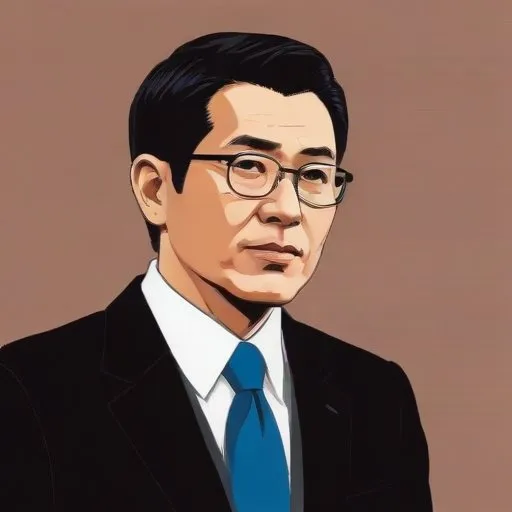
A Japanese Minister of Finance who served from 1954 to 1956, known for his efforts to stabilize the country's post-war economy. He played a key role in shaping Japan's economic policy during a critical period.
Yukio Sakurauchi was a multifaceted figure in pre-war Japan, renowned for his entrepreneurial prowess, political acumen, and cabinet ministerial roles. As the father of prominent post-war politician Yoshio Sakurauchi and grandfather of controversial politician Seiichi Ota, his legacy extends far beyond his own accomplishments.
Born on October 14, 1888, in Hirose Town, Shimane Prefecture, Sakurauchi hailed from a family of former samurai who served the Matsue Domain. His father's relocation to Yonago in 1885 led to a series of business ventures, including water wheel production, commodity trading, and tofu production, which ultimately laid the foundation for Sakurauchi's entrepreneurial spirit.
In 1893, Sakurauchi embarked on a journey of self-discovery, leaving home to work in a paper mill in Yokohama for minimal wages. This experience instilled in him the value of hard work and perseverance, which would serve him well in his future endeavors.
Sakurauchi's fortunes began to shift in 1908, when he made a fortune speculating in horses. This windfall enabled him to assume the presidency of Saitama Electric Light Company in 1909 and Okayama Hydroelectric Company in 1917. His business acumen and strategic thinking earned him the respect of his peers and the recognition of the Japanese government.
In 1920, Sakurauchi was elected to the Lower House of the Diet of Japan, marking the beginning of his political career. He went on to serve six terms, affiliating himself with the Rikken Seiykai and later the Rikken Minseit party.
His political prowess led to his appointment as Minister of Commerce and Industry in 1931, Minister of Agriculture and Forestry in 1939, and Treasury Minister in 1940. Throughout his career, Sakurauchi demonstrated a commitment to serving the Japanese people and shaping the country's economic and industrial landscape.
Yukio Sakurauchi's life serves as a testament to the power of perseverance, hard work, and strategic thinking. As an entrepreneur, politician, and cabinet minister, he left an indelible mark on Japan's economic and political history. His legacy continues to inspire future generations, reminding them of the importance of vision, leadership, and dedication to the greater good.
Born in 1919
Served as Prime Minister of Japan from 1991 to 1992, known for his efforts to revitalize the country's economy and his role in shaping Japan's post-Cold War foreign policy.
72 Years Old
The first Japanese leader to visit Pearl Harbor, he strengthened Japan's economy and international relations through bold policies and diplomatic efforts. He's known for his nationalist views and efforts to revise Japan's pacifist constitution.
84 Years Old
The 56th Prime Minister of Japan, serving from 2001 to 2006, known for his economic reforms, privatization of the postal system, and bold foreign policy initiatives. He's also famous for his flamboyant hairstyle and love of Elvis Presley music.
69 Years Old
The 62nd Prime Minister of Japan, a lawyer-turned-politician who led the country from 2011 to 2012, known for his efforts to rebuild Japan after the devastating Fukushima nuclear disaster. He's also recognized for increasing the country's consumption tax to tackle its massive debt.
80 Years Old
The 61st Prime Minister of Japan, a lawyer-turned-politician who led the country during the 2011 Fukushima Daiichi nuclear disaster, implementing reforms and advocating for renewable energy. He's known for his efforts to phase out nuclear power and promote sustainable energy.
75 Years Old
A Japanese economist and politician who served as the Minister of State for Economic and Fiscal Policy, known for implementing economic reforms and stimulus packages to revitalize Japan's economy. He is also a prominent advocate for structural reforms and fiscal discipline.
