


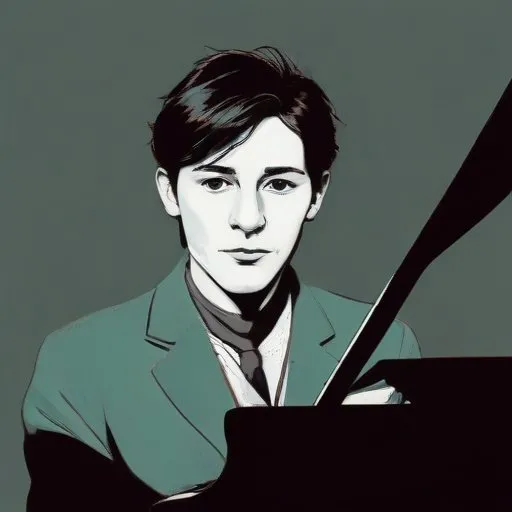
A French pianist and composer who made significant contributions to the development of opera and symphonic music in the late 18th and early 19th centuries, known for his innovative and expressive compositions.
Regarded as the most important opera composer in France during the Revolution, Étienne Méhul was a trailblazer of the late classical and early romantic periods. He was the first composer to be called a Romantic, leaving an indelible mark on the world of opera.
Born on June 22, 1763, in Givet, Ardennes, Méhul was exposed to music from a young age. His first music lessons came from a blind local organist, which sparked a lifelong passion. He later studied with Wilhelm Hanser, a German musician and organist, at the monastery of Lavaldieu.
In 1778, Méhul moved to Paris to study with Jean-Frédéric Edelmann, a harpsichord player and friend of Christoph Willibald Gluck. This association would have a profound impact on his future compositions.
Méhul's big break came in 1790 with the premiere of his opera Euphrosine, featuring a libretto by Franois-Benot Hoffman. The opera's immense success marked the beginning of a long-standing collaboration between the two and established Méhul as a new talent in the world of opera.
His subsequent operas, including Alonzo et Cora (1791) and Stratonice (1792), solidified his position as a leading composer of the time.
Méhul's operas were written in keeping with the reforms introduced by Gluck and Mozart, but he also injected a new sense of drama and passion into the genre. His music featured bold harmonies, expressive melodies, and a emphasis on orchestration.
He was also one of the first composers to focus on the dramatic aspects of opera, often opting for simplicity and clarity over elaborate ornamentation.
Méhul's contributions to the world of opera paved the way for future generations of composers. His emphasis on dramatic music and expressive orchestration influenced many, including Hector Berlioz and Richard Wagner.
Today, Méhul's operas are recognized as some of the most important works of the early Romantic period, and his legacy continues to inspire musicians and opera enthusiasts alike.
These operas showcase Méhul's mastery of the genre and his ability to create music that is both beautiful and emotionally powerful.
Born in 1756
A child prodigy and master of classical music, he composed over 600 works, including symphonies, operas, and chamber music, that continue to inspire and influence musicians today.
Born in 1770
A musical genius who expanded the possibilities of classical music, creating iconic symphonies and piano sonatas that continue to inspire and influence generations of artists.
Born in 1797
A renowned composer of symphonies, operas, and chamber music, particularly famous for his emotional and expressive lieder (art songs) that showcased his mastery of melody and harmony.
Born in 1803
A French Romantic-era mastermind who composed iconic symphonies, operas, and orchestral works, revolutionizing classical music with his bold, expressive style.
Born in 1714
A pioneering opera composer who revolutionized the art form with his innovative and expressive works, blending music and drama in a way that captivated audiences.
Born in 1782
A virtuosic violinist and composer who revolutionized the instrument's technical possibilities, leaving an indelible mark on classical music.
Born in 1792
Operatic mastermind behind iconic comedies like "The Barber of Seville" and "William Tell," crafting catchy, witty, and playful music that still delights audiences today.
Born in 1797
A renowned Italian composer of the Romantic era, best known for his operas, particularly "L'elisir d'amore" and "Don Pasquale", which are still widely performed today.
