


On October 14, 1962, U.S. President John F. Kennedy was handed a set of photographs that would change the course of history. The images, taken by a U2 spy plane, revealed the shocking presence of Soviet nuclear-armed ballistic missiles in Cuba, a mere 90 miles from the United States.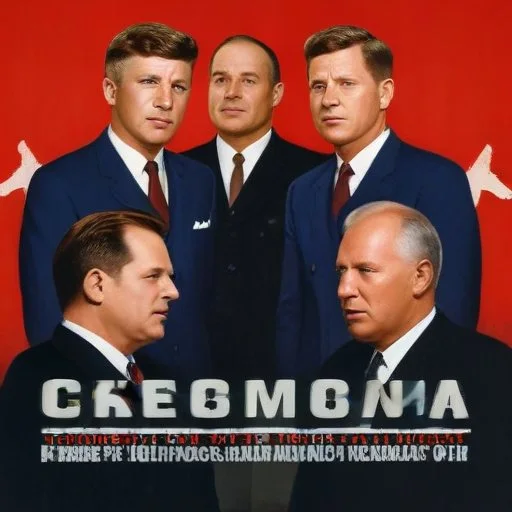
The discovery sparked a 13-day political and military standoff, bringing humanity to the brink of nuclear war. The world held its breath as Kennedy and Soviet Premier Nikita Khrushchev engaged in a high-stakes game of diplomacy, with the fate of humanity hanging precariously in the balance.
In the early 1960s, the Cold War was at its peak, with the United States and the Soviet Union locked in a bitter ideological struggle. Fidel Castro's Communist Cuba had become a thorn in the side of the United States, and the Soviets saw an opportunity to expand their influence in the Western Hemisphere.
Here's a breakdown of the key events that unfolded during the Cuban Missile Crisis:
The Cuban Missile Crisis had far-reaching consequences, including:
The Cuban Missile Crisis had a profound impact on popular culture, inspiring:
The crisis also sparked a wave of anti-nuclear protests and activism, as people around the world realized the devastating potential of nuclear conflict.
Here are some of the most memorable quotes from the Cuban Missile Crisis:
The Cuban Missile Crisis was a watershed moment in modern history, a stark reminder of the dangers of nuclear proliferation and the importance of diplomacy in preventing global catastrophe.
The discovery of Soviet nuclear missiles in Cuba was not an isolated event, but rather the culmination of a series of Cold War tensions and failed diplomatic efforts. In the months leading up to the crisis, Kennedy and Khrushchev had engaged in a series of heated exchanges, with the Soviet premier issuing a series of provocative statements and the American president responding with firm warnings.
In April 1962, Khrushchev had begun secretly deploying troops and military equipment to Cuba, citing the need to defend the island against a potential US invasion. The Soviet Union had long been concerned about the presence of American missile sites in Turkey, which it saw as a direct threat to its national security.
The construction of the Berlin Wall in August 1961 had further heightened tensions, with Kennedy labeling it a ".Symbol of communist tyranny" and Khrushchev responding that it was a necessary measure to protect East Germany from Western aggression.

Fidel Castro, the enigmatic leader of Cuba, played a crucial role in the events leading up to the crisis. A charismatic and ruthless politician, Castro had come to power in 1959 after leading a successful revolution against the authoritarian government of Fulgencio Batista.
Castro's commitment to socialism and his admiration for the Soviet Union led him to form a close alliance with Khrushchev, who saw the Cuban leader as a key ally in the Western Hemisphere. Throughout the crisis, Castro remained defiant, refusing to back down in the face of American aggression and even urging Khrushchev to launch a nuclear strike against the United States.
Despite his hawkish stance, Castro also played a crucial role in convincing Khrushchev to withdraw the missiles, reportedly warning the Soviet premier that a nuclear war would have devastating consequences for humanity.
The Cuban Missile Crisis marked a significant shift in the balance of power between the United States and the Soviet Union. Prior to the crisis, the Soviet Union had been seen as the dominant military power, with a larger army and a more extensive nuclear arsenal.
However, the crisis revealed that the United States had a significant technological advantage, with its U-2 spy planes and Polaris submarines providing a decisive edge. The crisis also highlighted the importance of diplomacy, with Kennedy's firm but measured response helping to avert a nuclear war.
In the aftermath of the crisis, the Soviet Union began to re-evaluate its military strategy, shifting from a focus on nuclear missiles to a greater emphasis on conventional forces. The crisis also led to a renewed emphasis on diplomacy, with the United States and the Soviet Union engaging in a series of high-level talks to reduce tensions.
The Cuban Missile Crisis must be viewed within the broader context of the Cold War, a global struggle for power and influence between the United States and the Soviet Union. The crisis was not an isolated event, but rather the culmination of decades of rivalry and tension between the two superpowers.
In the years leading up to the crisis, the Soviet Union had made significant gains in Eastern Europe and the Middle East, while the United States had responded with a series of military interventions and covert operations.
The crisis also highlighted the growing importance of the Third World, with Cuba serving as a key battleground in the struggle for influence between the United States and the Soviet Union. The crisis marked a significant turning point in the Cold War, with the United States emerging as the dominant military power and the Soviet Union beginning to re-evaluate its strategy.
The Cuban Missile Crisis had a profound impact on popular culture, inspiring a wave of films, books, and music that reflected the anxieties and fears of the time. The crisis also spawned a new genre of disaster movies, with films like "Dr. Strangelove" and "Fail-Safe" exploring the dangers of nuclear war.
The crisis also influenced the music of the time, with artists like Bob Dylan and Joan Baez writing songs about the dangers of nuclear war and the importance of peace.
In the years following the crisis, there was a growing movement towards pacifism and anti-nuclear activism, with people around the world calling for an end to the arms race and the development of more peaceful solutions to international conflicts.