


Vladimir Putin, a former KGB spy and seasoned politician, assumes the presidency of Russia on May 7, 2000, marking a pivotal moment in the country's history. As he takes the oath of office, Putin becomes the second President of Russia, inheriting a nation grappling with economic turmoil and corruption.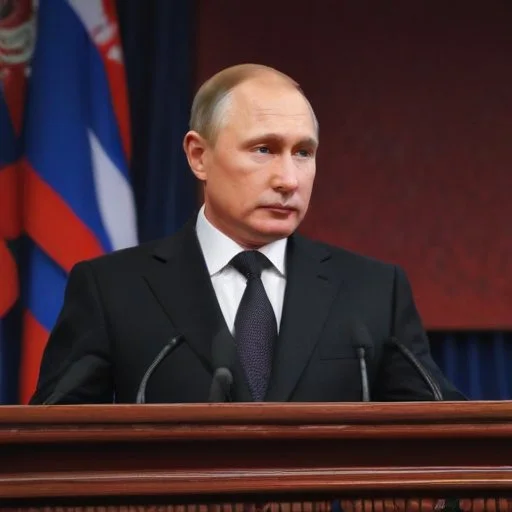
The collapse of the Soviet Union in 1991 left Russia in a state of political and economic flux. Boris Yeltsin, the country's first president, struggled to implement reforms, and the nation descended into chaos. Amidst this backdrop, Putin, a relatively unknown figure, emerged as a contender for the presidency.
Vladimir Putin's ascension to power was facilitated by his mentor, Boris Yeltsin. Yeltsin, facing declining health and popularity, sought a trusted ally to assume the presidency. Putin, who had served as Yeltsin's chief of staff, was handpicked for the role. Other key figures involved in Putin's rise to power include Sergey Ivanov, Putin's former KGB colleague, and Dmitry Medvedev, who would later become Putin's protégé.
Putin's inauguration marked a significant shift in Russia's political landscape. He vowed to restore national pride, tackle corruption, and revive the economy. Putin's calm demeanor and sharp mind instilled hope in the Russian people, who were weary of the political and economic instability of the post-Soviet era.
Putin's rise to power was facilitated by his ability to connect with the Russian people. He tapped into the nation's sense of nostalgia for Soviet-era greatness, promising to restore Russia's international influence and prestige. Putin's populist appeal was further amplified by his rugged, macho image, which resonated with many Russians.
In his inaugural address, Putin stated, "We will do everything to make Russia a prosperous and great country, where people will live better, and where they will be proud to say, 'I am a Russian citizen.'" This promise resonated with the Russian people, who were eager for a leader who could restore their nation's pride and prosperity.
Putin's presidency marked the beginning of a new era in Russian politics. His leadership had far-reaching implications for Russia's international relations, economy, and domestic politics. Putin's legacy continues to shape Russia's trajectory, with his influence still felt in the country's politics and society.
Boris Yeltsin, Russia's first president, played a crucial role in Vladimir Putin's ascension to power. Yeltsin, who had been struggling with health issues and plummeting popularity, sought a trusted ally to assume the presidency. Putin, who had served as Yeltsin's chief of staff, was handpicked for the role. This mentor-protégé relationship would have far-reaching implications for Russian politics.
Yeltsin's decision to resign in December 1999 paved the way for Putin's rise to power. In a surprise move, Yeltsin appointed Putin as the Acting President of Russia, setting the stage for Putin's eventual election as president in March 2000.
Vladimir Putin's presidency was marked by a desire to restore national pride and revive Russia's international influence. This ambition was rooted in the Soviet legacy, which had shaped Putin's worldview and informed his political ideology. Putin's promise to restore Russia's greatness resonated with the Russian people, who were nostalgic for the country's Soviet-era supremacy.
Putin's efforts to revive Russia's international influence were evident in his foreign policy initiatives, including the establishment of the Eurasian Economic Union and the promotion of Russian language and culture abroad. These moves were seen as a bid to reassert Russia's dominance in the post-Soviet space.
Vladimir Putin's presidency was marked by a series of economic reforms aimed at reviving Russia's struggling economy. Putin's government implemented policies to stimulate economic growth, including the introduction of a flat tax rate, the privatization of state-owned enterprises, and the development of strategic industries such as energy and defense.
These reforms had a significant impact on Russia's economy, with GDP growth rates averaging over 7% per annum between 2000 and 2008. The economy also experienced a significant decrease in poverty rates, with the percentage of Russians living below the poverty line declining from 30% in 2000 to 14% in 2008.

Vladimir Putin's rise to power was influenced by Russia's geopolitical context in the late 1990s. The country was struggling to come to terms with its new role in the post-Cold War era, and the Russian people were disillusioned with the economic and political chaos of the Yeltsin era.
Putin's promise to restore Russia's international influence and prestige resonated with the Russian people, who were eager for a leader who could reassert the country's dominance in the region. Putin's leadership style, which blended authoritarianism with nationalism, proved to be a winning formula in Russia's political landscape.
Vladimir Putin's political strategy was characterized by a gradual consolidation of power and influence. Putin's leadership style was marked by a centralization of authority, with the government exerting greater control over the media, the economy, and the political opposition.
Putin's government also implemented measures to suppress dissent and limit the influence of opposition parties. The Putin regime's political strategy was shaped by a desire to maintain stability and ensure the continuity of power, even if it meant limiting political freedoms and constraining the opposition.