


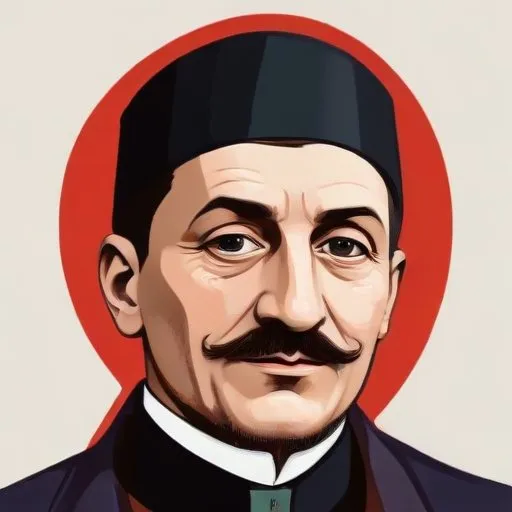
A Polish expert who studied and preserved national music and cultural heritage, particularly folk songs and dances. His work helped shape the country's musical identity.
Known for his trailblazing contributions to the field of musicology, Adolf Chybiski was a Polish historian, musicologist, and academic who left an indelible mark on the world of Polish Renaissance and Baroque music. Through his extensive research and teachings, he breathed new life into the forgotten melodies of Poland's rich musical heritage.
Born in 1880 to an industrialist family, Adolf Eustachy Chybiski was raised in a household that valued education and the arts. He pursued his passion for music at a young age, receiving private lessons in piano and music theory from renowned musician Jan Drozdowski.
Chybiski's academic journey took him to some of the most prestigious institutions in Europe. He studied German, classical philology, and law at Jagiellonian University, and later pursued musicology, art history, and philosophy in Munich. In 1908, he defended his doctorate, "Contributions to the History of the Timing and the Kapellmeisteramt in the Epoch of Mensuralmusik," cementing his reputation as a rising star in the field of musicology.
After completing his postdoctoral research, Chybiski became a lecturer and head of the Department of Musicology at the University of Lviv. His groundbreaking research on the mensural theory in Polish music works of the 16th century earned him the title of associate professor in 1917, and later, a full professorship in 1920.
Throughout his illustrious career, Chybiski lectured at the Lviv Conservatory, shared his expertise with the State Music Publishing Council, and even chaired the Theoretic Section of the Music School Programming Committee. His dedication to promoting Polish music led him to become the director of the Pozna Opera in 1948, a testament to his enduring passion for the arts.
Chybiski's work has had a profound impact on the field of musicology, inspiring generations of scholars and musicians to explore the rich tapestry of Polish music. His research has shed new light on the forgotten masters of the Polish Renaissance and Baroque periods, ensuring their legacy continues to inspire and enrich modern music.
Adolf Chybiski's life was a testament to the power of dedication and passion. Through his tireless pursuit of knowledge and his love for Polish music, he left behind a legacy that will continue to resonate with music lovers for generations to come.
Chybiski's work has had a profound impact on Polish culture, promoting a deeper understanding and appreciation of the country's rich musical heritage. His research has inspired a new generation of musicians and musicologists, ensuring the continued relevance and importance of Polish music in modern times.
Born in 1867
A Polish leader who played a crucial role in regaining Poland's independence after World War I and served as the country's prime minister, known for his military prowess and statesmanship.
Born in 1867
A Polish novelist who won the Nobel Prize in Literature in 1924 for his novel "Ch?opi" (The Peasants), a realistic depiction of rural life in Poland. He's known for his detailed and nuanced portrayals of Polish society and culture.
Born in 1846
A Polish journalist and author who wrote epic historical novels, including "Quo Vadis", which won him the Nobel Prize in Literature in 1905. His works are known for their vivid storytelling and historical accuracy.
Born in 1809
A leading figure of the Polish Romantic movement, known for his poetic and theatrical works that explored themes of love, freedom, and national identity. His plays and poems are still widely performed and studied in Poland today.
Born in 1798
A national hero in Poland, celebrated for his romantic poetry and plays that ignited a sense of patriotism and freedom during a time of foreign rule. His works are still widely read and performed today.
