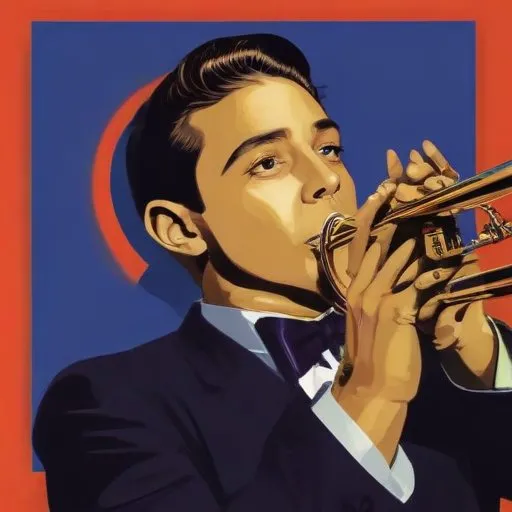
Al Killian: The Trumpet Maestro of the Big Band Era
A Legacy of Stratospheric Trumpeting
Al Killian was a phenomenal American jazz trumpeter and occasional bandleader, renowned for his extraordinary high-note abilities and technical mastery. During the 1930s to 1950s, Killian's virtuosic playing style electrified big bands, leaving an indelible mark on the jazz landscape.
Early Life and Career
Born on October 15, 1916, in Birmingham, Alabama, Killian began his musical journey with Charlie Turner's Arcadians in the mid-1930s. He went on to perform with prominent big bands led by Baron Lee, Teddy Hill,
Don Redman, and Claude Hopkins, honing his skills alongside some of the era's most prominent musicians.
Rise to Prominence
Killian's versatility and adaptability led him to work with
Count Basie and
Charlie Barnet in the early to mid-1940s, as well as a stint with
Lionel Hampton in 1945. His appearances on film and recordings further solidified his reputation as a top-tier trumpeter. However, Killian's career was not without controversy, including a notable racist incident where he was excluded from a film recording due to his race.
Jazz at the Philharmonic and Beyond
In 1946, Killian participated in
Norman Granz's esteemed Jazz at the Philharmonic concert series. This experience sparked his interest in bebop, leading him to form his own band in 1947 to explore this new style. Although short-lived, this venture showcased Killian's willingness to innovate and push boundaries. Subsequently, he briefly toured with Earle Spencer and Boyd Raeburn before joining
Duke Ellington's band, with which he toured and recorded from 1947 to 1950.
Tragic Demise and Lasting Legacy
On September 5, 1950, Killian's life was tragically cut short when he was murdered in his Los Angeles home by a psychopathic landlord.
Gunther Schuller aptly described Killian as "without a doubt the greatest of the Late Swing Era high-note lead trumpeters." This untimely demise robbed the jazz world of a unique talent, but Killian's influence continues to resonate through his remarkable body of work.
Pioneering Contribution to Jazz
Killian's legacy extends beyond his impressive technical prowess. He played a pivotal role in shaping the sound of the big band era, pushing the boundaries of what was possible on the trumpet. His work with Duke Ellington, in particular, contributed significantly to the evolution of jazz during this period.
Impact on Modern Jazz
Killian's influence can be seen in generations of trumpeters who followed in his footsteps. His innovative approach to high-note playing and technical mastery inspired a new wave of musicians, from bebop pioneers to contemporary jazz artists.
Remembering Al Killian
While his life was cut short, Al Killian's remarkable achievements continue to inspire and awe jazz enthusiasts. As a testament to his enduring legacy, Killian's music remains a staple of the jazz canon, a tribute to his boundless creativity and unfaltering dedication to his craft.
FAQ
What was Al Killians contribution to jazz trumpet?
Al Killian was a talented American trumpet player and bandleader who made significant contributions to jazz trumpet, known for his virtuosic technique and soulful playing style.
What bands did Al Killian perform with?
Al Killian performed with several prominent jazz bands, including the Duke Ellington Orchestra, the Count Basie Orchestra, and the Benny Carter Orchestra.
How did Al Killians playing style influence other jazz musicians?
Al Killians playing style influenced a generation of jazz musicians, including trumpeters and saxophonists who drew inspiration from his lyrical approach and technical mastery.
What was Al Killians experience as an African American jazz musician?
Al Killian faced challenges as an African American jazz musician, including racism and segregation, but he persevered, paving the way for future generations of African American jazz musicians.
What is Al Killians legacy in jazz?
Al Killians legacy in jazz is one of innovation, passion, and dedication. His music continues to inspire audiences and influence musicians today.