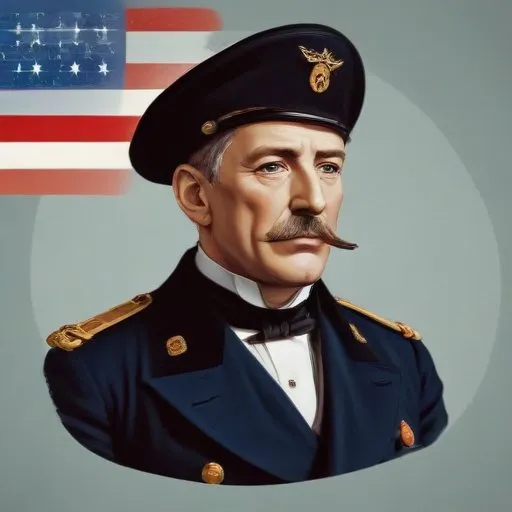
Albert William Stevens: The Pioneering Aerial Photographer and Balloonist
Aerial Photography Pioneering Achievements
Albert William Stevens, a US Army Air Corps officer, made history by capturing the first photograph of the Earth's curvature in 1930 while flying over South America. This remarkable feat marked the beginning of a remarkable career in aerial photography, which would take him to new heights – literally.
The Man Behind the Lens
Born on March 13, 1886, in Belfast, Maine, Stevens graduated from the University of Maine in 1909 with a master's degree in electrical engineering. His passion for photography and exploration led him to join the Army Air Corps, where he pursued his innovative ideas in aerial photography.
Breaking Boundaries in Aerial Photography
Stevens' innovative approach to aerial photography involved using infrared-sensitive film to capture stunning images through haze and fog. This technique enabled him to take breathtaking photographs of the Earth from unprecedented altitudes. His work not only expanded our understanding of the Earth's landscape but also paved the way for modern aerial photography.
A Historic Solar Eclipse Capture
In August 1932, Stevens, accompanied by Lieutenant Charles D. McAllister, achieved another remarkable milestone by capturing the first photograph of the Moon's shadow projected onto the Earth during a solar eclipse. This extraordinary image remains an iconic moment in the history of astronomy and photography.
The Thrilling Story of Explorer I
On July 29, 1934, Stevens, along with Major William Kepner and Captain Orvil Arson Anderson, embarked on a daring adventure in the specially constructed balloon, Explorer I. Their mission was to break the altitude record for manned flight. Although the balloon ruptured, and the gondola plummeted to earth, the crew miraculously escaped using parachutes, making it a harrowing yet triumphant experience.
Reaching New Heights with Explorer II
Stevens' most celebrated achievement came on November 11, 1935, when he and Captain Anderson soared to a record-breaking 72,395 feet (22,066 meters) above the Stratobowl in South Dakota. This feat, witnessed by 20,000 spectators and millions of radio listeners, marked a new world altitude record that would stand for over a decade.
Awards and Recognition
Stevens' extraordinary achievements earned him two Distinguished Flying Crosses, one for each of his historic balloon flights. His pioneering work in aerial photography and exploration left an indelible mark on the fields of aviation, photography, and science.
A Legacy in the Skies
Albert William Stevens passed away on March 26, 1949, in Redwood City, California, but his remarkable legacy continues to inspire generations of photographers, explorers, and scientists. His groundbreaking achievements remind us of the power of human curiosity and the importance of pushing boundaries to unlock new discoveries.
FAQ
What was Albert William Stevens military career like?
Albert William Stevens was an American captain and photographer who served in the United States Army during World War I. He was known for his bravery and was awarded the Distinguished Service Cross for his actions in combat.
What inspired Albert William Stevens photography?
Albert William Stevens photography was inspired by his love of nature and his experiences as a military officer. He was one of the first photographers to document the American West and its natural wonders.
What is Albert William Stevens most famous photograph?
Albert William Stevens most famous photograph is his iconic image of the Grand Teton mountain range, taken in 1917. The photograph is known for its technical skill and its sense of wonder and awe.
What role did Albert William Stevens play in the development of American photography?
Albert William Stevens played a significant role in the development of American photography, helping to establish the genre of landscape photography and influencing a generation of photographers.
How did Albert William Stevens military career influence his photography?
Albert William Stevens military career greatly influenced his photography, as he was able to use his experiences and skills to capture the beauty and majesty of the American West. His photographs often featured a sense of grandeur and drama, reflecting his military background.