


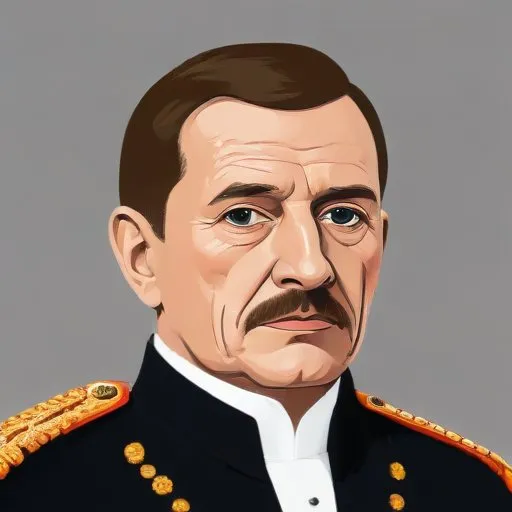
Estonian Minister of War who played a crucial role in the country's struggle for independence during World War I and the Estonian War of Independence. He's known for his military leadership and strategic decisions that shaped Estonia's early years.
Aleksander Tnisson is best known as the Estonian military commander who played a pivotal role in the country's War of Independence, earning him the status of a national hero and icon. As a Major General, Tnisson's bravery and leadership skills were instrumental in securing victories on the Viru Front, cementing his place in Estonia's history books.
Born on April 17, 1875, Tnisson graduated from the prestigious Vilnius Military Academy in 1899, setting the stage for a distinguished military career. He participated in the Russo-Japanese War and World War I, gaining valuable experience that would serve him well in Estonia's struggle for independence.
In 1917, Tnisson was instrumental in the formation of Estonian national units, and as commander of the 1st Estonian regiment, he led his troops to victory on the Riga front. Following a brief escape to Finland to avoid German occupation, Tnisson returned to Estonia in 1918 and became commander of the 1st Division, playing a crucial role in the country's fight for freedom.
After the war, Tnisson went on to serve as Minister of Defence twice, leveraging his military acumen to strengthen Estonia's national security. In 1934, he retired from the military and entered politics, serving as the mayor of Tartu from 1934 to 1939 and later as the Lord Mayor of Tallinn from 1939 to 1940.
Tnisson's numerous accolades include the Order of St. Vladimir, 4th class, for distinguished service, the Cross of Liberty, 1st class, 1st degree, and the Commander of the Order of the Cross of the Eagle. He was also awarded the Protection of Natural Amenities Medal, 2nd Rank, in recognition of his contributions to the nation.
In 1940, Soviet occupation authorities arrested Tnisson, and he was executed the following year. This tragic event shocked the nation, and his sacrifice remains a powerful symbol of Estonia's resistance against Soviet oppression.
Aleksander Tnisson's courage, leadership, and selflessness have inspired generations of Estonians, solidifying his place as one of the country's most beloved sons. His contributions to Estonia's independence and national security continue to resonate, serving as a powerful reminder of the importance of standing up against oppression and fighting for freedom.
Born in 1874
Estonia's first president, a key figure in the country's struggle for independence from Russia, served as a unifying force during tumultuous times. He's remembered for his role in shaping Estonia's early years and its path to sovereignty.
Born in 1868
Estonia's 2nd Prime Minister, a pioneering journalist, lawyer, and politician who played a crucial role in the country's struggle for independence and development. He's most known for his efforts to establish a democratic government and promote national unity.
Born in 1884
Estonia's 7th Prime Minister, a lawyer and politician who played a crucial role in shaping the country's early years of independence, known for his diplomatic efforts and national unification.
Born in 1866
Estonia's first Minister of Foreign Affairs, a key figure in the country's struggle for independence and sovereignty, instrumental in shaping its international relations.
Born in 1875
Estonia's second Prime Minister, a lawyer and politician, played a crucial role in shaping the country's early years, serving as a key figure in its struggle for independence. He's most known for his efforts in establishing Estonia's sovereignty and democratic government.
Born in 1888
Estonian journalist and politician who served as the 6th Prime Minister of Estonia, known for his leadership during the country's interwar period and his role in shaping the nation's early years of independence.
Born in 1886
Estonia's Head of State during World War II, leading the country's government-in-exile and advocating for independence from Soviet occupation. He played a crucial role in preserving Estonia's sovereignty and identity.
Born in 1890
A prominent Estonian leader who served as the country's Prime Minister during a tumultuous period, guiding Estonia through World War II and the Soviet occupation. He's revered for his bravery and statesmanship during Estonia's struggle for independence.
