


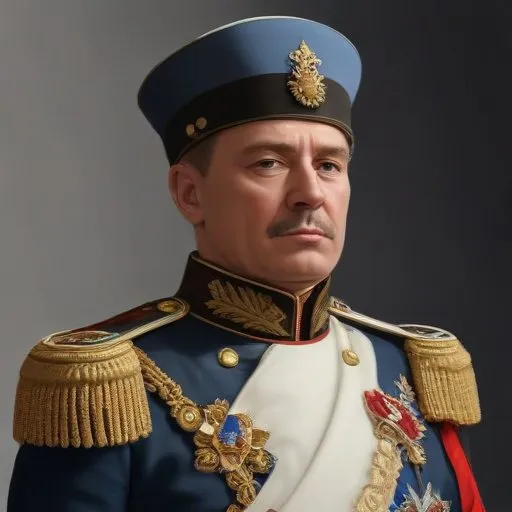
A former KGB general who served as Boris Yeltsin's bodyguard and later became a powerful figure in Russian politics, known for his controversial role in shaping Yeltsin's presidency.
Alexander Korzhakov is a name synonymous with Russian politics, particularly during the tumultuous era of Boris Yeltsin's presidency. As Yeltsin's trusted bodyguard, confidant, and adviser for eleven years, Korzhakov was a constant presence in the highest echelons of Russian power, culminating in his role as the head of the Presidential Security Service (PSB) from 1991 to 1996.
Born on January 31, 1950, in Moscow, Korzhakov's early life was marked by humble beginnings. He worked as an assembly worker after completing his secondary education and later served as a private in the Kremlin Regiment from 1969 to 1970. His career in the KGB began in 1970, where he served in the 9th Chief Directorate, Protection of Higher Party and Government Officials.
In 1971, Korzhakov became a member of the Communist Party and quickly rose through the ranks, becoming a member of the Party bureau of subdivisions and the committee of the Komsomol for the 9th administration. His tenure in Afghanistan from 1981 to 1982 and subsequent role as one of General Secretary Yuri Andropov's personal bodyguards in 1983-1984 further solidified his position within the KGB.
Korzhakov's most notable association is with Boris Yeltsin, whom he served as a bodyguard since 1985. The pinnacle of their partnership came on August 19, 1991, when Korzhakov stood alongside Yeltsin on top of a tank during the Russian president's historic speech.
As the head of the Presidential Security Service, Korzhakov was widely criticized for interfering in government affairs and business. His influence on Yeltsin's decisions and policies sparked controversy, with some accusing him of wielding too much power behind the scenes. Ultimately, Korzhakov was sacked in 1996 after losing a power struggle with the Prime Minister.
After his dismissal, Korzhakov successfully ran for a seat in the State Duma, where he served from 1997 to 2011. During this period, he published a biography in 1997, detailing his experiences at the highest levels of Russian politics. In the book, Korzhakov claimed that he and the Security Service governed the country for three years, sparking further debate about his role in Russian politics.
Alexander Korzhakov's legacy is complex and multifaceted. While his influence on Russian politics during the Yeltsin era is undeniable, his critics argue that he crossed the line from loyal bodyguard to power-hungry adviser. Regardless, Korzhakov's story serves as a fascinating glimpse into the intrigue and politics of post-Soviet Russia.
In his personal life, Korzhakov is a private individual, with little known about his family or personal relationships. One thing is certain, however – his name will forever be linked with the turbulent landscape of Russian politics in the 1990s.
95 Years Old
First President of Russia, leading the country's transition from communism to democracy, and known for his bold reforms and iconic leadership style.
73 Years Old
A Russian politician who has dominated the country's politics for over two decades, known for his authoritarian leadership style and controversial foreign policy decisions.
95 Years Old
The last leader of the Soviet Union, who introduced reforms that led to the end of the Cold War and the collapse of communism, earning a Nobel Peace Prize. He's known for his policies of glasnost and perestroika, which transformed the Soviet Union and the world.
60 Years Old
Russian lawyer and politician who served as President of Russia from 2008 to 2012, known for his efforts to modernize Russia's economy and politics. He also served as Prime Minister from 2012 to 2020.
88 Years Old
A Russian politician who served as Prime Minister from 1992 to 1998, known for his role in shaping post-Soviet Russia's economy and politics.
96 Years Old
A Ukrainian-Russian journalist and politician who served as Russia's Prime Minister from 1998 to 1999, known for his efforts to stabilize the country's economy and foreign policy during a tumultuous period.
