


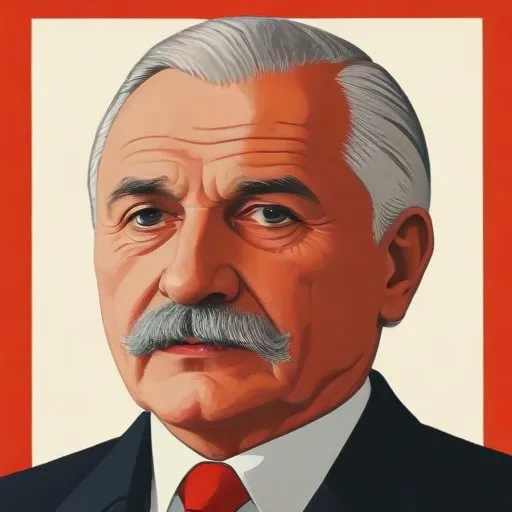
A Belarusian-German revolutionary and theorist who played a key role in the Russian Revolution of 1905 and later became a wealthy businessman, known for his radical ideas and influence on Lenin.
Alexander Parvus, born Israel Lazarevich Gelfand, was a renowned Marxist theoretician, publicist, and activist who played a crucial role in the Social Democratic Party of Germany and the Russian Revolution. He is best known for his contributions to Marxist theory, his involvement in the Russian Revolution, and his controversial yet influential writings that shaped the course of modern history.
Parvus was born on September 8, 1867, in the shtetl of Berazino, Russian Empire (present-day Belarus), to a Lithuanian Jewish family. His early childhood was marked by a fire that damaged his family's home, prompting a move to Odessa, Russian Empire (present-day Ukraine). Here, he attended gymnasium and received private tutoring in the humanities, which sparked his interest in politics and literature.
In 1886, Parvus traveled to Basel, Switzerland, where he was exposed to the writings of Alexander Herzen and revolutionary literature. This experience instilled in him a sense of rebellion against the Tsarist Empire, and he soon became the subject of official scrutiny by the tsarist secret police. Forced to leave Russia for his safety, Parvus remained abroad for over a decade, during which he enrolled at the University of Basel, where he studied political economy and graduated with a doctorate degree in 1891.
Parvus's writings and theories gained significant attention in Marxist circles, and he became a prominent figure in the Social Democratic Party of Germany. His works, such as "Die Aufgaben der Sozialdemokratie in der Revolution" (The Tasks of Social Democracy in the Revolution), showcased his expertise in Marxist theory and its application to the Russian Revolution.
Parvus's involvement in the Russian Revolution sparked controversy, particularly due to his connections with Vladimir Lenin and Leon Trotsky. His actions during the Revolution, including his role in the October Revolution, were often criticized, and his reputation suffered as a result.
Alexander Parvus's contributions to Marxist theory and his involvement in the Russian Revolution have had a lasting impact on modern history. His writings and actions continue to influence political thought and inspire debate, ensuring his legacy as a significant figure in the annals of Marxist history.
Alexander Parvus's story serves as a testament to the power of ideas and the impact of individual action on the course of history. His legacy continues to inspire and provoke, ensuring his place as a significant figure in the history of Marxist thought and the Russian Revolution.
Born in 1870
Founder of the world's first socialist state, leading the Bolshevik Revolution and establishing the Soviet Union, known for his radical Marxist ideology and authoritarian rule.
Born in 1879
Founded the Red Army and played a crucial role in the Russian Revolution, shaping the course of modern communism. A key figure in 20th-century politics and ideology.
Born in 1871
A pioneering Marxist theorist and activist who advocated for workers' rights and criticized capitalism, known for her radical ideas on revolution and democracy.
Born in 1871
Co-founder of the Communist Party of Germany, a key figure in the Spartacist uprising, and a vocal critic of World War I. He was a pioneering socialist leader who fought for workers' rights and social justice.
Born in 1856
A Russian philosopher and theorist who developed Marxist theory and was a key figure in the Russian Revolution, known for his writings on dialectical materialism.
Born in 1873
A Russian revolutionary and politician who played a key role in the Russian Social Democratic Labor Party, leading the Menshevik faction against the Bolsheviks. He's known for his opposition to Vladimir Lenin's authoritarianism.
Born in 1875
A Russian journalist and politician who served as the Soviet Union's first Commissar of Enlightenment, responsible for education and culture, and was a key figure in the development of Soviet arts and literature.
