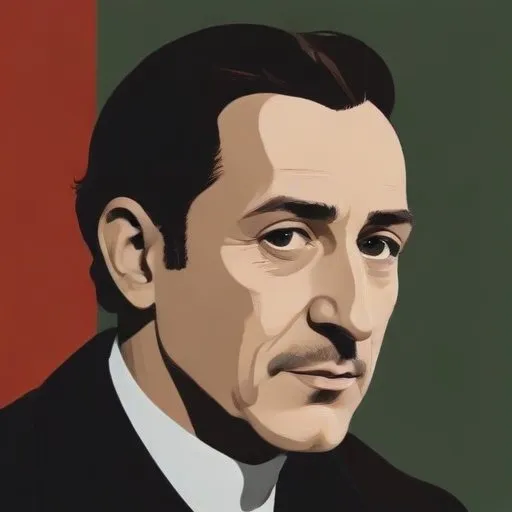
Alfonso Fontanelli: The Multifaceted Maestro of the Late Renaissance
A Leading Figure in the Ferrara School
Alfonso Fontanelli was a renowned Italian composer, writer, diplomat, courtier, and nobleman of the late Renaissance. He is best known for his progressive contributions to the Ferrara school in the late 16th century, and his pioneering work in the
seconda pratica style, which marked the transition to the Baroque era.
Early Life and Education
Born in Reggio nell'Emilia on February 15, 1557, Fontanelli was the son of Count Emilio Fontanelli. His early musical education was under the guidance of composer Gasparo Pratoneri, where he demonstrated a talent for writing as well. Several of his lyric poems have survived to this day, showcasing his literary skills.
A Career of Diplomacy and Music
Fontanelli's career as a courtier, statesman, and musician began in 1584, when he entered the service of the Este family in Ferrara. In 1586, he traveled to Rome, where he likely met the famous madrigalist
Luca Marenzio and members of the Roman school of composition. This exposure had a significant impact on his musical style.
Rise to Prominence
Fontanelli's diplomatic activity in Rome earned him two prestigious honors in 1588: he was named music counselor to the Accademia de Parteni in Ferrara and was made a gentleman of the Ferrara court. He continued to rise in influence until the dissolution of the Ferrara court in 1597, when the Este family was removed to Modena and the region of Ferrara was absorbed into the Papal States.
Compositions and Travels
Fontanelli probably wrote most of his surviving compositions during the 1590s and immediately after 1600. During this period, he was active as a musician at the Ferrara court, as well as a diplomat and statesman. He traveled extensively, visiting the Gonzaga court in Mantua and the Medici in Florence, where he interacted with local musicians.
A Notorious Companion
In 1594, Fontanelli embarked on a journey with Carlo Gesualdo, the notorious composer and murderer, visiting Venice, Florence, Naples, and Venosa. A correspondence from Fontanelli to his patron Alfonso II d'Este survives, providing valuable insights into his life and career.
Legacy and Impact
Fontanelli's music and writings have had a lasting impact on the development of Western classical music. His contributions to the
seconda pratica style paved the way for the Baroque era, influencing composers such as
Claudio Monteverdi and
Heinrich Schütz. Today, Fontanelli is remembered as a true Renaissance man, whose multifaceted talents and accomplishments continue to inspire and fascinate music lovers around the world.
- Fontanelli's surviving compositions include madrigals, motets, and sacred music.
- His writings include lyric poems and diplomatic correspondence.
- Fontanelli was known for his diplomatic skills, which earned him recognition and respect in the courts of Italy.
FAQ
What are the most famous compositions of Alfonso Fontanelli?
Alfonso Fontanelli was a prolific composer, and some of his most famous works include masses, motets, and hymns. His compositions are known for their beautiful melodies and complex harmonies.
When was Alfonso Fontanelli born?
Alfonso Fontanelli was born in 1553 in Italy. Little is known about his early life, but he went on to become a renowned composer and musician.
What is Alfonso Fontanellis contribution to music?
Alfonso Fontanelli made significant contributions to the development of music during the Renaissance period. He wrote music for the Catholic Church and was known for his innovative use of harmony and counterpoint.
What is Alfonso Fontanellis most famous work?
Alfonso Fontanellis most famous work is his Missarum cum quatuor vocibus, a collection of masses written for four voices. This work showcases his mastery of polyphonic music and is still studied by musicologists today.
Did Alfonso Fontanelli teach music?
Yes, Alfonso Fontanelli taught music at the Seggio di Nido in Naples. He was a respected teacher and mentor, and his students went on to become accomplished musicians in their own right.