


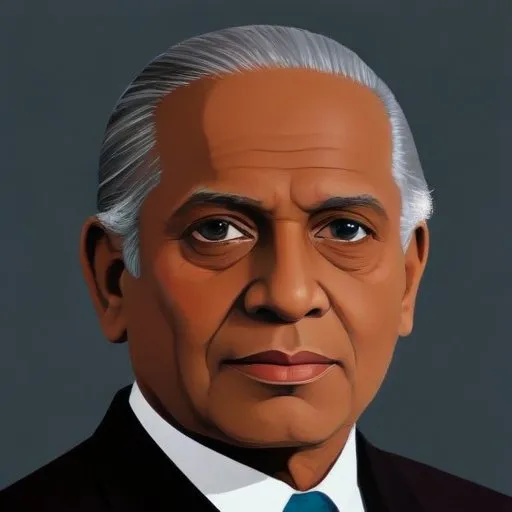
A Sri Lankan Tamil lawyer and politician who advocated for Tamil rights and served as the Mayor of Jaffna, playing a key role in the country's ethnic conflict. He's most known for his efforts to promote Tamil autonomy and self-governance.
Alfred Thangarajah Duraiappah, a Sri Lankan lawyer and politician, is notoriously known for being the Mayor of Jaffna from 1970 until his assassination in 1975. His life was marked by controversy, political turmoil, and a tragic demise at the hands of the Liberation Tigers of Tamil Eelam (LTTE).
Duraiappah was born on June 15, 1926, to an ice and aerated water manufacturer in Vannarpannai, northern Ceylon. He received his education at St. John's College, Jaffna, and later joined the Ceylon Law College, qualifying as a proctor in 1948. He joined the Unofficial Bar of Jaffna, setting the stage for his future political endeavors.
Duraiappah's entry into local government politics began in 1952 when he was elected to the Jaffna Municipal Council. He rose through the ranks, becoming the deputy mayor in 1958. In 1960, he contested the parliamentary election as an independent candidate and won, defeating prominent politicians from the All Ceylon Tamil Congress and the Federal Party.
Duraiappah's political career was marked by a series of elections and re-elections, with him losing his seat in 1965 but regaining it in 1970. During this period, he became a member of the governing Sri Lanka Freedom Party (SLFP) and its chief organizer in Jaffna District. This affiliation enabled him to channel government funds for municipal works, improving his popularity among the locals.
Duraiappah's life was cut short on July 27, 1975, when he was assassinated by the LTTE. The militant group viewed him as a traitor and government collaborator, and his death marked a turning point in the Tamil nationalist movement.
Despite his tumultuous political career and tragic end, Duraiappah's legacy as a lawyer, politician, and mayor of Jaffna remains. His story serves as a cautionary tale of the dangers of political violence and the complexities of Sri Lankan politics during the mid-20th century.
Duraiappah's political career was not without controversy. Tamil militants accused him of being a government collaborator, and his affiliation with the SLFP was seen as a betrayal of the Tamil nationalist cause. Additionally, his perceived closeness to the ruling party led to criticisms of nepotism and corruption.
Duraiappah's life and death had a significant impact on modern Sri Lankan society. His assassination marked a turning point in the Tamil nationalist movement, leading to an escalation of violence and militancy in the region. His legacy serves as a reminder of the complexities of Sri Lankan politics and the devastating consequences of political violence.
Despite the controversies surrounding his life, Duraiappah's story remains an important chapter in Sri Lanka's history, serving as a cautionary tale of the dangers of political violence and the importance of reconciliation and understanding.
Born in 1899
A lawyer-turned-politician who championed Sinhalese nationalism and led Sri Lanka towards self-sufficiency, introducing sweeping reforms in education, agriculture, and industry. He's remembered for his bold, if sometimes divisive, leadership.
Born in 1916
The world's first female prime minister, who broke gender barriers in politics and led her country through a tumultuous period of economic and social change. She paved the way for future generations of female leaders.
81 Years Old
A pioneering female leader who served as Sri Lanka's first female President, known for her efforts to bring peace and reconciliation to the war-torn nation. She implemented policies to promote economic development and social welfare.
80 Years Old
A Sri Lankan lawyer and politician who served as the 6th President of Sri Lanka, known for his role in ending the country's 26-year civil war. He's also infamous for alleged human rights abuses during his tenure.
77 Years Old
The 13th Prime Minister of Sri Lanka, a seasoned lawyer and politician, led the country through significant economic and political reforms, earning him a reputation as a champion of democracy and development.
Born in 1906
A Sri Lankan lawyer and politician who served as the 2nd President of Sri Lanka, known for introducing a new constitution and establishing a presidential system of government. He's also credited with opening up the country's economy and promoting market-oriented reforms.
