


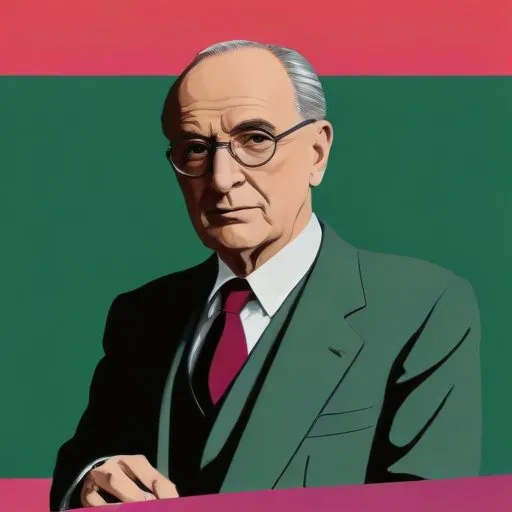
A British architect and ceramic designer, known for his innovative and artistic pottery designs that blended traditional techniques with modern styles.
Alfred Hoare Powell was a renowned English architect, designer, and painter of pottery, celebrated for his significant contributions to the Arts and Crafts movement in the late 19th and early 20th centuries. His work, characterized by a focus on handcrafted details and a rejection of industrialization, has left an indelible mark on the world of architecture, design, and ceramics.
Born on April 14, 1865, in Reading, Berkshire, Powell was the son of Thomas Edward Powell and Emma Corrie. He began his architectural career as a pupil of John Dando Sedding, working in the crafted Gothic tradition inspired by John Ruskin.
Alongside his mentor, Powell became a key figure in the Arts and Crafts revival, which sought to promote a return to traditional craftsmanship and reject the mass-produced, machine-made goods of the Industrial Revolution. He collaborated with notable architects and craftsmen of the time, including Ernest Gimson, the Barnsley brothers, and Norman Jewson, to create beautiful and functional buildings, furniture, and decorative arts that embodied the movement's principles.
One of Powell's most significant contributions was his work as a pottery designer for the esteemed company Wedgwood. Together with his wife, Ada Louise Powell (née Lessore), he hand-painted thousands of pieces of pottery and trained numerous paintresses in the craft. Their designs, characterized by intricate and colorful motifs, have become highly prized by collectors and admirers of the Arts and Crafts style.
Powell's architectural works include numerous notable projects, such as the extensive modifications and extensions to Mill Hill, the country home of Hugh Fairfax-Cholmeley in Yorkshire. He designed the gardens, gates, and external features of the estate, transforming it from a simple community living space to a desirable residence that remains to this day. His work also included the design of Dale End House, Brand, and other projects that showcased his mastery of the Arts and Crafts style.
Powell's contributions to the Arts and Crafts movement have had a lasting impact on the world of architecture, design, and ceramics. His emphasis on handcrafted details, community living, and the importance of traditional craftsmanship continues to inspire architects, designers, and craftspeople around the world. His legacy serves as a testament to the power of artistic expression and the human spirit.
Powell married Ada Louise Lessore in 1897, and the couple had a long and fulfilling partnership, both personally and professionally. He was briefly engaged to Olive Garnett, the diarist, in 1897. Powell's personal life was marked by a deep connection to the natural world and a commitment to the principles of the Arts and Crafts movement.
Powell's work and philosophy were deeply rooted in the principles of the Arts and Crafts movement, which emphasized the importance of handcrafted details, community living, and the rejection of industrialization. He believed in the power of art and craftsmanship to transform individuals and society, and his work continues to inspire generations of architects, designers, and craftspeople.
In conclusion, Alfred Hoare Powell's remarkable life and work have left an indelible mark on the world of architecture, design, and ceramics. His commitment to the principles of the Arts and Crafts movement has inspired countless individuals, and his legacy continues to flourish in the 21st century.
Born in 1834
A renowned artist and writer who revolutionized the Arts and Crafts movement with his stunning textiles, poetry, and novels, leaving a lasting impact on Victorian-era aesthetics.
Born in 1833
A leading figure in the Pre-Raphaelite movement, creating dreamlike, romantic, and mythological paintings that captivated the Victorian era. His works continue to inspire artists, designers, and writers to this day.
Born in 1828
A Victorian-era poet and painter who founded the Pre-Raphaelite Brotherhood, creating dreamlike, sensual works that explored themes of love, beauty, and mortality.
Born in 1830
A renowned Victorian-era poet and author, celebrated for her lyrical and symbolic poetry, particularly "The Goblin Market and Other Poems" and "The Prince's Progress".
Born in 1829
A renowned Pre-Raphaelite artist, famous for his exquisite and intricate paintings, particularly "Ophelia" and "Christ in the House of His Parents", which showcased his mastery of color and detail.
Born in 1827
A British soldier-turned-artist, he co-founded the Pre-Raphaelite Brotherhood, creating vivid, symbolic, and emotionally charged paintings that explored themes of faith, morality, and beauty.
Born in 1821
A French-English soldier and painter who created vivid, detailed, and emotive works that captured the essence of Victorian-era England, particularly with his masterpiece "The Last of England".
Born in 1819
A prominent art critic and social reformer who championed the Pre-Raphaelite movement and advocated for social justice, leaving a lasting impact on art, architecture, and literature.
