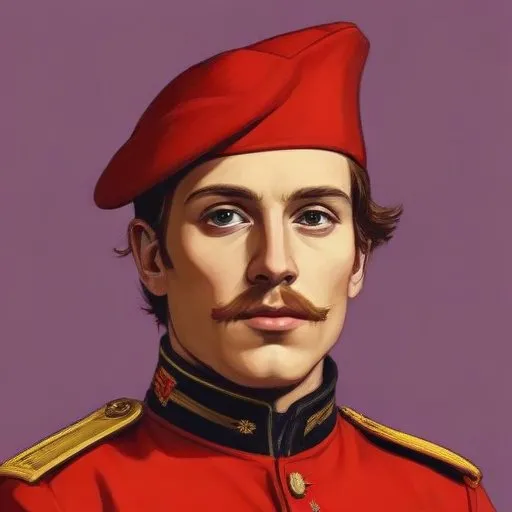
William Holman Hunt: The Visionary Painter of the Pre-Raphaelite Brotherhood
A Life Dedicated to Art and Symbolism
William Holman Hunt, a renowned English painter, is best known for his meticulous attention to detail, vivid color palette, and intricate symbolism in his works. As one of the founders of the Pre-Raphaelite Brotherhood, Hunt's artistic approach was deeply influenced by the writings of
John Ruskin and
Thomas Carlyle, who emphasized the importance of reading the world as a system of visual signs.
Early Life and Inspiration
Born on April 2, 1827, in Cheapside, City of London, Hunt was the son of William Hunt, a warehouse manager, and Sarah Hobman. He adopted the name Holman instead of Hobman after discovering a clerk's error on his baptism certificate. Growing up in a wealthy family, Hunt was encouraged to pursue his artistic interests from an early age.
Hunt's early artistic endeavors were met with rejection, but he persevered, eventually gaining admission to the Royal Academy art schools. However, he soon rebelled against the traditional teachings of the Academy, seeking a more unconventional approach to art.
The Birth of the Pre-Raphaelite Brotherhood
In 1848, Hunt, along with poet and artist
Dante Gabriel Rossetti, formed the Pre-Raphaelite Brotherhood, a movement that sought to revitalize art by emphasizing detailed observation of the natural world and a quasi-religious devotion to truth. This artistic approach was heavily influenced by the spiritual qualities of medieval art, in opposition to the rationalism of the Renaissance.
A Legacy of Symbolism and Detail
Hunt's paintings are characterized by their vivid colors, intricate symbolism, and meticulous attention to detail. His most famous works, such as "The Light of the World" (1851-1854) and "The Scapegoat" (1854-1856), showcase his unique style and artistic vision. Hunt's use of symbolism was deeply rooted in his spiritual beliefs, as he sought to reveal the correspondence between sign and fact in his art.
Personal Life and Relationships
Hunt married twice, first to Fanny Waugh in 1861, who modeled for his figure of Isabella. He later married Edith Wales in 1875. Hunt's personal relationships were often tumultuous, including a failed engagement to his model Annie Miller.
Teaching and Legacy
Hunt had many pupils, including Robert Braithwaite Martineau, and his teachings had a lasting impact on the art world. His commitment to the Pre-Raphaelite ideals remained unwavering throughout his career, inspiring future generations of artists.
Awards and Honors
Throughout his career, Hunt received numerous awards and honors, including the prestigious Order of Merit in 1905.
Legacy and Impact
William Holman Hunt's artistic contributions have had a profound impact on the development of modern art. His Pre-Raphaelite ideals continue to inspire artists, and his works remain a testament to his unwavering dedication to his craft.
Hunt's legacy extends beyond the art world, as his paintings continue to captivate audiences with their beauty, symbolism, and emotional depth. As one of the founders of the Pre-Raphaelite Brotherhood, Hunt's influence on art and culture remains undeniable.
Quotes and Memorable Sayings
- "The world itself should be read as a system of visual signs." – William Holman Hunt
- "It is the duty of the artist to reveal the correspondence between sign and fact." – William Holman Hunt
Timeline of Major Works
- 1851-1854: "The Light of the World"
- 1854-1856: "The Scapegoat"
- 1870: "The Shadow of Death"
Trivia and Fun Facts
- Hunt's painting "The Light of the World" took over three years to complete.
- Hunt was a strong advocate for the preservation of medieval art.
- He traveled extensively throughout his life, visiting countries such as Egypt and Palestine.
William Holman Hunt's remarkable life and artistic career continue to inspire and captivate audiences to this day. His dedication to his craft and his commitment to the Pre-Raphaelite ideals have left an indelible mark on the art world.
FAQ
What artistic movement was William Holman Hunt associated with?
William Holman Hunt was a prominent member of the Pre-Raphaelite Brotherhood, a group of British artists who sought to revive the style and spirit of medieval art.
What is Hunts most famous work?
Hunts most famous work is The Light of the World, a painting depicting Jesus Christ knocking on a door and symbolizing the light of Christianity.
How did Hunts experiences in the Middle East influence his art?
Hunts travels to the Middle East, particularly to Egypt and Palestine, had a profound impact on his art, as he was inspired by the biblical landscapes and architecture he encountered.
What was Hunts relationship like with other Pre-Raphaelite artists?
Hunt was close friends with fellow Pre-Raphaelite artists Dante Gabriel Rossetti and John Everett Millais, and the three men often collaborated on artistic projects and shared ideas.
How did Hunts art reflect his spiritual and moral values?
Hunts art often embodied his strong spiritual and moral convictions, as he sought to convey messages of hope, redemption, and moral guidance through his work.