


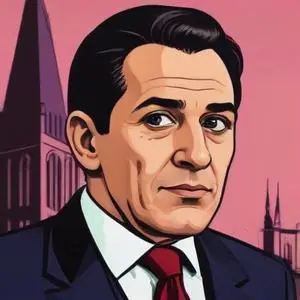
A key architect of the European Union, he drafted the Ventotene Manifesto, a foundational document for European integration. His work laid the groundwork for a unified Europe.
As one of the founding fathers of the European Union, Altiero Spinelli left an indelible mark on the continent's political landscape. This Italian communist politician, political theorist, and European federalist spent a lifetime fighting for a united and integrated Europe, earning him a revered place in history.
Born on August 31, 1907, in Rome, Italy, Spinelli grew up in a socialist household. His father's influence led him to join the Communist Party of Italy (PCdI) at just 17 years old in 1924. However, his activism quickly landed him in hot water, and he was arrested in 1927, spending ten years in prison and six years in confinement.
In 1941, during his internment on the island of Ventotene, Spinelli co-authored the Ventotene Manifesto, a seminal document that laid the groundwork for European integration. This revolutionary blueprint for a united Europe was drafted alongside fellow democratic socialists, igniting a spark that would fuel the European integration process.
In 1937, Spinelli broke with the PCdI, disillusioned with Stalinism and the party's Bolshevik ideology. This courageous move marked a turning point in his life, paving the way for his future involvement in European federalism.
Spinelli's commitment to European unity only intensified with time. He played a leading role in the foundation of the European Federalist Movement and had a profound influence on the first few decades of post-World War II European integration. Later, he helped relaunch the integration process in the 1980s.
In recognition of his tireless efforts, Spinelli was appointed to the European Commission, serving for six years. He was also a member of the European Parliament for ten years, until his passing in 1986. Today, the main building of the European Parliament in Brussels bears his name, a testament to his enduring legacy.
Spinelli's work has had a profound impact on modern society. He inspired generations of European leaders and thinkers, shaping the course of European history. His vision for a united Europe has become a reality, and his legacy continues to inspire those working towards a more integrated and peaceful continent.
"The idea of a united Europe is not a utopia, but a necessity." - Altiero Spinelli
Spinelli's remarkable life serves as a testament to the power of vision, courage, and perseverance. As we continue to navigate the complexities of European integration, his legacy reminds us of the importance of striving for a united and peaceful continent.
Born in 1881
Italian journalist and politician who served as the 30th Prime Minister of Italy, leading the country's post-WWII reconstruction and European integration efforts. He's known for his key role in shaping modern Italy's politics and economy.
Born in 1810
A renowned Romantic-era composer and influential music critic, known for his expressive and emotionally charged works, including symphonies, piano music, and art songs.
Born in 1876
Led post-war West Germany's reconstruction and served as a key figure in shaping the country's modern identity, earning him the title "Father of the Federal Republic."
Born in 1888
A key architect of the European Union, credited with uniting a war-torn continent through economic cooperation and integration. His vision for a unified Europe has shaped modern politics and global relations.
Born in 1899
A Belgian lawyer and politician who served as the 46th Prime Minister of Belgium, known for his key role in shaping the European Union and its institutions. He was a strong advocate for European integration and cooperation.
Born in 1901
First President of the European Commission, instrumental in shaping the EU's early development and integration, and a key figure in post-war European politics.
Born in 1908
A Dutch farmer-turned-politician who played a crucial role in shaping the European Union's agricultural policy and served as the President of the European Commission from 1972 to 1973. He's credited with modernizing European agriculture and promoting a united Europe.
Born in 1877
First President of the Italian Republic, instrumental in shaping the country's post-WWII government and constitution. Known for his key role in Italy's transition to a republic.
