


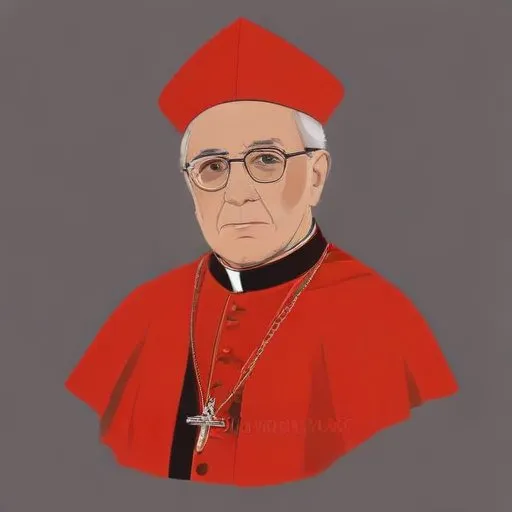
A 16th-century Italian cardinal who played a key role in the Council of Trent, shaping the Catholic Church's response to the Protestant Reformation. He was a skilled diplomat and negotiator.
Andrea della Valle, a prominent figure of the Italian Renaissance, is best remembered for his exquisite collection of Roman antiquities, which marked the pinnacle of High Renaissance art. As a cardinal, bishop, and art collector, della Valle's life was a testament to his passion for art, culture, and spirituality.
Born on November 29, 1463, in Rome, Andrea della Valle belonged to an ancient family of Roman nobles. His father, Filippo della Valle, was a Roman patrician, and the family tomb is located in Santa Maria in Aracoeli, where an inscription to their father was placed by Andrea and his brother Bartolomeo. This noble lineage would shape della Valle's future, as he went on to become a prominent figure in the Roman Catholic Church.
In 1496, della Valle was elected bishop of Crotone, marking the beginning of his journey in the ecclesiastical hierarchy. He later served as Apostolic secretary during the pontificate of Pope Julius II and was transferred to the titular diocese of Miletus in 1508. His dedication and commitment to the Church earned him the title of cardinal priest in the consistory of 1 July 1517.
Andrea della Valle's true passion lay in collecting Roman antiquities, and his collection is considered one of the most significant of the High Renaissance. He inherited some antiquities from his family's previous collection, which had been amassed over the centuries. Inspired by the Cortile del Belvedere, della Valle commissioned the talented sculptor-architect Lorenzetto Lotti to create a breathtaking setting for his collection in 1520.
The result was a stunning loggia, described by Giorgio Vasari as a hortus pensilis or hanging garden, which blurred the distinction between garden and courtyard. The sculptures were displayed amidst planted raised boxes and an aviary, creating an immersive experience that would transport visitors to a world of beauty and elegance.
Andrea della Valle's contribution to the world of art and culture is undeniable. His collection of Roman antiquities stands as a testament to his refined taste and his role in shaping the High Renaissance. As a cardinal, bishop, and art collector, della Valle's life was a masterful blend of spirituality, culture, and aesthetics, leaving an indelible mark on the Renaissance era.
Andrea della Valle's life was a testament to his passion for art, culture, and spirituality. His collection of Roman antiquities remains an iconic symbol of the High Renaissance, inspiring generations to come.
Born in 1417
A 15th-century pope who played a significant role in the fall of the Western Schism, ending the division in the Catholic Church. He's also known for his lavish spending and nepotism.
Born in 1487
A 16th-century Pope who commissioned Michelangelo to paint the Sistine Chapel's frescoes and was a patron of the arts, leaving a lasting impact on Renaissance art and architecture.
Born in 1417
A 15th-century pope who played a significant role in the fall of the Western Schism, ending the division in the Catholic Church. He's also known for his lavish spending and nepotism.
Born in 1504
Leader of the Catholic Church during the Counter-Reformation, he excommunicated Queen Elizabeth I and played a key role in the Council of Trent.
Born in 1502
Introduced the Gregorian calendar, a solar-based calendar that's widely used today, reforming the Julian calendar's inaccuracies.
Born in 1414
Established the Vatican Archives and commissioned the Sistine Chapel's ceiling, which was famously painted by Michelangelo. He also played a significant role in the Renaissance.
Born in 1568
The 17th-century Catholic leader who reigned for 21 years, known for his strong stance against Galileo Galilei and his scientific discoveries, as well as his extensive patronage of the arts.
Born in 1519
The 151st Pope of the Catholic Church, serving for only two months in 1591, he is mostly remembered for his brief and uneventful papacy.
