


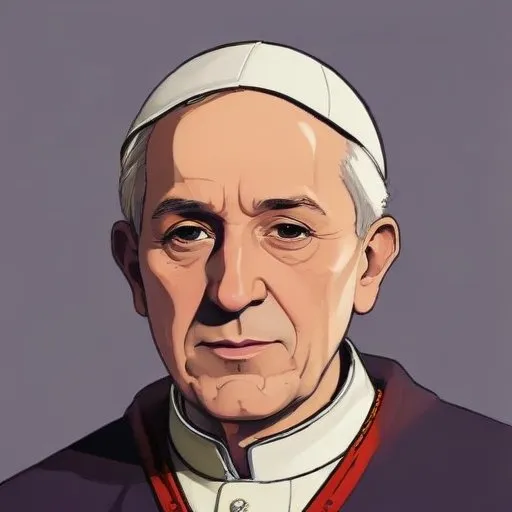
A Dutch priest who served as the Pope of the Catholic Church from 1522 to 1523, known for his attempts to reform the Church and his strong stance against corruption.
As the last non-Italian pope until John Paul II 455 years later, Pope Adrian VI is remembered for his efforts to reform the Catholic Church during a tumultuous period in history. Born Adriaan Florensz Boeyens in 1459, he rose to become the head of the Catholic Church and ruler of the Papal States from 1522 until his death in 1523.
Adrian was born in the Episcopal principality of Utrecht of the Holy Roman Empire of the German Nation. He studied at the University of Leuven in the Low Countries, where he became a professor of theology and later served as its rector.
In 1507, Adrian became the tutor of the future Charles V, Holy Roman Emperor, and later served as his emissary and regent. In 1516, Charles appointed Adrian bishop of Tortosa, Spain, and soon thereafter Grand Inquisitor of the kingdoms of Aragon and Castile.
After Pope Leo X's death, Adrian was elected pope in 1522 as a compromise candidate. During his papacy, he faced the daunting task of addressing the Protestant Reformation, which threatened to split the Church. Adrian refused to compromise with Lutheranism, demanding Luther's condemnation as a heretic.
However, he is notable for attempting to reform the Catholic Church administration in response to the Protestant Reformation. Adrian's admission that the Roman Curia itself was at fault for the turmoil in the Church was read at the 1522-1523 Diet of Nuremberg.
Although Adrian's efforts at reform were resisted by his contemporaries, his papacy marked a significant turning point in the Church's response to the Protestant Reformation. His legacy serves as a testament to the importance of self-reflection and reform within the Church.
Adrian's papacy was marked by his commitment to reform and his unwavering dedication to the Church. Despite facing opposition from within, he remained steadfast in his convictions, leaving behind a legacy that continues to inspire.
Adrian's papacy took place during a time of great upheaval, with the Protestant Reformation threatening to split the Church. His attempts at reform were a testament to the Church's ability to adapt and respond to changing circumstances.
Adrian's papacy is often compared to that of his predecessors, particularly Pope Leo X. While both popes faced the challenge of responding to the Protestant Reformation, Adrian's efforts at reform set him apart as a forward-thinking leader.
DID YOU KNOW?
Despite his short papacy, Pope Adrian VI left an indelible mark on the Catholic Church. His commitment to reform and his unwavering dedication to the Church continue to inspire and influence leaders to this day.
Born in 1459
A Dutch priest who served as the Pope of the Catholic Church from 1522 to 1523, known for his attempts to reform the Church and his strong stance against corruption.
Born in 1535
The second shortest-reigning pope in history, serving for just 27 days in 1605, he is most known for his brief but tumultuous papacy marked by power struggles and controversy.
Born in 1536
Led the Catholic Church during a tumultuous period, issuing papal bulls and playing a key role in the Counter-Reformation. He's also famous for his coffee habit, being the first Pope to try and approve of it.
Born in 1643
A 17th-century nobleman who ruled Lorraine and played a significant role in the Thirty Years' War, known for his military campaigns and territorial expansions.
Born in 1417
A 15th-century pope who played a significant role in the fall of the Western Schism, ending the division in the Catholic Church. He's also known for his lavish spending and nepotism.
Born in 1487
A 16th-century Pope who commissioned Michelangelo to paint the Sistine Chapel's frescoes and was a patron of the arts, leaving a lasting impact on Renaissance art and architecture.
Born in 1431
Ruthless and cunning, this Pope was infamous for his corrupt and immoral ways, using his power to further his family's interests.
Born in 1478
A renowned Renaissance humanist and statesman who served as Lord Chancellor of England, famous for his literary work "Utopia" and his martyrdom for refusing to acknowledge the English monarch's supremacy over the Church.
