


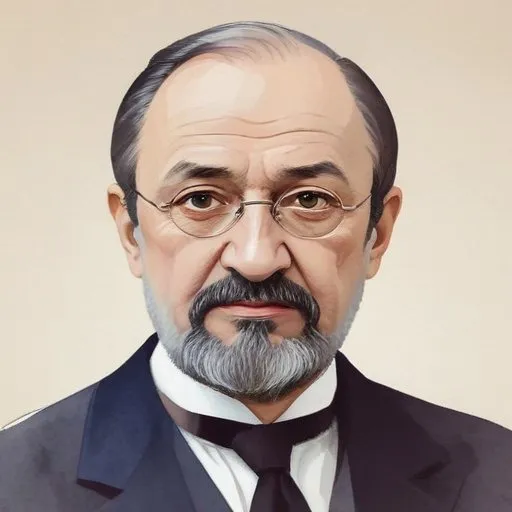
A Romanian philosopher and politician who served as the Minister of Education and Research, known for his contributions to the development of philosophy, politics, and education in post-communist Romania.
As a renowned Romanian philosopher, political scientist, and politician, Andrei Marga has left an indelible mark on the realms of education, politics, and philosophy. His work has not only shaped the intellectual landscape of his native country but has also resonated globally, earning him numerous accolades and recognition.
Marga's academic prowess and intellectual curiosity have driven him to author numerous volumes on political science, political philosophy, and the philosophy of history. His work explores a diverse range of topics, including the philosophical theories of Herbert Marcuse and Jürgen Habermas, the nature of positivism, and trends in contemporary philosophy.
His philosophical beliefs are shaped by his commitment to Christian values and his faith in the transformative power of education. He has been vocal about the need for moral and spiritual renewal in the face of globalization and its attendant challenges.
Born on May 22, 1946, in Bucharest, Romania, Marga attended the University of Cluj and later received a one-year scholarship at the University of Freiburg in West Germany.
In 1993, he became the rector of the Babeș-Bolyai University of Cluj-Napoca, a position he has held twice in his career.
Marga's political career has been marked by his commitment to democracy and his dedication to education reform. He served as Minister of Education in the Democratic Convention (CDR) coalition governments of Victor Ciorbea, Radu Vasile, and Mugur Isărescu from 1997 to 2000.
In January 2001, he replaced Ion Diaconescu as the president of the Christian Democratic National Peasants' Party (PNCD), but resigned from this position in July 2001, amid political tensions within the party.
Later, he formed a new political party, the Popular Christian Party, and subsequently became a member of the National Liberal Party (PNL).
In 2005, Marga was awarded the prestigious Herder Prize in recognition of his contributions to philosophy, education, and cultural exchange.
Andrei Marga's multifaceted career has left an enduring legacy in the realms of philosophy, education, and politics. His commitment to education reform, his philosophical contributions, and his public service have inspired generations of scholars, policymakers, and civic leaders.
Through his work, Marga has demonstrated the transformative power of ideas and the importance of engaging with the complexities of modern society. As a visionary philosopher and statesman, he continues to inspire and influence thinkers and leaders around the world.
84 Years Old
A Romanian philosopher, author, and academic who wrote extensively on philosophy, culture, and politics, and is known for his influential works on existentialism and phenomenology.
Born in 1911
A Romanian-French philosopher and academic who wrote extensively on the human condition, exploring themes of nihilism, pessimism, and the absurdity of life. His works are known for their poetic and provocative style.
96 Years Old
A Romanian engineer and politician who served as the country's second president, playing a key role in the country's transition from communism to democracy. He's known for his efforts to reform the economy and bring Romania into the European community.
