


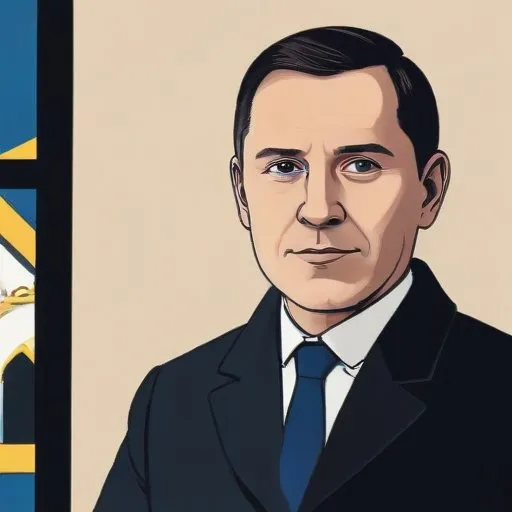
Estonian engineer and politician who served as the 17th Mayor of Tallinn, known for his contributions to the city's development and infrastructure .
Anton Uesson, a renowned Estonian politician and engineer, left an indelible mark on his country's architectural landscape, shaping the very fabric of Tallinn's urban identity. As a pioneer in his field, he is best known for his contributions to the development of Estonia's modern infrastructure, constructing numerous iconic buildings and landmarks that continue to inspire awe today.
Born on January 12, 1879, in Haimre Parish, Kreis Wiek, Governorate of Estonia (now Rapla County), Uesson was one of eight siblings. His academic pursuits led him to the Theological Seminary in Riga, Latvia, where he graduated in 1902. He further honed his skills at the Riga Polytechnic Institute, earning a degree in civil engineering in 1910. This solid foundation laid the groundwork for his remarkable career as an architect and engineer.
Uesson's architectural prowess flourished in the 1910s, as he worked under Tallinn's then-mayor, Voldemar Lender. His architectural style, characterized by Jugendstil influences, gave rise to numerous iconic buildings in Tallinn. By 1912, he had constructed over 40 houses in the capital city, leaving an enduring mark on Estonia's cultural heritage.
In addition to his architectural achievements, Uesson held prominent positions in various organizations, including the Estonian Technical Society, which he co-founded in 1917. He served as the society's first chairman and later became a member of the board of trustees of the Tallinn Technical School.
In 1919, Uesson was elected the Deputy Mayor of Tallinn, a position he held until 1934. His dedication to public service earned him the post of mayor in 1938. During his tenure, he fostered strong international relationships, exemplified by his congratulatory telegram to Herbert Hoover, the United States president, in 1928.
Uesson's contributions to Estonian society were recognized through various honors, including his election as an Honorary Citizen of Tallinn in 1920.
Tragically, Uesson's life was cut short during World War II. On June 14, 1941, he was arrested by the NKVD, along with many other prominent Estonian politicians and intellectuals. He was subsequently sent to a gulag in Yekaterinburg, Sverdlovsk oblast, where he was executed by gunshot on April 13, 1942.
Anton Uesson's legacy extends far beyond his architectural accomplishments. His dedication to public service, passion for education, and commitment to his country's development have left an indelible mark on Estonia's history. Today, his contributions continue to inspire future generations of architects, engineers, and policymakers.
While there are no recorded quotes from Uesson, his remarkable life and achievements serve as a testament to his unwavering commitment to his country and its people.
Born in 1874
Estonia's first president, a key figure in the country's struggle for independence from Russia, served as a unifying force during tumultuous times. He's remembered for his role in shaping Estonia's early years and its path to sovereignty.
Born in 1868
Estonia's 2nd Prime Minister, a pioneering journalist, lawyer, and politician who played a crucial role in the country's struggle for independence and development. He's most known for his efforts to establish a democratic government and promote national unity.
Born in 1884
Estonia's 7th Prime Minister, a lawyer and politician who played a crucial role in shaping the country's early years of independence, known for his diplomatic efforts and national unification.
Born in 1890
A prominent Estonian leader who served as the country's Prime Minister during a tumultuous period, guiding Estonia through World War II and the Soviet occupation. He's revered for his bravery and statesmanship during Estonia's struggle for independence.
Born in 1886
Estonia's Head of State during World War II, leading the country's government-in-exile and advocating for independence from Soviet occupation. He played a crucial role in preserving Estonia's sovereignty and identity.
Born in 1888
Estonian journalist and politician who served as the 6th Prime Minister of Estonia, known for his leadership during the country's interwar period and his role in shaping the nation's early years of independence.
Born in 1878
Estonian pastor and politician who served as the 9th Minister of Foreign Affairs, playing a significant role in Estonia's early 20th-century politics and independence movement. He was a key figure in shaping the country's foreign policy and international relations.
Born in 1860
Estonian journalist and politician who fought for press freedom and served as a member of the Estonian Parliament, advocating for democratic values and human rights.
