


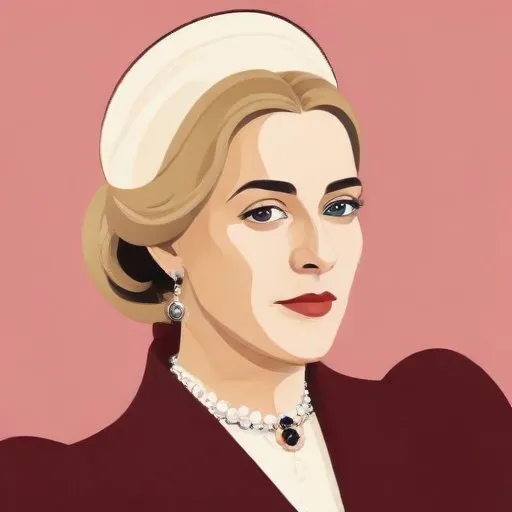
A member of the Habsburg-Este family, she was a 19th-century Austrian archduchess and princess who lived a life of luxury and duty within the royal court. She's known for her artistic talents and charitable work.
Archduchess Maria Leopoldine of AustriaEste is best known for her role as the Electress of Bavaria, a position she held from 1795 to 1804 as the second spouse of Charles Theodore, Elector of Bavaria. Through her marriage, she played a significant role in shaping the politics and culture of Bavaria during the late 18th and early 19th centuries.
Maria Leopoldine was born on December 10, 1776, in Milan, Italy, as the fourth child and third daughter of Archduke Ferdinand Karl of AustriaEste and his wife, Princess Maria Beatrice Ricciarda dEste.
Her parents, founders of the House of AustriaEste, were known for their commitment to their subjects and their focus on the education of their children. Ferdinand Karl and Maria Beatrice instilled in their children the importance of social responsibility and the value of strong relationships.
In 1795, Maria Leopoldine married Charles Theodore, Elector of Bavaria, a union that was arranged by her father. This marriage marked the beginning of her role as the Electress of Bavaria, a position she held until 1804.
As the Electress, Maria Leopoldine played a significant role in promoting the arts and culture in Bavaria. She was known for her patronage of the arts, and her court became a hub for intellectuals and artists.
Maria Leopoldine was known for her strong Italian temperament, her openness to expressing her opinions, and her willingness to speak out against injustice. She was a fun-loving and lively person who brought joy and energy to the court.
Maria Leopoldine's legacy extends beyond her role as the Electress of Bavaria. She played a significant role in shaping the cultural and political landscape of Bavaria during a time of great change and upheaval.
Through her marriage and her relationships, Maria Leopoldine helped to strengthen the ties between the royal houses of Austria and Bavaria, promoting greater understanding and cooperation between the two nations.
Maria Leopoldine's life was marked by a commitment to her duties as the Electress of Bavaria, her love of the arts and culture, and her strong sense of social responsibility. Her legacy continues to inspire and influence to this day.
Born in 1768
The last Holy Roman Emperor, who ruled from 1792 to 1806, oversaw the dissolution of the Holy Roman Empire and was a key figure in European politics during the Napoleonic Wars.
Born in 1717
The wife of Francis I, Holy Roman Emperor, ruled Austria and its territories with intelligence and diplomacy, implementing reforms and expanding the empire through strategic marriages. She's remembered for her strong leadership and cultural achievements.
Born in 1741
Reformer of the Habsburg dominions, abolishing serfdom and promoting religious tolerance, who implemented numerous reforms to modernize his empire.
Born in 1747
The last Habsburg ruler to hold the title of Holy Roman Emperor, he oversaw the dissolution of the empire and played a key role in European politics during the French Revolution.
Born in 1793
Emperor of Austria from 1835 to 1848, known for his role in the Revolutions of 1848 and his abdication in favor of his nephew Franz Joseph.
Born in 1755
The last queen of France before the French Revolution, known for her extravagance and mismanagement of the French economy, which contributed to the downfall of the monarchy.
Born in 1769
A French military leader who rose to prominence during the French Revolution and became Emperor of France, known for his military conquests and reorganization of Europe. He is also famous for his Napoleonic Code, which remains a foundation of modern law.
