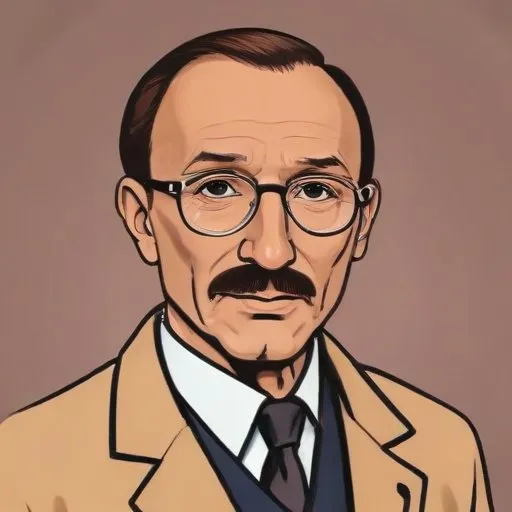
Armand Frappier: The Champion Disease Fighter
Fighting the "Tueuse de Maman": A Lifelong Crusade Against Tuberculosis
Armand Frappier was a Canadian physician, microbiologist, and titan in the fight against tuberculosis, a disease that claimed the life of his mother in 1923. He dedicated his career to understanding and combating this "mother killer," earning him the title of "Champion Disease Fighter" and leaving an indelible mark on the field of microbiology.
Early Life and Education
Born on November 26, 1904, in Salaberry-de-Valleyfield, Quebec, Frappier was the son of Arthur Alexis Frappier and Bernadette Codebecq. He received his Bachelor of Arts in 1924 and went on to earn his medical degree from the Université de Montréal in 1930. Frappier then obtained a Bachelor of Science in 1933, also from the Université de Montréal.
Founding the Institut de Microbiologie et d'Hygiène de Montréal
In 1938, Frappier founded the Institut de Microbiologie et d'Hygiène de Montréal, modeled after the Pasteur Institute in Paris and the Connaught Laboratories of the University of Toronto. This pioneering institution became the first French-language school of hygiene in the world, and Frappier served as its director for an impressive 38 years. The institute was renamed the Institut Armand-Frappier in 1975, a testament to his tireless efforts.
Contributions to the Fight Against Tuberculosis
Frappier's work was instrumental in the development of the Bacillus Calmette-Guérin (BCG) vaccine, which revolutionized the treatment of tuberculosis. He was one of the first researchers to confirm the safety and effectiveness of the BCG vaccine, paving the way for its widespread adoption. His contributions to the field of microbiology and public health earned him numerous accolades and honors.
Awards and Honors
- Officer of the Order of the British Empire (named by King George VI in 1945)
- Companion of the Order of Canada (1969)
- Grand Officer of the National Order of Quebec (1985)
- Fellow of the Royal Society of Canada
- Prix Armand-Frappier (established in 1993 to recognize outstanding contributions to science)
- Canada Post honored him with a stamp in 2000
- Inducted into the Canadian Medical Hall of Fame (2012)
Personal Life
Frappier married Thrèse Ostiguy in 1929, and they had four children together: Lise, Monique, Michèle, and Paul. His personal experiences, including the loss of his mother to tuberculosis, deeply influenced his work and motivated him to make a lasting impact on the world.
Legacy
Armand Frappier's contributions to the fight against tuberculosis have saved countless lives and continue to inspire future generations of scientists and researchers. His legacy serves as a testament to the power of dedication, hard work, and a commitment to making a difference in the world.
FAQ
What is Armand Frappier known for in the field of medicine?
Armand Frappier is known for his pioneering work on tuberculosis and his development of the first BCG vaccine in Canada.
What contributions did Armand Frappier make to public health?
Armand Frappier made significant contributions to public health through his work on tuberculosis prevention and control, and his efforts to promote vaccination and disease prevention programs.
What is Armand Frappiers educational background?
Armand Frappier studied medicine at the Université de Montréal, where he earned his doctorate in 1924. He then went on to study at the Pasteur Institute in Paris.
What is the significance of Armand Frappiers work on tuberculosis?
Armand Frappiers work on tuberculosis helped to reduce the incidence of the disease in Canada, and his development of the BCG vaccine saved countless lives.
How did Armand Frappiers work impact the field of microbiology?
Armand Frappiers work on tuberculosis and his development of the BCG vaccine contributed to a greater understanding of microbiology and the development of new treatments and vaccines for infectious diseases.