


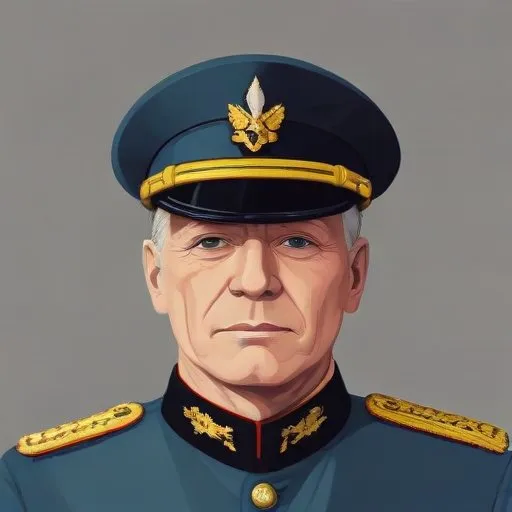
Estonian colonel who fought in World War II and later became a prominent figure in the Estonian resistance movement against Soviet occupation, known for his bravery and leadership.
However, Meri's life was not without its turmoils. Later in life, he faced charges of genocide for his involvement in the deportation of Estonians to inhospitable regions of the USSR. This dark episode in his life would forever taint his legacy and spark intense debates about his character.
Born on July 1, 1919, Meri's early life was marked by instability and upheaval. His parents, Konstantin and Olga, emigrated to Yugoslavia in 1926 due to economic reasons and political convictions. In Yugoslavia, Meri's father worked as a chef, while his mother worked as a maid. He was baptized into the Russian Orthodox Church and renamed Adrian.
Meri completed his primary education in Skopje and later attended the Russian-Serbian Gymnasium in Belgrade, graduating in 1938. After returning to Estonia, he took a job as an intern at AS Franz Krull before being called to serve in the autotank regiment of the Estonian military.
Meri's military career was marked by exceptional bravery and leadership. During the Soviet occupation in 1940, he was elected to the City Komsomol Committee in Tallinn and was tasked with creating a Komsomol organization in his Estonian army unit. After the absorption of his unit into the Red Army 22nd Estonian Territorial Rifle Corps, he was appointed a deputy political officer in the 415th Radio Battalion.
It was during this time that Meri displayed extraordinary courage, earning him the Gold Star of the Hero of the Soviet Union in August 1941. His heroic actions took place near Dno in July 1941, where he organized the defense of the headquarters of the 22nd Estonian Territorial Rifle Corps against the German army, despite being wounded four times in the battle.
In the latter part of his life, Meri faced intense scrutiny and criticism for his role in the deportation of Estonians to inhospitable regions of the USSR. These allegations led to him being charged with genocide, a crime that would have far-reaching implications for his legacy.
Despite these controversies, Meri continued to hold prominent positions, including serving as the honorary chairman of the Estonian Anti-Fascist Committee. He remained a figure of public interest until his passing on March 27, 2009, at the age of 89.
Arnold Meri's life is a complex tapestry of bravery, controversy, and legacy. While his heroic actions during World War II earned him the highest honors, his later involvement in the deportation of Estonians raises uncomfortable questions about his character.
As we reflect on his life, we are reminded that even the most revered heroes can have flaws and that their legacies must be examined in the context of their times. Meri's story serves as a poignant reminder of the complexities of human nature and the importance of nuanced understanding.
Born in 1874
Estonia's first president, a key figure in the country's struggle for independence from Russia, served as a unifying force during tumultuous times. He's remembered for his role in shaping Estonia's early years and its path to sovereignty.
Born in 1890
A prominent Estonian leader who served as the country's Prime Minister during a tumultuous period, guiding Estonia through World War II and the Soviet occupation. He's revered for his bravery and statesmanship during Estonia's struggle for independence.
Born in 1886
Estonia's Head of State during World War II, leading the country's government-in-exile and advocating for independence from Soviet occupation. He played a crucial role in preserving Estonia's sovereignty and identity.
Born in 1884
Estonia's 7th Prime Minister, a lawyer and politician who played a crucial role in shaping the country's early years of independence, known for his diplomatic efforts and national unification.
Born in 1888
Estonian journalist and politician who served as the 6th Prime Minister of Estonia, known for his leadership during the country's interwar period and his role in shaping the nation's early years of independence.
Born in 1884
A prominent military leader who played a crucial role in Estonia's struggle for independence, leading the country's armed forces to victory in the Estonian War of Independence.
Born in 1894
An Estonian educator and lieutenant who played a key role in the country's War of Independence, leading a student battalion to several victories against the Bolsheviks. He's also known for his contributions to Estonian education and scouting.
Born in 1889
Estonia's first Prime Minister after declaring independence from Russia, leading the country through its early years of statehood. He played a crucial role in shaping Estonia's government and constitution.
