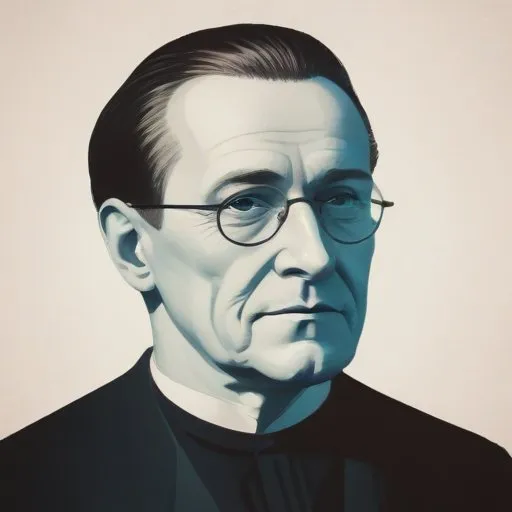
Arnold Ruge

Arnold Ruge

Arnold Ruge was born on September 13th, 1802

Full Name: Arnold Ruge
Place of Birth: Bergen auf Rügen, Prussia
Zodiac Sign: Unknown
Profession: German Philosopher and Author
Notable Works: Die Grundlage der deutschen Wissenschaft
Education: University of Halle, University of Jena
Known for: German idealism
Death: 1880

A German philosopher and author who contributed to the development of Young Hegelianism, a radical and democratic movement that criticized traditional authority and advocated for social change.

Written by: Liam O'Sullivan Liam O'Sullivan

Arnold Ruge: The German Philosopher and Political Writer Behind the Unification of Germany

A Champion of Freedom and Unity

Arnold Ruge, a prominent German philosopher and political writer, is best known for his tireless advocacy for a free and united Germany. Through his writings and activism, Ruge played a significant role in shaping the country's political landscape, influencing key thinkers of his time, and leaving a lasting legacy.

Early Life and Education

Born on September 13, 1802, in Bergen auf Rügen, Ruge was the older brother of Ludwig Ruge. He pursued higher education at the universities of Halle, Jena, and Heidelberg, where he became involved in student agitations advocating for a unified Germany.

Incubation of Ideas in Prison

Ruge's activism led to his imprisonment from 1824 to 1830 in the fortress of Kolberg. During this period, he delved deep into the works of Plato and ancient Greek poets, laying the foundation for his philosophical contributions.

Academic and Literary Pursuits

Upon his release, Ruge moved to Halle and published several plays, including the tragedy Schill und die Seinen, as well as translations of ancient Greek texts, such as Oedipus at Colonus. In 1832, he became a Privatdozent at the University of Halle, where he began to develop his philosophical ideas.

The Young Hegelians and the Hallesche Jahrbücher

Ruge's association with the Young Hegelians, a group of philosophers critical of Georg Wilhelm Friedrich Hegel's ideals, led to the founding of the Hallesche Jahrbücher für deutsche Kunst und Wissenschaft in 1837, alongside E. T. Echtermeyer. This periodical served as a platform for Ruge to discuss contemporary issues from a Hegelian philosophical perspective.

Critique of Hegel and the Pursuit of Freedom

Ruge shared Hegel's belief that history is a progressive advance towards the realization of freedom, attained through the creation of the rational General Will in the State. However, he criticized Hegel for having a closed interpretation of history, leaving no room for novelty or future development.

Collaboration with Karl Marx and the Deutsch-Französische Jahrbücher

In Paris, Ruge co-edited the Deutsch-Französische Jahrbücher with Karl Marx, but their collaboration was short-lived due to Ruge's disagreement with Marx's socialistic theories.

The Revolutions of 1848 and the Pursuit of Unity

During the revolutionary movement of 1848, Ruge organized the extreme left in the Frankfurt parliament, working tirelessly towards German unification. He later became the editor of Die Reform in Berlin, where he continued to advocate for unity and supported Polish demands.

Legacy and Impact on Modern Society

Ruge's philosophical contributions, literary works, and activism have left an indelible mark on modern society. His critiques of Hegel and advocacy for freedom and unity continue to influence contemporary debates in philosophy and politics.

Personal Milestones and Key Life Events

A Lasting Legacy

Arnold Ruge's life and work serve as a testament to the power of human perseverance and the importance of striving for freedom and unity. As a philosopher, writer, and activist, Ruge continues to inspire generations to think critically and work towards a more just and unified society.
Timeline
1802
Born in Bergen auf Rügen, Prussia
Arnold Ruge was born on September 13, 1802, in Bergen auf Rügen, Prussia (now part of Germany).
1830
Received doctorate from University of Jena
Ruge received his doctorate in philosophy from the University of Jena, where he later became a lecturer.
1848
Participated in the Frankfurt Parliament
Ruge was a delegate to the Frankfurt Parliament, a national assembly that aimed to create a unified German state.
1850
Fled to England after persecution
Ruge fled to England after facing persecution for his radical views, where he continued to write and publish.
1880
Died in Brighton, England
Arnold Ruge died on December 31, 1880, in Brighton, England, leaving behind a legacy of philosophical and literary works.
Arnold Ruge

Arnold Ruge Quiz

What philosophical movement was Arnold Ruge a key contributor to?

Score: 0/5
FAQ
Who was Arnold Ruge and what were his contributions to philosophy?
Arnold Ruge was a German philosopher and author who played a significant role in the development of modern German philosophy. He is best known for his writings on aesthetics and his criticism of Hegelianism.
What was Arnold Ruges approach to aesthetics?
Arnold Ruge took a romantic approach to aesthetics, emphasizing the importance of individual creativity and imagination in the production of art.
How did Arnold Ruge influence the development of German philosophy?
Arnold Ruges writings and teachings played a significant role in shaping the development of German philosophy, influencing thinkers such as Friedrich Nietzsche and Karl Marx.
What was Arnold Ruges relationship with Hegel?
Arnold Ruge was a vocal critic of Hegels philosophy, arguing that it was overly abstract and neglectful of the importance of individual creativity and action.
What is Arnold Ruges legacy in philosophy?
Arnold Ruge is remembered as a pioneering philosopher who helped to shape the development of modern German philosophy. His ideas continue to influence philosophers and aestheticians today.

Related People:

Karl Marx

Born in 1818

A 19th-century philosopher who developed the theory of communism, arguing that capitalism would eventually be replaced by a socialist society. He's known for his critique of capitalism and the concept of class struggle.

Friedrich Engels

Born in 1820

A 19th-century philosopher and economist who co-authored "The Communist Manifesto" with Karl Marx, shaping modern socialist and communist thought. He also wrote extensively on economics, history, and politics.

Georg Wilhelm Friedrich Hegel

Born in 1770

A German philosopher and academic who developed a comprehensive and systematic philosophy that emphasized the unity of all things and the dialectical process of thesis, antithesis, and synthesis. His ideas have had a profound impact on modern thought, influencing fields such as philosophy, politics, and art.

Ludwig Feuerbach

Born in 1804

A 19th-century philosopher who critiqued religion and idealism, arguing that God is a human creation and that people should focus on this life rather than the afterlife. His ideas influenced many prominent thinkers, including Karl Marx and Friedrich Nietzsche.

Max Stirner

Born in 1806

A 19th-century philosopher who rejected all forms of authority and advocated for individualism, arguing that people should prioritize their own interests and desires above all else.

Mikhail Bakunin

Born in 1814

A Russian philosopher and theorist who advocated for anarchism and the abolition of the state, and is known for his influence on the development of anarchist thought. His ideas emphasized individual freedom and the rejection of authority.

Pierre-Joseph Proudhon

Born in 1809

A 19th-century French economist and politician who advocated for anarchism, socialism, and mutualism, and is known for coining the phrase "Property is Theft."

Ferdinand Lassalle

Born in 1825

A 19th-century German philosopher and jurist who developed the concept of the "iron law of oligarchy," which states that power tends to concentrate in the hands of a few individuals. He also advocated for workers' rights and social reform.