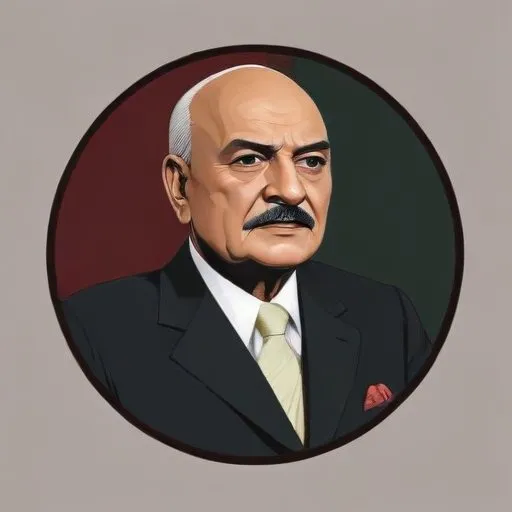
Asghar Khan: The Pacifist politician and Human Rights Advocate
A Life Dedicated to Service and Dissent
Air Marshal Muhammad Asghar Khan is renowned for his courageous stand against military dictatorship and his unwavering commitment to pacifism, peace, and human rights. As a politician, autobiographer, and military officer, Khan's life was a testament to his unrelenting pursuit of justice and democracy in Pakistan.
Early Life and Military Career
Born on January 17, 1921, into a military family, Asghar Khan's early life was marked by a sense of duty and service. He briefly served as an officer in the Indian Army before being deputed to the Royal Indian Air Force (IAF) as a military adviser in 1941. Khan's exceptional leadership skills and bravery earned him a promotion to the rank of Air Officer, making him the youngest officer to command the Pakistan Air Force (PAF) at the age of 36.
A Voice of Dissent
In 1965, Khan's dissent with General Musa Khan, the Army Commander-in-Chief, over Operation Gibraltar and the Indo-Pakistani War of 1965, led to his replacement as Commander-in-Chief of the PAF. This defining moment marked the beginning of Khan's journey as a dissident, as he continued to speak out against military dictatorship and advocate for democracy.
Founding the Tehrike-Istiqlal Party
After retiring from the military in 1968, Khan founded the Tehrike-Istiqlal Party, a secular and centrist political party that opposed the Pakistan Peoples Party (PPP) and the Pakistan Muslim League (PML). Although the party failed to make a significant impact in the 1970 Pakistani general elections, Khan's political career was just beginning.
A Life of Activism
From the 1970s to the 1990s, Khan's political career focused on the politics of agitation, against elected civilian governments. He filed multiple lawsuits against the PPP and the PML-N, notably the Mehrangate bank scandal, at the Supreme Court of Pakistan. Khan's activism and dissent earned him recognition as a champion of human rights and democracy.
Philosophical Contributions and Beliefs
Khan's writings and speeches reflect his deep commitment to democracy, human rights, and pacifism. He believed in the power of civil disobedience and non-violent resistance, drawing inspiration from
Mahatma Gandhi and
Martin Luther King Jr. Khan's philosophical contributions continue to influence Pakistani politics, inspiring generations of politicians, activists, and citizens.
Personal Milestones and Key Life Events
- 1941: Deputed to the Royal Indian Air Force (IAF) as a military adviser
- 1957: Appointed Commander-in-Chief of the Pakistan Air Force (PAF)
- 1965: Replaced as Commander-in-Chief of the PAF due to dissent with General Musa Khan
- 1968: Founded the Tehrike-Istiqlal Party
- 1970s-1990s: Focused on politics of agitation against elected civilian governments
Legacy and Impact
Asghar Khan's life was a testament to his unwavering commitment to democracy, human rights, and pacifism. His courage in speaking out against military dictatorship and his advocacy for civilian rule continue to inspire generations of Pakistanis. Khan's legacy serves as a reminder of the importance of dissent and activism in the pursuit of a just and equitable society.
Quotes and Memorable Sayings
- "The struggle for democracy is not a destination, it's a journey."
- "The power of the people is greater than the people in power."
Awards and Honors
Asghar Khan received numerous awards and honors for his contributions to democracy and human rights, including the Sitara-e-Pakistan (Star of Pakistan) and the Hilal-e-Pakistan (Crescent of Pakistan).
Visual Timeline and Milestones

FAQ
What is Asghar Khans role in Pakistani politics?
Asghar Khan is a renowned Pakistani general and politician who played a significant role in the countrys politics, founding the Tehrik-i-Istiqlal party in 1970.
What is Asghar Khans stance on democracy?
Asghar Khan was a strong advocate for democracy and human rights in Pakistan, criticizing military regimes and promoting civilian rule.
What awards has Asghar Khan received?
Asghar Khan was awarded the Sitara-e-Pakistan in 1965 for his outstanding services to the country, and also received the Nishan-e-Imtiaz in 2002.
What is Asghar Khans educational background?
Asghar Khan graduated from the Royal Indian Military College in Dehradun, India, and later attended the Command and Staff College in Quetta, Pakistan.
What is Asghar Khans legacy in Pakistani politics?
Asghar Khans legacy in Pakistani politics is marked by his commitment to democracy and human rights, earning him the respect and admiration of many Pakistanis.