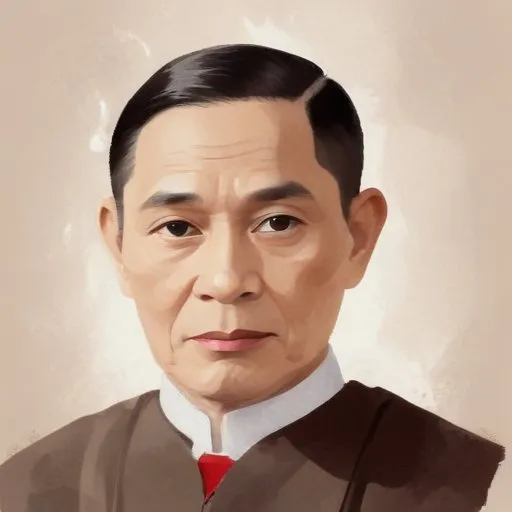
Ba Maw: The Visionary Leader of Burma's Turbulent Era
A Trailblazing Career in Politics and Law
Ba Maw, a renowned Burmese lawyer and political leader, left an indelible mark on Burma's history during the interwar period and Second World War. As the first Premier of Burma (1937-1939) and head of State (1942-1945), Ba Maw navigated the country through tumultuous times, earning him a revered place in the annals of Burmese politics.
Early Life and Education: Laying the Foundations
Born on February 8, 1893, in Maubin, Burma, Ba Maw hailed from a distinguished family of mixed Mon-Burman parentage. His father, Shwe Kye, was an ethnic Mon from Amherst (now Kyaikkhami), well-versed in French and English languages, and served as a royal diplomat. This exposure to diverse cultures and languages instilled in Ba Maw a broad perspective that would later shape his politics.
Ba Maw's educational trajectory was marked by excellence. He attended Rangoon College, where he earned a degree in 1913. He then pursued a Master's degree from the University of Calcutta in 1917. His academic prowess took him to Cambridge University in England, where he received a law degree from Grays Inn in 1923. To further hone his skills, he obtained a doctoral degree from the University of Bordeaux, France, writing his thesis on aspects of Buddhism in Burma in French.
Academic Career: Sowing the Seeds of Knowledge
Before venturing into politics, Ba Maw began his academic career as a teacher at Rangoon Government High School and later at ABM school. In 1917, he became the first English lecturer at Rangoon University, where he worked for the next four years. This phase of his life laid the groundwork for his future leadership, as he imparted knowledge and inspired the next generation of Burmese leaders.
Rise to Prominence: Defending Saya San and Beyond
Ba Maw's law career, which began in the 1920s, catapulted him to prominence in 1931 when he defended the rebel leader, Saya San. This courageous act marked a turning point in his life, as he began to dabble in colonial-era Burmese politics. His legal acumen and eloquence earned him recognition, paving the way for his future leadership roles.
Philosophical Contributions and Beliefs: A Vision for Burma
Throughout his life, Ba Maw was guided by a deep sense of nationalism and a desire to reform Burma's political landscape. He believed in the importance of Buddhism in shaping the country's identity and advocated for its amalgamation with Western values. This unique approach earned him both admiration and criticism, as he attempted to navigate the complexities of Burmese politics.
Legacy: A Lasting Impact on Modern Burma
Ba Maw's legacy is multifaceted and far-reaching. As a statesman, he played a crucial role in shaping Burma's independence movement. As an educator, he inspired generations of Burmese leaders. As a lawyer, he defended those who dared to challenge the status quo. His vision for a modern, inclusive Burma continues to inspire future generations, making him an enduring figure in the country's history.
Personal Milestones and Key Life Events
- February 8, 1893: Born in Maubin, Burma
- 1913: Earned a degree from Rangoon College
- 1917: Obtained MA degree from the University of Calcutta
- 1923: Received a law degree from Grays Inn, Cambridge University
- 1931: Defended rebel leader Saya San
- 1937-1939: Served as the first Premier of Burma
- 1942-1945: Head of State of Burma
- May 29, 1977: Passed away
Ba Maw's remarkable journey, marked by his academic excellence, legal prowess, and political vision, has left an indelible mark on Burma's history. As we reflect on his life and legacy, we are reminded of the power of vision, courage, and determination in shaping the course of a nation's destiny.
FAQ
What was Ba Maws early life like?
Ba Maw was born on February 8, 1893, in Ma-ubin, British Burma, and grew up in a family of modest means, with his father working as a schoolteacher.
What was Ba Maws role in Burmas fight for independence?
Ba Maw was a key figure in Burmas fight for independence from British colonial rule, serving as the Prime Minister of Burma from 1937 to 1939.
What was Ba Maws relationship like with the Japanese during World War II?
Ba Maw collaborated with the Japanese during World War II, serving as the head of state of the State of Burma from 1942 to 1945.
What was Ba Maws later life like?
After World War II, Ba Maw was arrested and tried for treason, but was later released and returned to politics, serving as a member of the Burmese parliament.
Did Ba Maw have any notable writings or publications?
Yes, Ba Maw published several books on Burmese history and politics, including Breakthrough in Burma: Memoirs of a Revolution, 1939-1946 in 1968.