


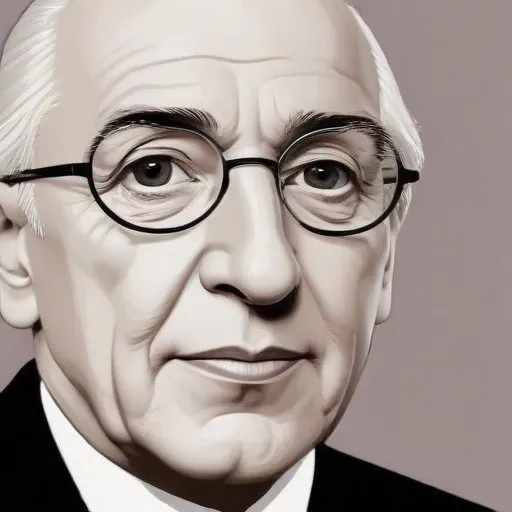
A British philosopher and politician who wrote extensively on philosophy, politics, and culture, and was a prominent figure in the UK's Labour Party. He's known for making philosophy accessible to a broad audience through his writings and TV programs.
Bryan Magee, a renowned British philosopher, broadcaster, politician, and author, is best known for making philosophy accessible to a broad audience. Through his engaging writing style, radio and television programs, and lectures, Magee successfully bridged the gap between academic philosophy and everyday life.
Born on April 12, 1930, in Hoxton, London, Magee grew up in a working-class family above their clothing shop. His childhood was marked by a difficult relationship with his abusive mother, but he was close to his father. During World War II, Magee was evacuated to Market Harborough in Leicestershire, and upon his return to London, he found that much of Hoxton had been bombed. He went on to attend Christs Hospital school on a London County Council scholarship, where he developed a keen interest in socialist politics.
Magee's academic journey took him to Keble College, Oxford, where he studied history and later Philosophy, Politics, and Economics. During his time at Oxford, he was elected president of the Oxford Union and befriended prominent figures such as Robin Day, William Rees-Mogg, Jeremy Thorpe, and Michael Heseltine. After completing his studies, Magee became an honorary fellow at Keble College.
Magee's philosophical contributions are diverse and far-reaching. He wrote extensively on the history of philosophy, particularly on German philosophy, and was known for his ability to make complex ideas accessible to a broad audience. His notable works include "The Philosophy of Schopenhauer" and "Wagner and Philosophy."
Magee's philosophical stance was characterized by a commitment to reason, evidence, and critical thinking. He believed that philosophy should be engaged with and debated by people from all walks of life, rather than confined to academic circles. Through his writings and broadcasts, Magee inspired a generation of thinkers and encouraged critical thinking and intellectual curiosity.
Magee's broadcasting career spans over two decades, during which he presented numerous radio and television programs that explored philosophical ideas and their relevance to everyday life. His programs, such as "Men of Ideas" and "The Great Philosophers," are testament to his ability to communicate complex ideas in an engaging and accessible manner.
Magee's contributions to philosophy and broadcasting were recognized with numerous awards and honors, including the BAFTA Award for Best Factual Series for "The Great Philosophers" and the Royal Television Society's Award for Best Presenter.
Throughout his life, Magee was dedicated to his work and left an indelible mark on the world of philosophy. His legacy continues to inspire new generations of thinkers and philosophers, and his commitment to making philosophy accessible to all remains an enduring testament to his intellectual curiosity and passion for learning.
Bryan Magee's remarkable life and work serve as a testament to the power of philosophy to inspire and educate. His legacy continues to inspire new generations of thinkers, and his commitment to making philosophy accessible to all remains an enduring tribute to his intellectual curiosity and passion for learning.
Born in 1909
A Latvian-English historian and philosopher who explored the intersection of philosophy, history, and politics, and is renowned for his work on the Enlightenment, liberty, and the nature of humanity.
Born in 1910
A prominent logical positivist, he championed the idea that only verifiable statements are meaningful, and his book "Language, Truth, and Logic" remains a seminal work in 20th-century philosophy.
Born in 1872
A renowned thinker who made significant contributions to mathematics, philosophy, and social commentary, known for his influential writings on logic, ethics, and politics. He's a prominent figure in shaping modern intellectual thought.
Born in 1889
A German philosopher and academic who explored the meaning of existence, time, and human existence, influencing 20th-century philosophy with his concept of "Being-in-the-world".
Born in 1905
Existentialist philosopher and playwright who argued that humans have complete freedom to choose their actions and create their own meaning in life, influencing modern thought on morality and individual responsibility.
Born in 1908
A pioneering feminist philosopher who wrote extensively on ethics, politics, and gender, famously arguing that "one is not born, but rather becomes, a woman."
Born in 1899
Austrian economist and philosopher who championed free market capitalism and limited government intervention, warning of the dangers of socialism and totalitarianism. His work influenced economic policy and shaped modern libertarian thought.
