


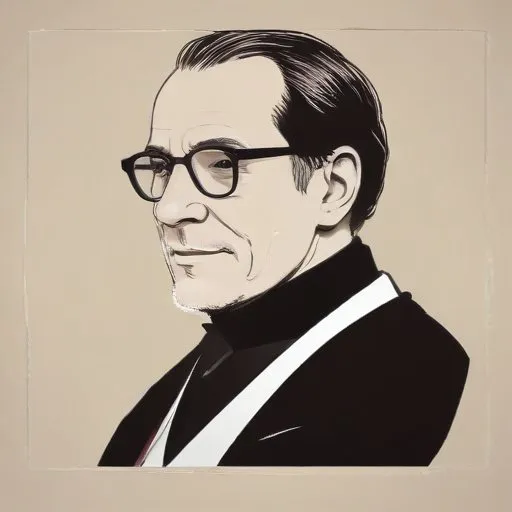
A renowned pianist and educator, known for his virtuosic performances and influential teaching methods that shaped the careers of many notable pianists.
Renowned for his mastery of the piano repertoire, Carl Friedberg is celebrated as one of the most influential piano pedagogues of the 20th century. With a performing career spanning over six decades, he left an indelible mark on the world of classical music.
Born on September 18, 1872, in Bingen, Germany, Carl Rudolf Hermann Friedberg was the son of Eduard Friedberg and Elisa Landau. His family, who were wine merchants in Bingen since 1700, instilled in him a deep love for music from an early age.
Friedberg's musical journey began with piano lessons under James Kwast, followed by studies with the legendary Clara Schumann at the Hoch Conservatory in Frankfurt. It was during this period that he developed his unique playing style, which would later earn him widespread acclaim.
Friedberg's teaching career commenced in 1893 at the Hoch Conservatory, where he taught alongside his mentor, Clara Schumann. He later moved to the Cologne Conservatory, where he remained until 1914. In 1923, he assumed the position of principal piano teacher at the New York Institute of Musical Art, which later became the Juilliard School of Music in 1926.
As a performer, Friedberg made his official debut in 1892 with the Vienna Philharmonic Orchestra under Gustav Mahler, earning a glowing review from the esteemed critic, Edward Hanslick. He went on to perform extensively throughout Europe and America, sharing the stage with luminaries such as Fritz Kreisler and Artur Schnabel.
Friedberg's greatest legacy lies in the numerous pianists he nurtured throughout his career. His pupils include Nina Simone, William Masselos, and Malcolm Frager, among many others. These students went on to become accomplished pianists in their own right, perpetuating Friedberg's influence across generations.
Despite his aversion to recorded piano music, Friedberg made a single commercial LP recording in 1953, at the age of 81, for Zodiac Records. This rare recording remains a testament to his unwavering dedication to his craft.
Carl Friedberg's impact on the world of classical music extends far beyond his own performances and teachings. He played a crucial role in shaping the pianistic landscape of the 20th century, influencing generations of pianists and pedagogues.
Friedberg's passing on September 9, 1955, in Merano, Italy, marked the end of an era, but his legacy continues to inspire and guide pianists to this day.
"The teacher's role is not to impose, but to awaken." - Carl Friedberg
Born in 1887
A renowned pianist and educator, celebrated for his poetic and expressive performances of Chopin's music, as well as his charismatic stage presence.
Born in 1903
A renowned pianist and composer, celebrated for his virtuosic technique and powerful performances of classical music, particularly Chopin and Rachmaninoff.
Born in 1873
A renowned Russian musician who composed iconic symphonies and piano concertos, and was also a skilled pianist and conductor, leaving a lasting legacy in classical music.
Born in 1866
A renowned pianist, composer, and conductor who blurred the lines between classical and modern music, creating a unique fusion of styles and influencing generations of musicians to come.
Born in 1882
A renowned pianist and composer, known for his poetic and introspective performances of Beethoven's sonatas, which set a new standard for interpreting classical music.
Born in 1819
A renowned 19th-century pianist and composer, she was one of the first females to achieve recognition in a male-dominated field, creating over 60 pieces of music. Her compositions showcased romanticism and lyricism.
Born in 1810
A renowned Romantic-era composer and influential music critic, known for his expressive and emotionally charged works, including symphonies, piano music, and art songs.
Born in 1811
A virtuosic pianist and composer who revolutionized classical music with his technically demanding and emotionally expressive works, blending Hungarian folk influences with Romantic-era drama.
