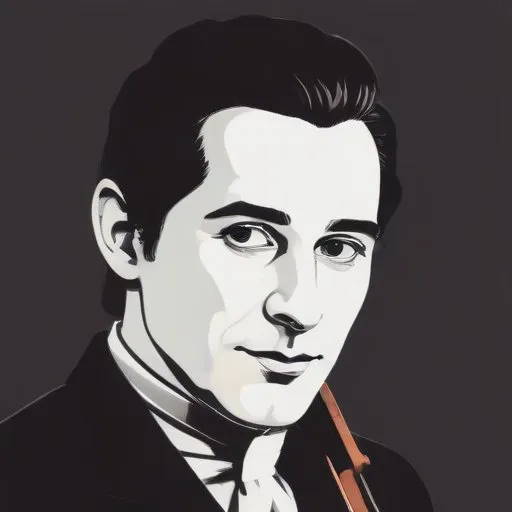
Carl Heinrich Biber: The Maestro of Salzburg
A Master of the Late Baroque Era
Carl Heinrich Biber was a renowned Austrian violinist and composer of the late Baroque period, celebrated for his contributions to the development of the violin concerto and his innovative compositions that blended the old with the new. As a prolific composer, he left an indelible mark on the music world, particularly in the city of Salzburg, where he spent most of his life.
Early Life and Education
Born on September 4, 1681, in Salzburg, Austria, Carl Heinrich Biber was the sixth son of
Heinrich Ignaz Franz Biber, a musician himself. The younger Biber received his early musical education from his father, which laid the foundation for his future success.
A Journey of Discovery
In 1704, Biber embarked on a study trip to Venice and Rome, where he immersed himself in the rich musical heritage of these cities. This journey had a profound impact on his compositional style, exposing him to the works of prominent composers of the time.
Career Highlights
- 1714: Appointed Vicekapellmeister at the Salzburg court, where he worked alongside prominent musicians and composers.
- 1743: Succeeded Matthias Sigismund Biechteler as Hofkapellmeister, a testament to his growing reputation as a composer and musician.
- Supervised Leopold Mozart, the father of Wolfgang Amadeus Mozart, further solidifying his influence on the next generation of musicians.
Compositional Style and Output
Biber's music embodied the transition between the late Baroque and Rococo styles, characterized by a unique blend of complexity and elegance. His oeuvre includes:
- Masses and other liturgical works, showcasing his mastery of choral music.
- Instrumental church sonatas, often featuring string instruments with organ accompaniment, occasionally incorporating brass and woodwind instruments.
Legacy and Impact
Carl Heinrich Biber's contributions to the world of music are multifaceted:
- His innovative compositions paved the way for future generations of composers, influencing the development of classical music.
- As a teacher and mentor, he played a significant role in shaping the musical talents of Leopold Mozart and, by extension, his son Wolfgang Amadeus Mozart.
- His music remains a testament to the beauty and complexity of the late Baroque era, continuing to inspire and delight audiences today.
A Life Well-Lived
Carl Heinrich Biber lived a fulfilling life, dedicated to his art and his community. He passed away on November 19, 1749, in his beloved city of Salzburg, leaving behind a legacy that continues to resonate with music lovers around the world.
FAQ
What were Carl Heinrich Bibers contributions to baroque music?
Carl Heinrich Biber was a prominent Austrian violinist and composer, making significant contributions to baroque music through his innovative compositions and virtuosic performances.
How did Carl Heinrich Bibers music reflect his Catholic faith?
Carl Heinrich Bibers music reflected his Catholic faith, as he often composed works for religious services and celebrations, including Masses and sacred concertos.
What was Carl Heinrich Bibers role in the development of the violin?
Carl Heinrich Biber played a key role in the development of the violin, as he explored new techniques and expanded the instruments expressive possibilities through his compositions.
How did Carl Heinrich Bibers relationships with patronage shape his career?
Carl Heinrich Bibers relationships with patronage, including his association with the Archbishop of Salzburg, shaped his career, as he received support and commissions for his work.
What was Carl Heinrich Bibers legacy in music history?
Carl Heinrich Bibers legacy in music history is that of a virtuosic violinist and composer who helped to shape the course of baroque music and expand the expressive possibilities of the violin.