


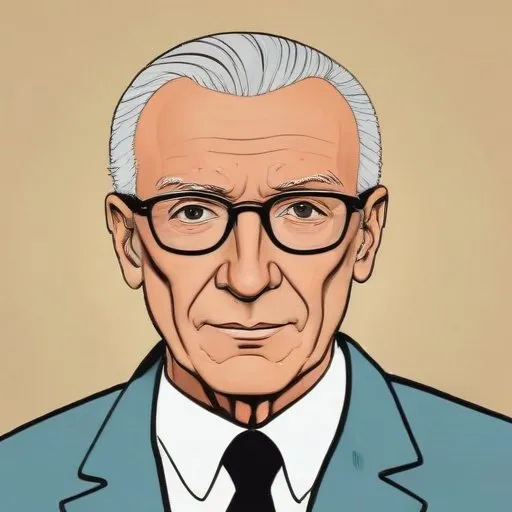
Pioneering researcher who discovered the existence of bioelectricity in animals, paving the way for modern neuroscience and electrophysiology.
Carlo Matteucci, an Italian physicist and neurophysiologist, is renowned for his groundbreaking research in bioelectricity, paving the way for a deeper understanding of the intricacies of life and electricity. His pioneering work in the 19th century laid the foundation for the discovery of the nerves' action potential, earning him the prestigious Copley medal from the Royal Society in 1844.
Born on June 20, 1811, in Forl, Italy, Carlo Matteucci was the son of physician Vincenzo Matteucci and Chiara Folfi. He pursued his passion for mathematics at the University of Bologna, graduating with a doctorate in 1829. Matteucci's education continued at the renowned École Polytechnique in Paris, France, between 1829 and 1831, where he was influenced by the works of François Arago.
Inspired by the work of Luigi Galvani on bioelectricity, Matteucci began his own series of experiments in 1830, which continued until his death in 1865. Using Leopoldo Nobili's sensitive galvanometer, he demonstrated that injured excitable biological tissues generate direct electrical currents. Matteucci's innovative approach led to the development of the "rheoscopic frog," a biological detector of electricity that employed a frog's leg nerve and muscle.
In addition to his scientific pursuits, Matteucci was an active participant in politics. He was chosen as an Italian senator in 1860, reflecting his dedication to public service and leadership.
Carlo Matteucci's remarkable journey, marked by his groundbreaking research and commitment to public service, continues to inspire scientists and scholars today. His pioneering work in bioelectricity has left an indelible mark on the scientific community, ensuring his legacy as one of the most influential figures in the history of neuroscience and physiology.
Born in 1745
Italian physicist who invented the first electrical battery, revolutionizing the field of electricity and paving the way for countless technological advancements.
Born in 1737
Pioneering researcher who discovered bioelectricity, sparking a new understanding of the human body and paving the way for modern medical advancements.
Born in 1818
A German physician and physiologist who pioneered the field of electrophysiology, discovering the electrical impulses that control muscle movement and founding the field of neurophysiology.
Born in 1762
Pioneering electrochemist who conducted groundbreaking experiments on galvanism, inspiring Mary Shelley's Frankenstein. Known for his bold demonstrations of reanimating dead bodies using electricity.
Born in 1734
A German physician and astrologer who developed a theory of "animal magnetism" and is considered the father of hypnosis, known for his controversial and influential ideas about the power of the mind.
Born in 1791
Pioneering scientist who discovered electromagnetic induction, formulated the laws of electrolysis, and invented the first electrical generator, revolutionizing our understanding of electricity and its applications.
Born in 1808
An Italian-American engineer credited with inventing the first practical telephone, predating Alexander Graham Bell's patent. He's known for his pioneering work in telecommunications.
Born in 1874
Developer of the first practical wireless telegraph, pioneering radio communication and earning a Nobel Prize in Physics. Known for revolutionizing long-distance communication.
