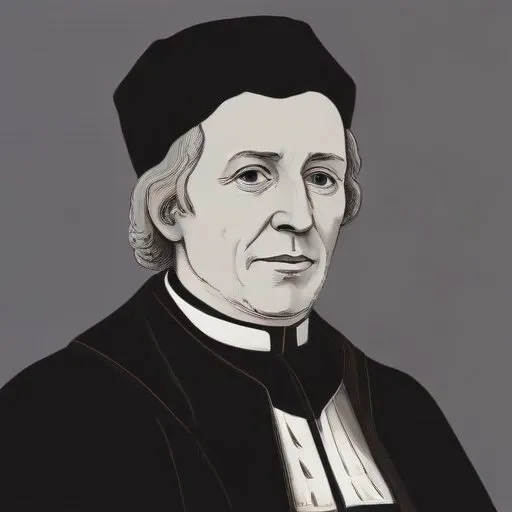
Caspar Barlaeus: The Renaissance Polymath
Theologian, Poet, Historian, and Philosopher
Caspar Barlaeus was a 17th-century Dutch polymath who left an indelible mark on various fields, including theology, poetry, history, and philosophy. With his profound knowledge and contributions, he is regarded as one of the most influential Renaissance humanists of his time.
Early Life and Education
Born on February 12, 1584, in Antwerp, Belgium, Caspar Kaspar van Baerle fled with his family to Zaltbommel due to the Spanish occupation. His father later became the head of the Latin school in Zaltbommel. Barlaeus pursued his studies in theology and philosophy at the University of Leiden, where he laid the foundation for his future accomplishments.
Academic Pursuits and Controversies
Barlaeus' academic journey was marked by controversy when he was forced to leave his position as a professor of philosophy at the University of Leiden in 1619 due to his Remonstrant sympathies. Undeterred, he pursued a degree in medicine from Caen, although he never practiced professionally. In 1631, he became a professor of philosophy and rhetoric at the Amsterdam Athenaeum, where he encouraged other notable scholars, including Martinus Hortensius.
A Patron of the Arts and Sciences
Barlaeus was fortunate to have a patron in Amsterdam burgomaster
Andries de Graeff, who supported his endeavors. This patronage enabled Barlaeus to focus on his scholarly pursuits, including his contributions to cartography and history.
Literary Achievements
Barlaeus was a prolific writer, publishing numerous volumes of Latin poetry. His literary achievements also include the eulogy accompanying the 1622 portrait of cartographer Willem Blaeu. Furthermore, he translated Antonio de Herrera's
Description of the West Indies in 1622 and provided the text for
Jodocus Hondius' atlas of Italy in 1627.
Mental Health and the Glass Delusion
Barlaeus struggled with mental health issues, including the Glass Delusion, a peculiar affliction where he believed he was made of glass. Although this aspect of his life is somewhat unsubstantiated, it is a testament to his complexity as a human being.
Legacy and Impact
Caspar Barlaeus' contributions to various fields have left a lasting impact on modern society. His works continue to inspire scholars, and his legacy serves as a testament to the power of human curiosity and intellectual pursuit. Despite facing numerous challenges, Barlaeus remained committed to his craft, leaving behind a rich body of work that continues to fascinate and educate scholars to this day.
- Key Works:
- Latin poetry volumes
- Eulogy for Willem Blaeu's portrait (1622)
- Translation of Antonio de Herrera's Description of the West Indies (1622)
- Text for Jodocus Hondius' atlas of Italy (1627)
- Influences:
- Remonstrant movement
- Renaissance humanism
In conclusion, Caspar Barlaeus' remarkable life and achievements serve as a testament to the power of human ingenuity and intellectual curiosity. His contributions to theology, poetry, history, and philosophy continue to inspire scholars, ensuring his legacy as one of the most notable Renaissance polymaths.
FAQ
What is Caspar Barlaeuss significance in Dutch history?
Caspar Barlaeus was a prominent Dutch historian, poet, and theologian who played a key role in shaping the countrys cultural and intellectual landscape during the 17th century.
What were Caspar Barlaeuss contributions to poetry?
Caspar Barlaeus was a prolific poet who wrote in both Dutch and Latin. He is best known for his poems on historical and philosophical themes, which showcased his mastery of language and form.
Did Caspar Barlaeus hold any academic positions?
Yes, Caspar Barlaeus held several academic positions throughout his career, including professor of philosophy at the University of Amsterdam and rector of the University of Leiden.
What are Caspar Barlaeuss most famous works?
Some of Caspar Barlaeuss most famous works include his poetry collections, such as Medea and Hadriana, as well as his historical writings, including Mercator sapiens.
How did Caspar Barlaeus influence Dutch literature?
Caspar Barlaeus had a significant impact on Dutch literature, helping to establish the Netherlands as a major cultural center in Europe. He also played a key role in promoting the study of classical languages and literature.