


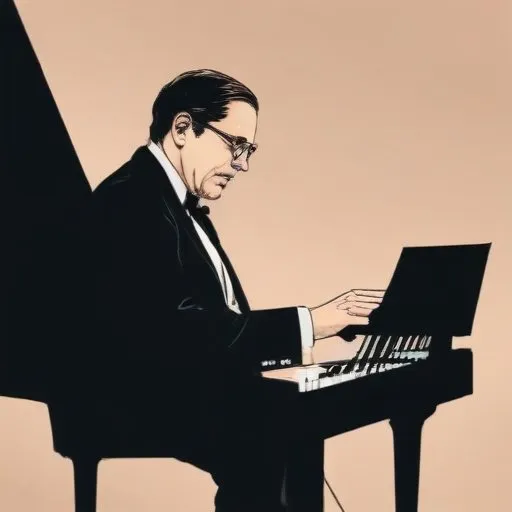
A pioneering figure in American modernism, blending French Impressionism with exoticism, creating a unique sound that resonated with the avant-garde.
Charles Griffes is often hailed as one of the most important American composers of the early 20th century, yet his life was cut tragically short by illness. Born on September 17, 1884, in Elmira, New York, Griffes was destined for greatness, and his unique blend of romanticism and modernism would go on to shape the course of American music.
Griffes began his musical journey at the tender age of 11, teaching himself to play the piano and organ. His natural talent soon earned him a spot at the Elmira Free Academy, where he received formal training in music theory and composition. It wasn't long before Griffes' music caught the attention of prominent critics and composers, including the likes of Frederick Delius and Gustav Mahler.
Griffes' fascination with Eastern music and philosophy would have a profound impact on his compositional style. After discovering the works of Indian philosopher and poet Rabindranath Tagore, Griffes became enamored with the exotic sounds and rhythms of the East. This newfound passion would influence some of his most iconic works, including his Piano Sonata in F-Sharp Minor and The Pleasure Dome of Kubla Khan.
Griffes' use of unconventional harmonies, melodies, and rhythms set him apart from his contemporaries. His music was often marked by a sense of experimentation and innovation, qualities that would later earn him recognition as a true pioneer of American music.
Tragically, Griffes' life was cut short when he succumbed to pleurisy and pneumonia in 1920, at the age of 35. Despite his untimely death, Griffes left behind a rich legacy of music that would continue to inspire generations of composers and musicians.
Griffes' contributions to American music are immeasurable. His innovative style paved the way for future generations of composers, including the likes of Howard Hanson and William Schuman. Today, Griffes' music remains a testament to his boundless creativity and genius.
"Music is the only thing that has ever given me a sense of being really alive."
Griffes' music is often seen as a bridge between the romanticism of the late 19th century and the modernism of the early 20th century. His innovative style and exotic influences paved the way for future generations of American composers, and his contributions to the world of music continue to be celebrated and recognized today.
Born in 1862
A renowned French pianist and composer who revolutionized classical music with his unique, dreamy, and unconventional style, creating iconic works like "Clair de Lune" and "Prelude to the Afternoon of a Faun".
Born in 1875
A renowned French musician who blended classical and modern styles, creating iconic works like "Bolero" that continue to mesmerize audiences with their beauty and complexity.
Born in 1866
A pioneering composer of minimalist and avant-garde music, known for his unconventional and humorous approach to classical music, creating a new kind of simplicity and clarity. His music often featured repetitive patterns and witty titles.
Born in 1862
A pioneering composer of the early 20th century, known for his impressionistic and expressive works that evoke a sense of nature and the human experience. His music is characterized by lush harmonies and orchestration.
Born in 1872
A renowned composer and educator, he's celebrated for his symphonies and folk-song inspired works that evoke a sense of English heritage and nostalgia. His music is a testament to his love for his homeland's cultural roots.
Born in 1898
A renowned pianist and composer who blended jazz and classical music to create iconic works like "Rhapsody in Blue" and "An American in Paris", leaving a lasting impact on American music.
Born in 1892
A renowned pianist and composer, he is best known for his iconic scores for films, television, and radio, including the famous "Grand Canyon Suite".
Born in 1896
A renowned composer, conductor, and educator who made significant contributions to American classical music, particularly through his Romantic-style symphonies and leadership of the Eastman School of Music.
