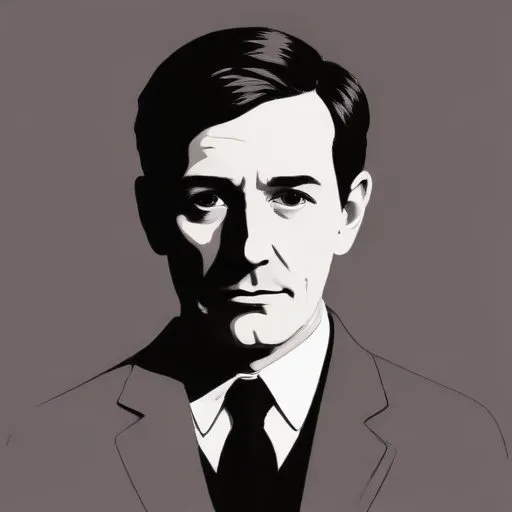
Charles Mackay: The Visionary Who Exposed the Madness of Crowds
A Poet, Journalist, and Author Ahead of His Time
Charles Mackay is best known for his seminal work, "Extraordinary Popular Delusions and the Madness of Crowds," a book that has become a cornerstone of financial literature and a testament to the power of mass hysteria. Published in 1841, this classic tome is still widely read and studied today, offering a fascinating glimpse into the psychology of crowds and the dangers of unchecked speculation.
Early Life and Education
Born on March 27, 1814, in Perth, Scotland, Mackay's early life was marked by tragedy when his mother, Amelia Cargill, died shortly after his birth. His father,
George Mackay, a bombardier in the Royal Artillery, later placed him at a school in Brussels, where he developed a passion for languages. Mackay's educational journey took him to the Caledonian Asylum in London and later to a school in Brussels, where he honed his skills in French and began writing poetry.
A Career in Journalism and Literature
Mackay's writing career began in earnest in the 1830s, when he started contributing to various newspapers and journals. He worked as a private secretary to William Cockerill, an ironmaster, near Liège, and wrote for the Courrier Belge. His English poems were published in The Telegraph, a local newspaper. In 1834, he began his career in journalism in London, contributing to The Sun, and later became assistant subeditor of The Morning Chronicle from 1835 to 1844.
The Editor and Anthologist
In the autumn of 1844, Mackay returned to Scotland and became the editor of the Glasgow Argus, a position he held until 1847. During this period, he also compiled several anthologies, including "The Thames and Its Tributaries" and "The Pocket Book of English Poetry." His editorial work and literary pursuits earned him a reputation as a learned and prolific writer.
A Legacy of Wisdom and Insight
"Extraordinary Popular Delusions and the Madness of Crowds" remains Mackay's most enduring legacy. This seminal work is a testament to his prescience and understanding of human psychology. By documenting the speculative manias of the past, Mackay provided a warning to future generations about the dangers of unchecked speculation and the importance of rational thinking.
- Notable works: "Extraordinary Popular Delusions and the Madness of Crowds," "The Thames and Its Tributaries," and "The Pocket Book of English Poetry."
- Awards and honors: None recorded.
- Personal life: Mackay was twice married, first to Rosa Henrietta Vale and then to Mary Elizabeth Mills. He had four children, including the novelist Marie Corelli, who was born out of wedlock.
Influence on Modern Society
Mackay's work continues to influence modern society, with "Extraordinary Popular Delusions and the Madness of Crowds" remaining a relevant and thought-provoking text. His insights into the psychology of crowds and the dangers of speculation have been applied in various fields, including economics, finance, and sociology.
In conclusion, Charles Mackay's remarkable life and work serve as a testament to the power of human curiosity and the importance of rational thinking. As we navigate the complexities of modern life, his warnings about the dangers of mass hysteria and unchecked speculation remain as relevant today as they were when his book was first published.
Charles Mackay may have lived in the 19th century, but his ideas and insights continue to resonate with us today, reminding us of the importance of critical thinking and the need to question the madness of crowds.
FAQ
What was Charles Mackays most famous literary work?
Charles Mackays most famous literary work is his poem Extraordinary Popular Delusions and the Madness of Crowds, which explores the psychology of financial bubbles and mass hysteria.
What was Charles Mackays profession aside from writing?
Aside from writing, Charles Mackay was a journalist and editor. He worked as the editor of the Illustrated London News and was a correspondent for The Times during the American Civil War.
What themes did Charles Mackay explore in his writing?
Mackays writing explored themes such as human psychology, economics, and social commentary. His works often examined the intersection of individual behavior and collective phenomena.
How did Charles Mackays writing influence economic thought?
Mackays work on financial bubbles and market psychology has had a lasting impact on economic thought, influencing thinkers such as Charles Kindleberger and Hyman Minsky.
What is Charles Mackays legacy in literary and economic circles?
Charles Mackays legacy lies in his contributions to the development of economic thought and his literary exploration of human psychology. His work continues to be celebrated for its insight and prescience.