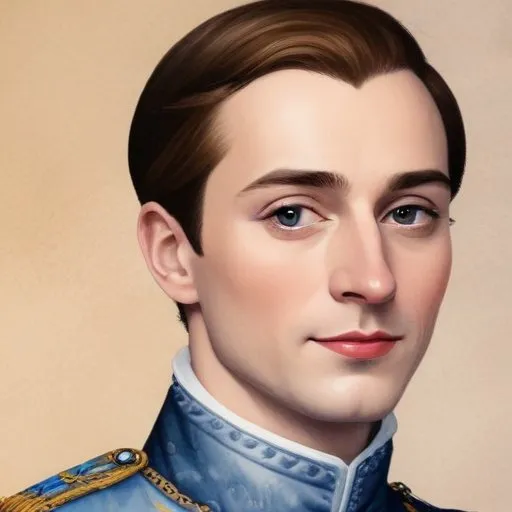
Charles de Valois, Duke of Angoulême: The Illegitimate Son Who Made His Mark
A Life of Intrigue and Illustrious Titles
Charles de Valois, Duke of Angoulême, was a man of many titles and accomplishments. He is perhaps best known as the illegitimate son of
Charles IX of France and Marie Touchet, a union that would set the stage for a life of intrigue and adventure. As a memoirist, count of Auvergne, and duke of Angoulême, Charles de Valois left an indelible mark on French history.
Early Life and Education
Born on April 28, 1573, at the Château de Fayet in Dauphin, Charles was commended to the care of Henry III by his father, who died just a year later. Henry III faithfully fulfilled the charge, ensuring Charles received a careful education. This early investment in his education would serve him well, as he was later inducted into the Knights of Malta, a prestigious military order.
Rise to Prominence
In 1588, Charles attained one of the highest dignities of the Knights of Malta, becoming the Grand Prior of France. This distinction was followed by his inheritance of large estates from his paternal grandmother, Catherine de Medici, which earned him the title of count of Auvergne.
Military Career and Conspiracy
Under Henry IV, Charles was made colonel of horse and commanded a squadron at the Battle of Ivry. However, his military career was not without controversy. In 1601, he became embroiled in a conspiracy involving the Dukes of Savoy, Biron, and Monsieur de Turenne. Although the conspiracy was discovered, Charles was released from imprisonment after a few months, thanks in part to the influence of his half-sister and aunt, the Duchess of Angoulême, and his father-in-law.
Further Intrigue and Imprisonment
Charles's involvement in further intrigues with the court of
Philip III of Spain led to his arrest in 1604, along with his half-sister, Henriette de Balzac d'Entragues, and her father, d'Entragues. While Charles was condemned to death, his sentence was later commuted to perpetual imprisonment in the Bastille, where he remained for 11 years, from 1605 to 1616.
Legacy and Memoirs
Despite the turmoil that marked his life, Charles de Valois, Duke of Angoulême, left a lasting legacy. His memoirs, penned during his imprisonment, provide valuable insights into the intrigue and politics of 17th-century France. Charles's life is a testament to the complexities of the human experience, marked by both grand achievements and tumultuous struggles.
- Notable Titles: Count of Auvergne, Duke of Angoulême, Grand Prior of France
- Involvements: Knights of Malta, conspiracy with the Dukes of Savoy, Biron, and Monsieur de Turenne, intrigue with the court of Philip III of Spain
- Imprisonment: 1605-1616, Bastille
Through his tumultuous life, Charles de Valois, Duke of Angoulême, demonstrated a perseverance that allowed him to rise above adversity and leave a lasting impact on the annals of French history.
FAQ
Who was Charles de Valois, Duke of Angoulême?
Charles de Valois, Duke of Angoulême was the son of Charles IX of France and a prominent figure in French politics during the late 16th century.
What was Charles de Valoiss role in the French Wars of Religion?
Charles de Valois played a significant role in the French Wars of Religion, initially siding with the Catholic League and later switching to the Huguenot cause. He was a skilled military leader and politician.
What was Charles de Valoiss relationship like with Henry IV of France?
Charles de Valois had a complex and often contentious relationship with Henry IV of France, who was his cousin and rival for power. The two leaders often clashed, but also formed alliances and cooperated on occasion.
What were Charles de Valoiss territorial ambitions?
Charles de Valois had significant territorial ambitions, seeking to expand his influence and control over various regions of France. He was particularly interested in acquiring the kingdom of Navarre, which was eventually absorbed into France.
What was Charles de Valoiss legacy in French history?
Charles de Valoiss legacy in French history is complex and multifaceted. He played a significant role in shaping the countrys politics and religion, but also faced criticism for his rivalries and conflicts with other leaders.