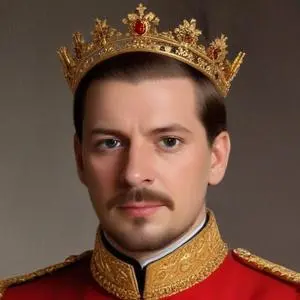
Philip III of Spain: The King of the Golden Age
A Reign Marked by Wars and Diplomacy
Philip III of Spain, also known as Philip the Pious, is renowned for his reign as the King of Spain, Portugal, Naples, Sicily, and Sardinia, as well as the Duke of Milan from 1598 until his death in 1621. He is famously recognized for achieving a temporary peace with the Dutch from 1609 to 1621 and bringing Spain into the Thirty Years War from 1618 to 1648 through an initially successful campaign.
Early Life and Education
Born on April 14, 1578, in Madrid, Philip III was the son of King
Philip II of Spain and his fourth wife, Anna, who was also his niece. His father, determined to avoid the mistakes of his predecessor, took great care in Philip's education, appointing Juan de Ziga as his tutor. This carefully crafted education aimed to prepare Philip for his future role as king.
Rise to Power and Marriage
Philip III ascended to the throne in 1598 following the death of his father. He married his cousin, Margaret of Austria, sister of
Ferdinand II, Holy Roman Emperor, in 1599. This strategic union allied Spain with the powerful Habsburg dynasty and secured Philip's position as a prominent European leader.
Political Reputation and Controversies
Philip III's reign was marred by controversy, with many historians characterizing him as an ineffective and weak ruler. His reliance on his corrupt chief minister, Francisco Gmez de Sandoval, 1st Duke of Lerma, drew widespread criticism. This period was marked by economic difficulties, which ultimately contributed to the decline of the Spanish Empire.
Legacy and Impact on Spanish History
Despite his negative reputation, Philip III's reign remains a critical period in Spanish history. His temporary peace with the Dutch and initial successes in the Thirty Years War demonstrate his ability to navigate complex geopolitical situations. Furthermore, his reign marked the height of the Spanish Empire, with Spain exerting significant influence across Europe and the Americas.
Personal Milestones and Key Life Events
- Born on April 14, 1578, in Madrid
- Ascended to the throne in 1598 following the death of his father
- Married Margaret of Austria in 1599
- Died on March 31, 1621, at the age of 42
Historical Context and Legacy
Philip III's reign must be considered within the context of the Golden Age of Spanish history, a period marked by significant cultural, artistic, and literary achievements. His legacy, although tainted by controversy, remains an integral part of Spain's rich history.
FAQ
What is Philip III of Spains reign like?
Philip III of Spains reign was marked by several key events, including the Spanish colonization of the Americas and the Thirty Years War.
What is Philip III of Spains role in European politics?
Philip III of Spain played a crucial role in European politics, maintaining alliances with other Catholic monarchs and engaging in conflicts with Protestant states.
What are Philip III of Spains notable achievements?
Philip III of Spain achieved several notable successes, including the establishment of the Council of the Indies and the colonization of the Philippines.
What is Philip III of Spains relationship with the Catholic Church?
Philip III of Spain was a devout Catholic and maintained close ties with the Catholic Church, supporting the Inquisition and promoting Catholic interests.
What is Philip III of Spains legacy in Spanish history?
Philip III of Spains legacy in Spanish history is still felt today, with his reign marking a significant period of growth and expansion for the Spanish Empire.