


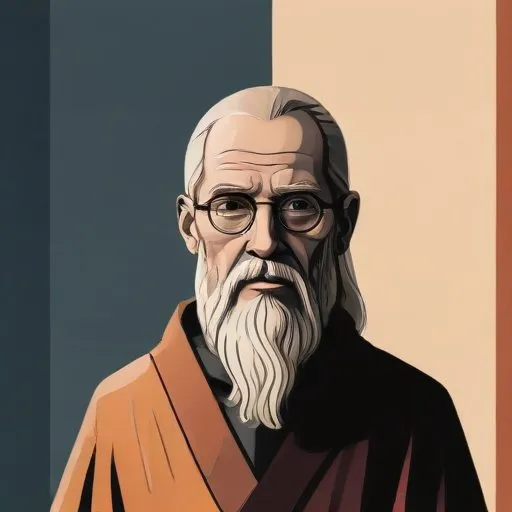
A 17th-century Dutch theologian who challenged traditional Calvinist views, sparking controversy and debate among European scholars. He's most known for his unorthodox ideas on God's nature and human free will.
Conrad Vorstius, a German-Dutch theologian, is best known for his heterodox views that sparked a theological firestorm in the early 17th century. As the successor to Jacobus Arminius in the theology chair at Leiden University, Vorstius's appointment became an international affair, entangling the politics and religion of the United Provinces during the Twelve Years Truce.
Vorstius was born on July 19, 1569, in Cologne, Germany, to Roman Catholic parents who later converted to Protestantism. He received his early education at Bedburdyck, Germany, and later studied at Düsseldorf and Aix-la-Chapelle. However, his inability to take the required oath of obedience to the decrees of the Council of Trent prevented him from completing his degrees at the College of St. Lawrence in Cologne.
Instead, Vorstius turned to practical affairs, working as a purchaser for two years, where he developed skills in business, reckoning, and languages like French and Italian. In 1589, he resumed his studies at the Herborn Academy, devoting himself to theology under Johannes Piscator.
Vorstius's theological views were deemed sympathetic to Socinianism, a non-trinitarian Christian movement. His publications, which contradicted the mainstream Calvinist theology of the time, sparked heated debates and controversies. The controversy surrounding his appointment and views eventually led to his declaration as a heretic at the Synod of Dort in 1619.
Vorstius's controversial appointment and views had far-reaching consequences, influencing the political and religious landscape of the United Provinces during the Twelve Years Truce. His declaration as a heretic at the Synod of Dort in 1619 solidified the orthodox Calvinist stance, shaping the theological direction of the Protestant Reformation.
Vorstius's life and works serve as a testament to the complexities and controversies of the Protestant Reformation. His heterodox views, though deemed heretical by his contemporaries, continue to fascinate scholars and theologians to this day.
Born in 1509
A French pastor and theologian who played a key role in the Protestant Reformation, shaping Christian theology and influencing Western civilization. He's famous for his teachings on predestination and his role in establishing Calvinism.
Born in 1483
A German monk and priest who sparked the Protestant Reformation, challenging Catholic Church authority and shaping Western Christianity. He's famous for nailing 95 theses to a church door, sparking a religious revolution.
Born in 1484
Leader of the Swiss Reformation, advocating for church reform and inspiring other Protestant movements.
Born in 1497
A 16th-century Renaissance scholar who made significant contributions to the development of the Protestant Reformation and education, known for his theological writings and astronomical observations.
Born in 1519
A 16th-century French theologian and scholar who played a key role in shaping Protestantism, particularly Calvinism, through his writings and teachings. He's also known for his Greek New Testament translation.
Born in 1504
A prominent figure in the Swiss Reformation, he played a key role in shaping Protestant theology and wrote influential works on covenant theology. His writings had a lasting impact on Reformed Christianity.
Born in 1924
Prolific author of macabre and suspenseful novels, often blending elements of horror, mystery, and dark humor, with works adapted into successful films and TV shows.
