


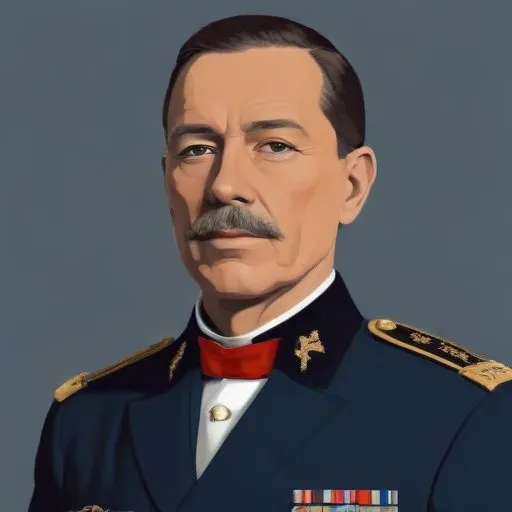
A Confederate general during the American Civil War, he later became a mathematics professor and president of the North Carolina State University, making significant contributions to education.
D. H. Hill, a prominent Confederate general during the American Civil War, is best known for his bravery and strategic prowess on the battlefield, as well as his contributions to the field of education. Born on July 1, 1821, in York District, South Carolina, Hill's life was marked by a deep dedication to his country and a passion for learning.
Hill's early life was shaped by his family's military traditions. His father, Solomon Hill, was a veteran of the War of 1812, and his brother, Joshua Hill, served in the Mexican-American War. Hill's educational pursuits took him to the United States Military Academy at West Point, where he graduated 28th out of 56 cadets in 1842.
Hill's military career spanned over two decades, during which he fought in the Mexican-American War and the American Civil War. He rose through the ranks, becoming a brigadier general in the Confederate States Army in 1861. Hill's most notable military accomplishments include his role in the Battle of Seven Pines, the Battle of Fredericksburg, and the Battle of Chancellorsville.
In addition to his military service, Hill was a dedicated educator. He served as a professor of mathematics at Washington College (now Washington and Lee University) and later became the superintendent of the North Carolina Military Institute. Hill's academic contributions extended beyond the classroom, as he authored several books on mathematics and was a strong advocate for education reform.
Hill's personal life was marked by tragedy, including the loss of his first wife, Isabella, in 1857. He later married Daniel Harvey Hill, with whom he had nine children. Hill's strong sense of duty and honor guided his personal and professional life, earning him the respect of his peers and the admiration of his students.
Hill's life and legacy are inextricably linked to the tumultuous era of the American Civil War. As a Confederate general, he played a significant role in shaping the course of the war. However, his commitment to education and his contributions to the field of mathematics have endured long after the conflict ended. Today, Hill is remembered as a multifaceted figure, whose bravery, strategic thinking, and dedication to education continue to inspire.
"I have always believed that the true strength of a nation lies not in its armies, but in its schools." - D. H. Hill
This quote, attributed to Hill, reflects his deep commitment to education and his recognition of its importance in shaping the future of a nation.
Hill's legacy extends beyond the military and academic spheres. His commitment to education has inspired generations of educators and students. His bravery and strategic thinking have served as a model for military leaders and historians. Today, Hill's multifaceted life serves as a testament to the power of dedication, honor, and duty.
Born in 1807
Led the Confederate States Army during the American Civil War, surrendering to Union forces at Appomattox, marking the war's effective end.
Born in 1824
A Confederate general during the American Civil War, he's renowned for his unconventional tactics and bravery, earning him a legendary status among military historians.
Born in 1821
A Confederate general during the American Civil War, later serving as a diplomat and ambassador to Turkey, known for his military strategies and post-war reconciliation efforts.
Born in 1825
A Confederate general during the American Civil War, known for his bravery and tactical skills, leading troops in several key battles, including the Battle of Chancellorsville.
Born in 1831
A Confederate general during the American Civil War, known for his bravery and aggressive tactics, but also criticized for his reckless decisions that led to devastating defeats.
Born in 1817
A Confederate general during the American Civil War, he's infamous for his tactical blunders and defeats, ultimately losing the war for the South.
Born in 1818
A Confederate general who played a pivotal role in the American Civil War, particularly during the Battle of Fort Sumter, and is often credited with starting the war.
