


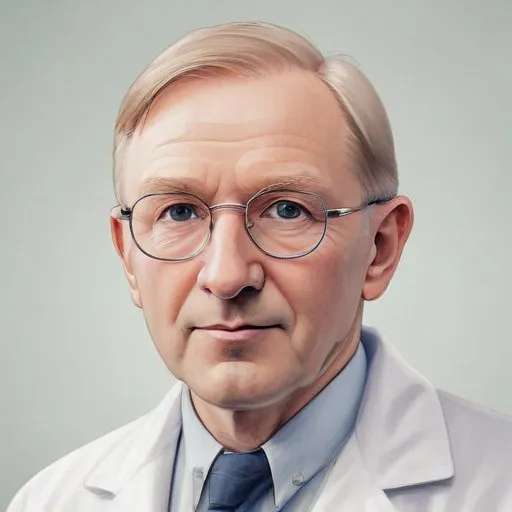
A pioneering microbiologist and geneticist who discovered the actinomycin antibiotics and made significant contributions to the field of genetics, particularly in the study of antibiotic production.
Sir David Alan Hopwood is renowned for his groundbreaking contributions to the field of microbiology, particularly in the genetics of Streptomyces coelicolor, a species of bacteria that produces antibiotics. This British microbiologist and geneticist has dedicated over four decades to studying the intricacies of these microorganisms, earning him numerous accolades and recognition within the scientific community.
Hopwood's illustrious career has seen him hold various prestigious positions, including Lecturer in Genetics at the University of Glasgow, John Innes Professor of Genetics at the University of East Anglia, and Emeritus Fellow in the Department of Molecular Microbiology at the John Innes Centre. His most notable work includes the sequencing of the S. coelicolor A3(2) genome in 2002, which has significantly advanced our understanding of these microorganisms.
Hopwood's work has not only expanded our knowledge of microbiology but has also shed light on the importance of fundamental scientific research. He believes that understanding the intricacies of microorganisms can lead to breakthroughs in fields such as medicine, agriculture, and biotechnology. His dedication to basic scientific inquiry has inspired generations of researchers to pursue careers in microbiology.
Born on August 19, 1933, Hopwood pursued his education at Purbrook Park County High School, Lymm Grammar School, and St John's College, Cambridge. He earned his PhD from the University of Glasgow in 1961. Throughout his life, he has been driven by an insatiable curiosity and passion for understanding the natural world.
Hopwood's research has far-reaching implications for human health, as the discovery of new antibiotics and the development of novel therapeutic strategies rely on a deeper understanding of microorganisms. His work has paved the way for the creation of novel antibacterial agents, reinforcing the importance of microbiological research in combating infectious diseases.
Sir David Hopwood's contributions to microbiology have left an indelible mark on the scientific community. His dedication to the field has inspired numerous researchers, and his discoveries continue to shape our understanding of microorganisms. As a testament to his legacy, the S. coelicolor A3(2) genome sequence remains a cornerstone of modern microbiology.
Hopwood's remarkable journey serves as a beacon of inspiration for future generations of scientists, demonstrating the power of curiosity-driven research and its potential to transform our understanding of the natural world.
Born in 1881
Discovered penicillin, a revolutionary antibiotic, and pioneered its use in medicine. This breakthrough has saved countless lives and transformed the field of healthcare.
Born in 1898
Developed penicillin as a medicine, revolutionizing the treatment of bacterial infections. This discovery has saved countless lives and transformed modern medicine.
Born in 1888
A pioneering biochemist and microbiologist who discovered numerous antibiotics, including streptomycin, and developed a method for producing them on a large scale. Their work revolutionized the treatment of bacterial infections.
Born in 1901
A pioneer in microbiology and environmentalism, he explored the interconnectedness of humans and their ecosystem, advocating for a holistic approach to health and conservation.
Born in 1749
Developed the smallpox vaccine, revolutionizing disease prevention and saving countless lives.
Born in 1822
Developed vaccines for rabies and anthrax, and pioneered the germ theory of disease, revolutionizing our understanding of microbiology and disease prevention.
Born in 1843
A pioneering microbiologist and physician who discovered the bacteria that cause tuberculosis, cholera, and anthrax, revolutionizing the field of microbiology and saving countless lives.
