


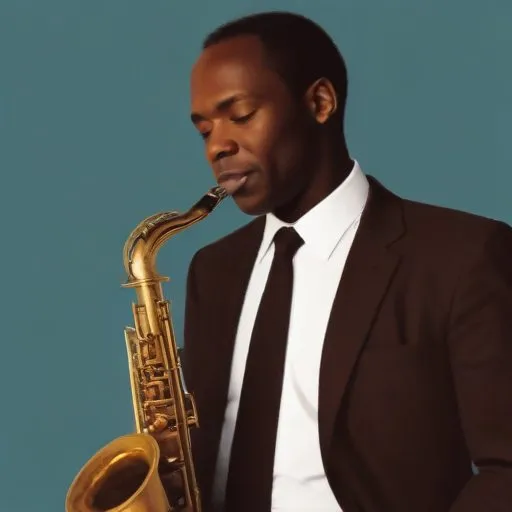
A renowned saxophonist and educator, he was a key figure in the development of bebop and modern jazz, influencing generations of musicians. His virtuosic playing style and pedagogical legacy continue to inspire jazz enthusiasts today.
Don Byas, the American jazz tenor saxophonist, was a virtuoso who effortlessly traversed the realms of swing and bebop, leaving an indelible mark on the jazz landscape. With a career spanning over three decades, Byas collaborated with some of the genre's most iconic figures, including Count Basie, Duke Ellington, and Dizzy Gillespie.
Byas was born on October 21, 1913, in Muskogee, Oklahoma, to a family steeped in music. His parents, both musicians, encouraged his love for music from a young age. He began his musical education in the European classical tradition, learning to play the violin, clarinet, and alto saxophone.
Byas's early influences included Benny Carter, whom he idolized, and whose multi-instrumentalist approach inspired Byas's own experimentation with different instruments. He started performing in local orchestras at the age of 17, playing with notable musicians such as Bennie Moten, Terrence Holder, and Walter Page.
In the early 1930s, Byas switched to the tenor saxophone, an instrument that would become synonymous with his name. This change marked a significant turning point in his career, as he began to explore the rich, full-bodied sound of the tenor sax.
In 1937, Byas relocated to New York City, where he became an integral part of the vibrant jazz scene. He worked with Eddie Mallory's band, accompanying Ethel Waters on tour and at the legendary Cotton Club. Byas also recorded his first solo record, "Is This to Be My Souvenir," with Timme Rosenkrantz and his Barrelhouse Barons for Victor Records in 1939.
Throughout the 1940s and 1950s, Byas collaborated with some of jazz's most renowned figures, including Count Basie, Duke Ellington, Art Blakey, and Dizzy Gillespie. He also led his own band, featuring musicians such as trumpeter Kenny Dorham and pianist Ernie Henry.
In 1946, Byas moved to Europe, where he spent the remainder of his life, performing and recording with local musicians. His decision to leave the United States was influenced by the racism he faced, as well as the allure of European audiences who appreciated his unique style.
Don Byas passed away on August 24, 1972, but his legacy continues to inspire generations of jazz musicians. His unique blend of swing and bebop, combined with his virtuosic tenor saxophone playing, has cemented his place as one of the most influential saxophonists in jazz history.
Byas once said, "I'm not a bebopper, I'm not a swing musician, I'm a musician who plays jazz." This quote aptly captures his approach to music, which defied categorization and embodied the spirit of jazz.
Through his remarkable career, Don Byas left an indelible mark on the jazz landscape, influencing countless musicians and shaping the course of the genre. His legacy continues to inspire and delight audiences to this day.
Born in 1920
A pioneering jazz saxophonist and composer, known for his lightning-fast solos and innovative bebop style that revolutionized jazz music. 82
Born in 1917
A virtuosic trumpet player and composer who revolutionized jazz with his lightning-fast solos and iconic puffy cheeks, creating a new language for the instrument. He's synonymous with bebop and modern jazz.
Born in 1917
A jazz legend who revolutionized piano playing and composition with unorthodox techniques and harmonies, creating a unique, improvisational style that continues to inspire generations of musicians.
Born in 1926
A legendary jazz saxophonist and composer who revolutionized the genre with his innovative, spiritually-driven improvisations and iconic albums like "A Love Supreme".
Born in 1926
A legendary jazz musician who revolutionized the genre with his improvisational style and iconic albums like "Kind of Blue". He's synonymous with cool, jazzy sophistication.
96 Years Old
A legendary jazz saxophonist and composer, renowned for his improvisational genius and iconic recordings that redefined the genre. His playing style is characterized by intense emotional expression and harmonic innovation.
Born in 1919
A legendary jazz drummer and leader of the Jazz Messengers, known for nurturing young talent and shaping the sound of modern jazz through his iconic band.
Born in 1922
A virtuosic bassist and composer who blended jazz with gospel, blues, and classical music, creating complex, eclectic works that showcased his genre-bending genius. His innovative compositions and bold leadership style continue to inspire musicians across genres.
