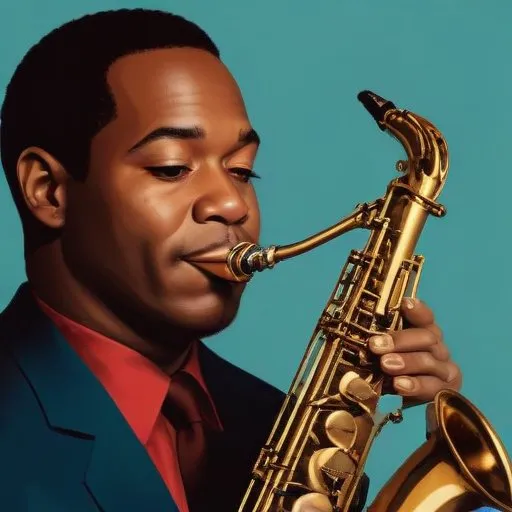
Eddie Lockjaw Davis: The Tenor Saxophone Maestro
A Legendary Career in Jazz
Eddie Lockjaw Davis, known for his scintillating tenor saxophone playing and distinctive "lockjaw" style, left an indelible mark on the jazz world. This American jazz legend, born on March 2, 1922, was a master of multiple genres, encompassing swing, bop, hard bop, Latin jazz, and soul jazz.
Early Beginnings and Influences
Davis's journey began with his early days in the jazz scene, playing with renowned musicians like
Cootie Williams, Lucky Millinder, and Andy Kirk. His formative years were deeply influenced by the sounds of
Louis Armstrong and
Count Basie, who would later become his collaborators.
The "Lockjaw" Moniker
The origin of Davis's nickname "Lockjaw" remains shrouded in mystery. Some attribute it to his biting hard on the saxophone mouthpiece, while others believe it came from the title of a tune. Regardless of its source, the moniker "Lockjaw" became synonymous with Davis's unique playing style.
Leadership and Collaborations
Davis led his own bands and made numerous recordings as a leader, cementing his status as a respected bandleader. His 1946 band, Eddie Davis and His Beboppers, featured prominent musicians like
Fats Navarro, Al Haig, and Gene Ramey. Notable collaborations include his work with
Sonny Stitt,
Johnny Griffin, and Shirley Scott, with whom he pioneered the tenor sax-Hammond organ combo.
Discography and Career Highlights
Some of Davis's most notable recordings include:
- Goodies from Eddie Davis (1954)
- The Battle of Birdland (1955), a live album with Sonny Stitt
- Modern Jazz Expressions (1956)
- Jazz With a Horn (1956), also released as This and That (1959)
Influence on Modern Jazz
Davis's innovative approach to the tenor saxophone and his genre-bending collaborations have had a lasting impact on modern jazz. He paved the way for future generations of saxophonists, influencing the development of jazz and its various sub-genres.
Legacy and Rememberance
Eddie Lockjaw Davis passed away on November 3, 1986, at the age of 64, leaving behind a rich legacy in the jazz world. His contributions to the genre continue to inspire musicians and jazz enthusiasts alike, solidifying his place as one of the most revered tenor saxophonists in jazz history.
FAQ
What was Eddie Lockjaw Daviss role in the development of jazz?
Eddie Lockjaw Davis was a highly influential tenor saxophonist who played a key role in the development of jazz, particularly in the 1940s and 1950s. He was known for his robust and energetic playing style, which helped to define the sound of early R&B and hard bop.
How did Eddie Lockjaw Daviss collaborations with other musicians impact his career?
Eddie Lockjaw Daviss collaborations with other musicians, including Count Basie, Coleman Hawkins, and Johnny Griffin, had a significant impact on his career, helping to establish him as a leading figure in the jazz world. These collaborations also led to some of Daviss most famous recordings, including his work with the Count Basie Orchestra.
What was Eddie Lockjaw Daviss approach to improvisation?
Eddie Lockjaw Daviss approach to improvisation was characterized by his spontaneity and creativity, with his solos often featuring rapid-fire phrases and blues-inflected melodic lines. Daviss improvisational style was highly influential, and his use of rhythmic and harmonic motifs helped to shape the sound of post-war jazz.
How did Eddie Lockjaw Daviss career evolve over time?
Eddie Lockjaw Daviss career evolved significantly over time, with his early work in the 1940s and 1950s establishing him as a leading figure in the jazz world. In the 1960s and 1970s, Daviss music incorporated more funk and soul influences, and he continued to record and perform until his death in 1986.
What legacy did Eddie Lockjaw Davis leave in the world of jazz?
Eddie Lockjaw Davis left a legacy as one of the greatest tenor saxophonists in jazz history, with his playing style and improvisational approach influencing generations of musicians. His contributions to the development of R&B and hard bop, as well as his work with some of jazzs biggest names, have cemented his place as a true jazz legend.