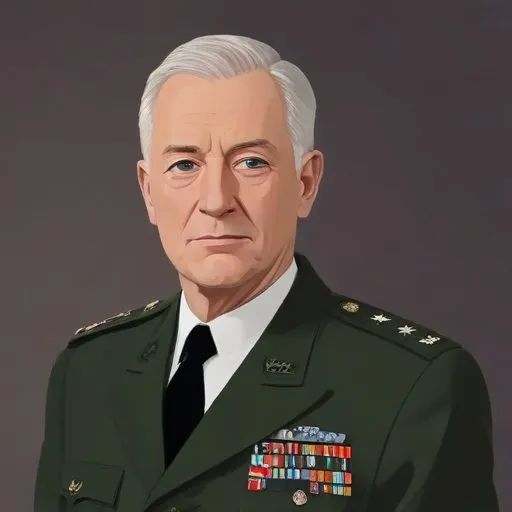
Edward Lansdale: The Pioneer of Clandestine Operations and Psychological Warfare
A Silent Warrior in the Shadows
Edward Lansdale was a mastermind behind the scenes, known for his innovative and unconventional approach to warfare. As a pioneer in clandestine operations and psychological warfare, he left an indelible mark on the world of espionage and military strategy.
Early Life and Education
Born on February 6, 1908, in Detroit, Michigan, Lansdale was the second of four sons to Henry and Sarah Lansdale. He grew up in Los Angeles, California, and attended school in Michigan, New York, and California. Lansdale's educational journey took him to the University of California, Los Angeles (UCLA), where he earned his way through writing for newspapers and magazines. Despite struggling with foreign languages, Lansdale's entrepreneurial spirit and writing skills helped him navigate his academic pursuits.
A Career in the Shadows
Lansdale's true calling was in the world of espionage and intelligence. During World War II, he served with the Office of Strategic Services (OSS), where he was promoted to major. He extended his tour to remain in the Philippines until 1948, helping the Philippine Army rebuild its intelligence services and resolve the cases of large numbers of prisoners of war.
The Hukbalahap Rebellion and the Birth of Modern Counterinsurgency
In the early 1950s, Lansdale played a significant role in suppressing the Hukbalahap Rebellion in the Philippines. This experience taught him the importance of understanding the enemy's psychology and the power of propaganda in winning guerrilla wars. Lansdale's approach to counterinsurgency, which focused on winning the hearts and minds of the local population, won the approval of the presidential administrations of both Kennedy and Johnson.
The Saigon Military Mission and the CIA
In 1954, Lansdale moved to Saigon and started the Saigon Military Mission, a covert intelligence operation created to sow dissension in North Vietnam. This operation marked the beginning of Lansdale's affiliation with the Central Intelligence Agency (CIA), where he continued to work on various projects until his retirement in 1963.
Philosophical Contributions and Beliefs
Lansdale believed that the key to winning guerrilla wars lay in understanding the enemy's psychology and motivations. He advocated for a more nuanced approach to counterinsurgency, one that prioritized cultural sensitivity and intelligence gathering over brute force. Lansdale's approach to warfare was rooted in his conviction that the key to victory lay in the hearts and minds of the people, rather than in military might alone.
Personal Milestones and Key Life Events
- 1908: Born in Detroit, Michigan
- 1948: Helped the Philippine Army rebuild its intelligence services
- 1950s: Suppressed the Hukbalahap Rebellion in the Philippines
- 1954: Started the Saigon Military Mission in Vietnam
- 1963: Retired from the CIA
- 1987: Passed away on February 23
Influence on Modern Society
Lansdale's legacy extends far beyond his own lifetime. His innovative approach to counterinsurgency and psychological warfare has influenced military strategy and intelligence gathering for decades. His work in the Philippines and Vietnam paved the way for future generations of military strategists and intelligence operatives.
Controversies and Public Perception
Lansdale's work was not without controversy. Critics accused him of employing questionable tactics, including propaganda and manipulation, to achieve his goals. Despite these criticisms, Lansdale's contributions to the field of counterinsurgency and intelligence gathering remain undeniable.
Quotes and Memorable Sayings
"The only way to win a guerrilla war is to win the people's war."
Legacy and Historical Context
Edward Lansdale's life and work serve as a testament to the power of unconventional thinking and innovation in the face of uncertainty. His legacy continues to shape the world of military strategy and intelligence gathering, serving as a reminder of the importance of understanding the human psyche in the pursuit of victory.
FAQ
What was Edward Lansdales early life and education like?
Born in 1908, Edward Lansdale studied journalism and philosophy at the University of California, eventually becoming a prominent figure in the US military and CIA.
What was Edward Lansdales role in the US military and CIA?
Lansdale served in the US Army Air Forces during World War II and later worked as a CIA operative, playing a key role in several covert operations around the world.
What was Edward Lansdales approach to counterinsurgency?
Lansdale was a pioneer in the field of counterinsurgency, developing a range of strategies and tactics aimed at defeating communist insurgencies in Asia and Latin America.
What was Edward Lansdales relationship with the Philippines like?
Lansdale had a deep understanding of and affection for the Philippines, working closely with Philippine leaders to implement reforms and counter communist insurgencies.
How is Edward Lansdale remembered in the history of US foreign policy?
Edward Lansdale is remembered as a visionary and innovator in the field of counterinsurgency, leaving behind a legacy of ideas and approaches that continue to influence US foreign policy today.