


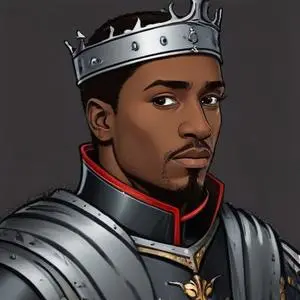
The eldest son of King Edward III, he was a renowned military leader and heir to the English throne, famous for his victories in the Hundred Years' War, particularly the Battle of Poitiers. He was also known for his chivalry and founding the Order of the Garter.
Edward, the Black Prince, is renowned as one of the most celebrated and revered figures of medieval England, famed for his bravery, martial skills, and unwavering dedication to chivalry. As the eldest son of King Edward III, he played a pivotal role in shaping the course of English history, leaving an indelible mark on the realm through his military conquests, cultural achievements, and philanthropic endeavors.
Born on June 15, 1330, Edward was groomed for greatness from an early age, receiving a comprehensive education in the arts of war, diplomacy, and governance. His tutors, including the renowned scholar and cleric, Richard de Bury, instilled in him a deep appreciation for classical literature, philosophy, and the chivalric code.
Edward's military career was marked by a string of impressive victories, which earned him the respect and admiration of his contemporaries. The Battle of Crécy in 1346, where he fought alongside his father, showcased his mettle as a skilled and fearless warrior. The subsequent Battle of Poitiers in 1356, where he led the English army to a resounding triumph, cementing his reputation as a master strategist and leader.
Edward's unwavering commitment to the code of chivalry, which emphasized honor, loyalty, and courtesy, inspired a generation of knights and nobles. His patronage of the arts and literature helped to foster a cultural renaissance in England, as witnessed in the works of Geoffrey Chaucer and other prominent writers of the time.
Edward's marriage to Joan, the Fair Maid of Kent, was a union of love and convenience, securing his claim to the throne and producing two sons, Edward and Richard. However, his personal relationships were not without controversy, as rumors of extramarital affairs and illegitimate children swirled around him.
Edward, the Black Prince, left an enduring legacy in the realms of politics, culture, and literature. His military campaigns expanded England's territories, while his cultural patronage helped to shape the nation's literary and artistic heritage. Though his untimely death in 1376, at the age of 46, cut short his reign, his ideals of chivalry and honor continued to inspire generations of English nobles and knights.
"Honor is the reward of virtue, and it is better to die in the pursuit of honor than to live in the contempt of the world."
Edward, the Black Prince, remains an iconic figure in English history, celebrated for his unwavering commitment to chivalry, his military prowess, and his cultural achievements. His legacy continues to inspire generations, serving as a testament to the power of honor, loyalty, and dedication.
Born in 1620
Pioneering demographer and statistician who analyzed London's mortality rates, creating the first life table and laying the foundation for modern epidemiology and data analysis.
Born in 1552
A Renaissance man who wrote poetry, fought in wars, and explored the New World, introducing potatoes and tobacco to England. He's famous for his daring exploits and romanticized legend.
79 Years Old
Australian Labor Party politician who served as Treasurer of Australia from 1983 to 1991, implementing significant economic reforms. He is credited with modernizing the Australian economy.
Born in 1564
Renowned playwright and poet behind iconic works like Romeo and Juliet, Hamlet, and Macbeth, whose writings continue to influence literature and theater to this day.
