


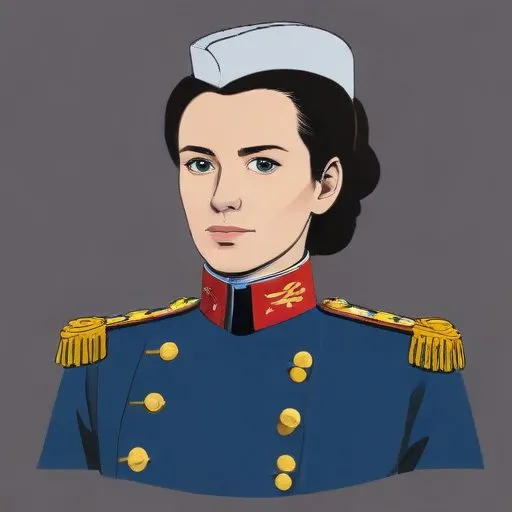
First female brigadier general in the US Army, known for her pioneering role in breaking gender barriers in the military.
Elizabeth P. Hoisington was a pioneering figure in the United States Army, known for being one of the first two women to attain the rank of brigadier general. Her remarkable career spanned over three decades, during which she broke down barriers and paved the way for future generations of women in the military.
Born on November 3, 1918, in Newton, Kansas, Hoisington grew up in a time when women's roles in the military were limited. Despite these challenges, she was determined to pursue a career in the army. Hoisington graduated from the College of Notre Dame of Maryland in 1940, laying the foundation for her future success.
Hoisington's military career began in 1942, when she enlisted in the Women's Army Auxiliary Corps (WAAC). She completed her basic training at Fort Des Moines, Iowa, and was soon promoted to first sergeant. Her exceptional leadership skills and dedication earned her a commission as a WAAC third officer in May 1943.
As the WAAC became the Women's Army Corps (WAC) in 1943, Hoisington's rank was converted to a standard army rank, and she became a second lieutenant. She deployed to Europe, serving in France after D-Day, and continued to advance through the ranks, commanding WAC units in Japan, Germany, and France, and serving in staff assignments in San Francisco and at the Pentagon.
In 1965, Hoisington was appointed the seventh director of the Women's Army Corps, a position she held until 1971. During her tenure, she oversaw the deployment of WACs to Vietnam, visiting them in Saigon and Long Binh in 1967. Despite facing challenges and controversy, Hoisington remained committed to advancing the role of women in the military.
Elizabeth P. Hoisington's remarkable career has inspired generations of women to pursue careers in the military. Her trailblazing achievements have paved the way for greater gender equality in the armed forces. As one of the first two women to attain the rank of brigadier general, Hoisington's legacy continues to inspire and motivate women to strive for excellence in the military.
Hoisington's remarkable achievements have earned her numerous awards and honors, recognizing her dedication, leadership, and service to the United States Army.
Beyond her remarkable military career, Hoisington was known for her humility, kindness, and generosity. She was a role model and mentor to many, dedicating herself to the advancement of women's roles in the military.
Elizabeth P. Hoisington's legacy continues to inspire and motivate women to strive for excellence in the military. Her trailblazing achievements have paved the way for greater gender equality in the armed forces, ensuring that her impact will be felt for generations to come.
Born in 1893
Led the US Army in World War II and became the last five-star general, playing a crucial role in shaping post-war American military strategy. He's also known for his humble and unassuming leadership style.
Born in 1890
Led the Allied forces to victory in World War II and later served as President, maintaining peace and prosperity during the Cold War era. He's known for his strategic leadership and diplomatic skills.
Born in 1880
A highly decorated military leader and statesman who played a crucial role in shaping post-WWII foreign policy and was awarded the Nobel Peace Prize for his efforts. He's most known for authoring the Marshall Plan, a massive economic aid program that helped rebuild war-torn Europe.
Born in 1891
Led the US Air Forces to victory in World War II, pioneering the use of strategic bombing and playing a crucial role in shaping the US military's air power.
Born in 1906
A pioneering Air Force general who played a crucial role in shaping the US military's strategic bombing capabilities during World War II and the Cold War. He's also known for his hawkish stance on communism and his influence on US foreign policy.
Born in 1901
American general and diplomat who served as United States Ambassador to South Vietnam, playing a crucial role in shaping US foreign policy during the Vietnam War. He's known for his efforts to stabilize the region and prevent communist takeover.
Born in 1914
A decorated four-star general who played a crucial role in the Vietnam War, leading US military forces to victory in several key battles and later becoming the Army's Chief of Staff.
