


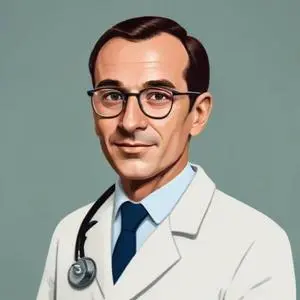
A pioneering surgeon who developed innovative techniques for thyroid surgery and discovered the importance of the thyroid gland in regulating metabolism. He is credited with saving countless lives and revolutionizing the field of endocrinology.
Emil Theodor Kocher, a Swiss physician and medical researcher, is renowned for his groundbreaking work in the physiology, pathology, and surgery of the thyroid, earning him the 1909 Nobel Prize in Physiology or Medicine. His pioneering efforts in introducing and promoting aseptic surgery and scientific methods in surgery reduced the mortality rate of thyroidectomies to an unprecedented level, making him a legend in the field of surgery.
Kocher was born on August 25, 1841, in Bern, Switzerland, to Jakob Alexander Kocher, a railway engineer, and Maria Kocher (née Wermuth). His father's occupation led the family to move to Burgdorf in 1845, where Kocher started his schooling. Later, they moved back to Bern, where he attended middle and high school, excelling in his studies and developing a keen interest in art and classical philology.
Kocher's fascination with medicine led him to pursue a medical degree from the University of Bern, which he completed in 1865. He then worked under the guidance of renowned surgeons in Berlin, Vienna, and Zurich, refining his skills and expanding his knowledge. In 1872, he became a lecturer in surgery at the University of Bern and eventually rose to the position of professor of surgery in 1882.
Kocher's most significant contributions include:
Kocher's groundbreaking work earned him numerous accolades, including:
Kocher's pioneering work in thyroid surgery paved the way for future generations of surgeons. His emphasis on aseptic surgery and scientific methods in surgery revolutionized the field, making him a leader and pioneer in his time. Today, his legacy continues to inspire and influence surgeons worldwide.
Kocher married Maria Lang in 1867, and they had three sons together. He was a devout member of the Moravian Church, a Protestant denomination, and was deeply committed to his faith. Throughout his life, Kocher maintained a strong sense of social responsibility, engaging in charitable activities and advocating for better healthcare.
Emil Theodor Kocher's remarkable life and achievements serve as a testament to his unwavering dedication to the advancement of medical science and his enduring impact on the field of surgery.
Born in 1867
Danish physician and pathologist who discovered the Spiroptera carcinoma, a parasitic worm that causes cancer in rats, leading to a deeper understanding of cancer development. His work laid the foundation for future cancer research.
Born in 1860
Developed the first practical electrocardiogram (ECG) and discovered the mechanism of the electrocardiogram, revolutionizing the field of cardiology.
Born in 1857
A pioneering scientist who made groundbreaking discoveries in the fields of physiology, bacteriology, and pathology, and was awarded the Nobel Prize for his work on the nervous system.
Born in 1906
A German-Irish biochemist and academic who discovered penicillin's antibacterial properties and developed it as a therapeutic agent, revolutionizing the treatment of bacterial infections.
Born in 1881
Discovered penicillin, a revolutionary antibiotic, and pioneered its use in medicine. This breakthrough has saved countless lives and transformed the field of healthcare.
