


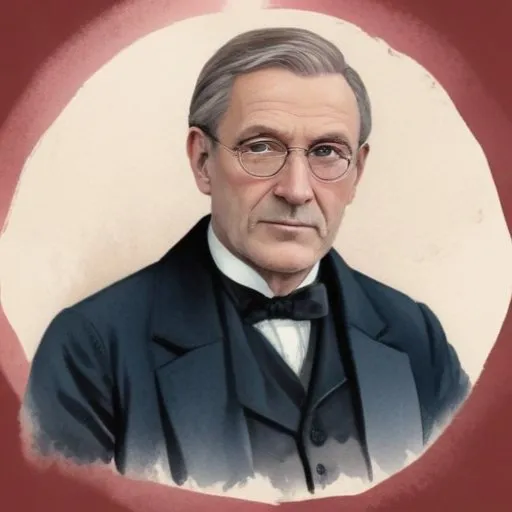
Danish physician and pathologist who discovered the Spiroptera carcinoma, a parasitic worm that causes cancer in rats, leading to a deeper understanding of cancer development. His work laid the foundation for future cancer research.
Johannes Fibiger, a renowned Danish physician and professor of anatomical pathology, is best known for his groundbreaking discovery of the Spiroptera carcinoma, which he believed to be the cause of stomach cancer in rats and mice. This pioneering work earned him the 1926 Nobel Prize in Physiology or Medicine, marking a significant milestone in the field of cancer research.
In 1907, while working at the Institute of Pathological Anatomy of the University of Copenhagen, Fibiger discovered new roundworms in wild rats. His curiosity led him to suspect that these roundworms might be responsible for stomach cancer in those rats. He dedicated himself to further research and, in 1913, reported that he could experimentally induce cancer in healthy rats using the roundworms.
This breakthrough was hailed as the greatest contribution to experimental medicine at the time, and Fibiger's work was met with widespread acclaim. His discovery opened up new avenues for cancer research, and scientists around the world began to explore the potential link between parasites and cancer.
In 1926, Fibiger was nominated for the Nobel Prize in Physiology or Medicine, along with Katsusaburo Yamagiwa, who had demonstrated the ability to induce carcinoma by painting crude coal tar on the inner surface of rabbits' ears. Although they were initially considered undeserving, Fibiger was retrospectively chosen for the 1926 Nobel Prize in the following year.
However, in the years that followed, independent research revealed that Fibiger's findings were based on flawed methodology. It was discovered that the tumors and cancer produced by Fibiger were actually caused by vitamin A deficiency, not the roundworms he had identified. The roundworms themselves, later correctly named Gongylonema neoplasticum, were found to be harmless.
Despite the controversy surrounding his work, Fibiger's legacy in the field of cancer research remains significant. His pioneering spirit and dedication to understanding the complexities of cancer paved the way for future researchers. Although his discovery was eventually discredited, it served as a catalyst for further investigation and led to important advances in our understanding of cancer.
Fibiger's work also highlights the importance of rigorous scientific methodology and the need for ongoing scrutiny in the pursuit of knowledge. His story serves as a reminder that even the most celebrated discoveries can be subject to revision and reinterpretation as new evidence emerges.
Johannes Fibiger was born on April 23, 1867, in Silkeborg, Denmark. He studied medicine at the University of Copenhagen, where he later became a professor of anatomical pathology. Fibiger's work on diphtheria is also regarded as a significant contribution to the development of an important research methodology.
Fibiger passed away on January 30, 1928, but his legacy continues to inspire and inform cancer research today.
Born in 1857
A British doctor and math whiz who discovered the malaria parasite's transmission mechanism, earning a Nobel Prize in Physiology or Medicine in 1902.
Born in 1845
Developed the theory of phagocytosis, which describes how cells engulf and destroy foreign particles and bacteria, leading to a deeper understanding of the immune system.
Born in 1854
A German physician and biologist who discovered the first effective treatment for syphilis and developed the concept of chemotherapy, earning a Nobel Prize in Physiology or Medicine in 1908.
Born in 1843
A pioneering microbiologist and physician who discovered the bacteria that cause tuberculosis, cholera, and anthrax, revolutionizing the field of microbiology and saving countless lives.
Born in 1822
Developed vaccines for rabies and anthrax, and pioneered the germ theory of disease, revolutionizing our understanding of microbiology and disease prevention.
Born in 1852
Pioneering neuroscientist and pathologist who discovered the structure of neurons and pioneered the field of neuroscience, earning a Nobel Prize in Physiology or Medicine in 1906.
