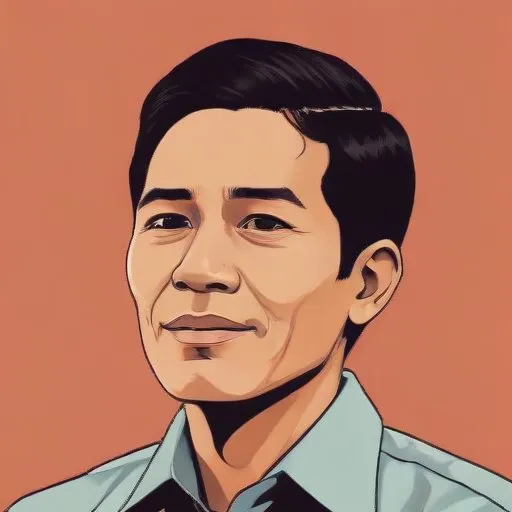
Emilio Jacinto: The Brains of the Katipunan
Emilio Jacinto, a Filipino general during the Philippine Revolution, is renowned for being one of the highest-ranking officers of the revolutionary society Kataastaasang, Kagalanggalang na Katipunan ng mga Anak ng Bayan, better known as the Katipunan. He was an integral part of the Philippine Revolution, serving as the Secretary of State for the Haring Bayang Katagalugan, a revolutionary government established during the outbreak of hostilities.
Early Life and Education
Jacinto was born on December 15, 1875, in Tondo, Manila. He was proficient in both Spanish and Tagalog, showcasing his linguistic abilities from an early age. He attended San Juan de Letran College and later transferred to the University of Santo Tomas to study law, where he was classmates with notable figures such as Manuel Quezon,
Sergio Osmeña, and Juan Sumulong. However, he did not complete his college education, instead, joining the secret society Katipunan at the age of 19.
Rise to Prominence
Jacinto's involvement with the Katipunan led him to become the advisor on fiscal matters and secretary to
Andrés Bonifacio, the Supremo Supreme President of the Katipunan. He was later known as Utak ng Katipunan, or the Brain of the Katipunan, due to his exceptional skills in strategy and planning. Jacinto also befriended
Apolinario Mabini when they attempted to continue
José Rizal's La Liga Filipina.
Writings and Pen Names
Jacinto was a prolific writer and contributed to the Katipunan newspaper called Kalayaan. He wrote under the pen name Dimasilaw and used the alias Pingkian in the Katipunan. His writings played a significant role in shaping the revolution and inspiring the Filipino people to fight for independence.
Philosophical Contributions and Beliefs
Jacinto's contributions to the Philippine Revolution were not limited to his military prowess. He was a strong advocate for the Kartilya, a primer that outlined the principles and codes of conduct for the Katipunan. His philosophical beliefs were rooted in the pursuit of independence and freedom from Spanish colonial rule.
Personal Milestones and Key Life Events
Jacinto was present during the Cry of Pugad Lawin or Cry of Balintawak, a pivotal event that signaled the start of the Revolution against the Spanish colonial government in the islands. His involvement in the Katipunan and his role in shaping the revolution's strategy and ideology made him a key figure in Philippine history.
Influence on Modern Society
Jacinto's legacy extends beyond his military achievements. His contributions to the Philippine Revolution paved the way for the country's independence and self-governance. He is remembered as a hero and a symbol of resistance against colonial rule.
Quotes and Memorable Sayings
- "Ang kataastaasan, kagalanggalang na Katipunan ng mga Anak ng Bayan" (The highest and most honorable society of the sons of the people)
- "Kartilya ng Katipunan" (The primer of the Katipunan)
Historical Context and Legacy
Jacinto's role in the Philippine Revolution has been immortalized in history textbooks and is still celebrated today. He is often referred to as the Brains of the Katipunan, a title that underscores his importance in shaping the revolution's strategy and ideology. His legacy continues to inspire Filipinos to fight for their rights and freedoms.
Comparative Analysis with Contemporaries
While Andrés Bonifacio is often credited as the Supremo of the Katipunan, Jacinto's contributions to the revolution should not be underestimated. Some contend that Jacinto should be rightfully recognized as the Brains of the Revolution, a title that is usually given to Apolinario Mabini. However, Jacinto's role in shaping the revolution's strategy and ideology is undeniable, and his legacy continues to be celebrated today.
FAQ
Who was Emilio Jacinto, the Filipino journalist and activist?
Emilio Jacinto was a Filipino journalist and activist who played a key role in the Philippine Revolution against Spanish colonial rule. He was a close associate of Emilio Aguinaldo, the leader of the revolution, and served as the secretary of the revolutionary government.
What was Emilio Jacintos role in the Philippine Revolution?
Emilio Jacinto was a key figure in the Philippine Revolution, serving as a strategist, propagandist, and military commander. He helped to organize and lead several key battles against the Spanish, and played a key role in the negotiation of the Pact of Biak-na-Bato.
How did Emilio Jacintos writing contribute to the Philippine Revolution?
Emilio Jacintos writing played a significant role in the Philippine Revolution, as he used his journalism to spread revolutionary ideas and rally support for the cause. His writings helped to inspire and mobilize Filipinos to take action against Spanish colonial rule.
What was Emilio Jacintos relationship with Emilio Aguinaldo?
Emilio Jacinto was a close associate and advisor to Emilio Aguinaldo, the leader of the Philippine Revolution. He served as Aguinaldos secretary and played a key role in the revolutionary government.
What is Emilio Jacintos legacy in the Philippines?
Emilio Jacintos legacy in the Philippines is that of a hero and a champion of independence. He is remembered as a key figure in the Philippine Revolution and is celebrated as a national hero.