


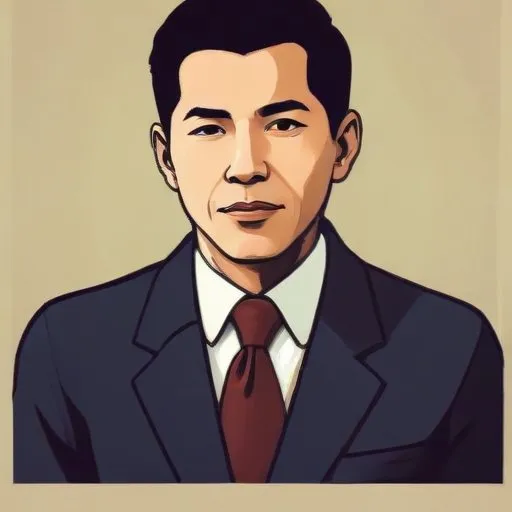
A pioneering journalist and lawyer who fought for reforms and freedom of the press in the Philippines during the Spanish colonial era, using his writings to expose social ills and advocate for change.
Marcelo H. del Pilar, a Filipino writer, lawyer, journalist, and freemason, is known for his pivotal role in the Reform Movement in Spain, fighting for the rights and independence of the Philippines during the late 19th century. Through his writings and activism, he became a beacon of hope for his country, inspiring generations to come.
Marcelo H. del Pilar was born on August 30, 1850, in Bulacan, Bulacan, Philippines. He came from a modest family and was raised in a culturally rich environment that instilled in him a sense of nationalism and love for his country. Del Pilar's early education took place at the Universidad de Santo Toms, where he developed a passion for writing and law.
In the mid-1880s, del Pilar expanded his antifriar movement from Malolos to Manila, criticizing the Spanish friars who were exploiting the Filipino people. This activism led to an order of banishment being issued against him in 1888, forcing him to flee to Spain.
In Spain, del Pilar became the editor of La Solidaridad, a newspaper that became the voice of the Reform Movement. Alongside Jos Rizal and Graciano Lpez Jaena, he fought for the rights of Filipinos, demanding reforms and an end to Spanish colonial rule.
Del Pilar's writings reflected his strong belief in the power of education, democracy, and human rights. He advocated for the separation of church and state, criticizing the Spanish friars who used their power to exploit and oppress the Filipino people.
Marcelo H. del Pilar's fight for the Philippine Revolution paved the way for future generations to continue the struggle for independence. Although he did not live to see the fruits of his labor, his legacy lives on, inspiring Filipinos to this day.
Del Pilar's contributions to Philippine history have been recognized by the National Heroes Committee, which recommended him as a national hero in 1995. His writings and activism continue to inspire Filipinos, promoting a sense of nationalism and pride in their cultural heritage.
"Ang hindi marunong lumingon sa pinanggalingan ay hindi makakarating sa paroroonan." ("He who does not know how to look back at where he came from will never reach his destination.")
Born in 1861
A Filipino polymath who wrote novels that sparked a revolution, exposing the harsh realities of colonial rule and inspiring a nation to fight for independence.
Born in 1863
Co-founder of the Katipunan, a secret society that sparked the Philippine Revolution against Spanish colonial rule, fighting for independence and national freedom.
Born in 1869
Led the Philippine Revolution against Spanish colonial rule and later established the First Philippine Republic, becoming its first president. He's revered as a national hero for his fight for independence.
Born in 1864
The first Prime Minister of the Philippines, a key figure in the country's struggle for independence from Spain and the United States, known for his leadership and vision for a self-governing nation.
Born in 1917
A Filipino leader who ruled with an iron fist, implementing martial law and amassing wealth, leaving a legacy of controversy and economic turmoil.
93 Years Old
First female president of the Philippines, led the People Power Revolution, and restored democracy after decades of authoritarian rule.
93 Years Old
A Filipino journalist and politician who led the opposition against Ferdinand Marcos' regime, known for his courageous fight for democracy and human rights. Assassinated in 1983, his death sparked the People Power Revolution.
