


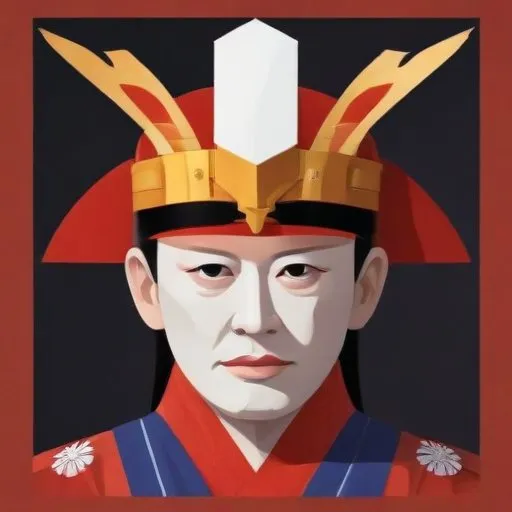
The 116th emperor of Japan, ruling from 1500 to 1526, known for his attempts to restore imperial power and authority during the Sengoku period. He's also famous for his cultural achievements, particularly in poetry and art.
Emperor Go-Kashiwabara, the 104th emperor of Japan, is remembered for his unwavering dedication to the imperial throne amidst the tumultuous era of the Ashikaga shogunate. Despite the crippling poverty and instability that plagued the Imperial Family during his reign from 1500 to 1526, Go-Kashiwabara persevered, leaving an indelible mark on Japanese history.
Born on November 19, 1462, as Katsuhito, Go-Kashiwabara was the first son of Emperor Go-Tsuchimikado and Empress Niwata Minamoto Asako, daughter of Niwata Nagakata. His family tree is a testament to the intricate web of alliances and marriages that defined the imperial court of the time.
Go-Kashiwabara's reign was marked by the nadir of imperial authority, as the Ashikaga shoguns continued to consolidate their power. The emperor's inability to perform the traditional coronation ceremony due to poverty is a stark reminder of the era's tumultuous nature.
In 1521, thanks to the generosity of Honganji Jitsunyo, son of Rennyō, and the Muromachi Bakufu, Go-Kashiwabara was finally able to perform the long-delayed coronation ceremony, a testament to his unwavering commitment to the imperial throne.
Despite the challenges he faced, Go-Kashiwabara's resilience and dedication to the imperial institution have cemented his place in Japanese history. His reign serves as a poignant reminder of the complexities and intricacies of the medieval Japanese political landscape.
Through his tumultuous reign, Go-Kashiwabara demonstrated an unyielding commitment to the preservation of the imperial tradition, ensuring the continuation of the imperial lineage despite the overwhelming odds against him.
Today, Emperor Go-Kashiwabara's legacy serves as a powerful reminder of the importance of perseverance and dedication in the face of adversity, inspiring generations to come.
Born in 1517
The 15th-century Japanese monarch who reigned during a period of civil war and is remembered for his attempts to restore imperial authority and promote cultural revival. He's also known for his patronage of the arts, particularly Noh theater.
Born in 1572
The 107th emperor of Japan, ruling from 1586 to 1603, known for his role in the transition from the Sengoku period to the Edo period, and for being the last emperor to hold significant power. He played a key role in the unification of Japan under the Tokugawa shogunate.
Born in 1543
Unified Japan's warring states, establishing a dynasty that ruled for over 250 years, and is revered as a brilliant military strategist and statesman.
Born in 1537
A powerful Japanese warlord who unified Japan's warring states and led two invasions of Korea, leaving a lasting legacy in Japanese history. He's also known for his iconic Osaka Castle.
Born in 1530
A powerful feudal lord who unified Japan's Echigo Province and fought several battles, earning a legendary reputation for bravery and martial prowess.
Born in 1521
A powerful daimy? who unified Japan's Takeda clan and expanded its territories through military campaigns, known for his exceptional leadership and innovative tactics.
