


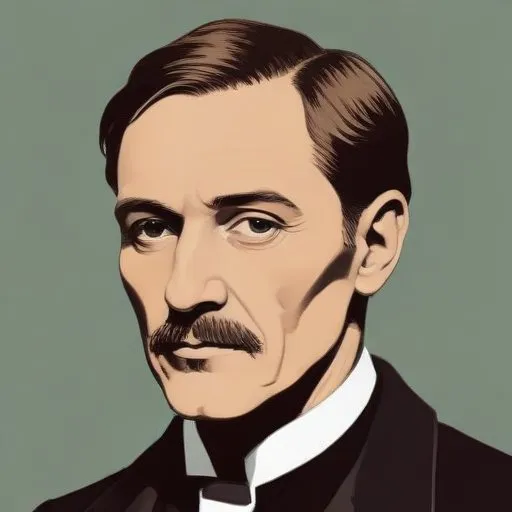
A decadent poet and writer of the 1890s, known for his dark, sensual, and often disturbing works that explored themes of love, death, and decay. His poetry is characterized by its musicality and vivid imagery.
Ernest Dowson, an English poet, novelist, and short-story writer, is often associated with the Decadent movement, a literary and artistic phenomenon that emerged in the late 19th century. His works are characterized by a sense of tragic beauty, echoing the fleeting nature of life and love.
Born on August 2, 1867, in Lee, Kent, Dowson was the great-nephew of Alfred Domett, a Prime Minister of New Zealand. He attended The Queen's College, Oxford, but left in 1888 without obtaining a degree. During his time at Oxford, Dowson developed a passion for literature and poetry, which would become the driving force behind his creative endeavors.
Dowson was an active member of the Rhymers Club, a literary group that counted among its members some of the most prominent writers of the time, including W.B. Yeats and Ernest Radford. He was a frequent contributor to literary magazines such as The Yellow Book and The Savoy, where his poetry and short stories often explored themes of love, beauty, and mortality.
In addition to his own creative work, Dowson collaborated with Arthur Moore on two novels, and later became a translator of French fiction, including works by Balzac and the Goncourt brothers. His translations played a significant role in introducing French literary traditions to the English-speaking world.
Dowson's personal life was marked by turmoil and tragedy. In 1889, he became infatuated with an 11-year-old girl, Adelaide Missie Foltinowicz, the daughter of a Polish restaurant owner. This infatuation would last for several years, culminating in a rejected marriage proposal in 1893.
In the following years, Dowson's life was punctuated by personal tragedies, including the death of his father in 1894 and his mother's suicide in 1895. His health began to decline rapidly, and he was forced to rely on the charity of friends and acquaintances to survive.
Despite his short and tumultuous life, Dowson's work had a significant impact on the literary world. His poetry and short stories continue to be celebrated for their lyricism and their exploration of the human experience. His translations introduced French literary traditions to a new audience, and his association with the Decadent movement helped to shape the literary landscape of the late 19th century.
In the end, it was Dowson's own ephemeral beauty, his fragility and vulnerability, that imbued his work with a sense of tragedy and longing. His poetry and stories continue to captivate readers with their haunting beauty, a testament to the enduring power of art to transcend mortality.
Dowson's legacy serves as a reminder that even the most fleeting of lives can leave an indelible mark on the world of literature and art.
Born in 1854
A witty and flamboyant literary mastermind, renowned for crafting clever, humorous, and poignant works that continue to delight audiences with their clever wordplay and societal commentary.
Born in 1837
A prominent Victorian-era writer, known for his poetic works that explored themes of beauty, death, and the human condition, with a distinctive style that blended sensuality and symbolism.
Born in 1828
A Victorian-era poet and painter who founded the Pre-Raphaelite Brotherhood, creating dreamlike, sensual works that explored themes of love, beauty, and mortality.
Born in 1830
A renowned Victorian-era poet and author, celebrated for her lyrical and symbolic poetry, particularly "The Goblin Market and Other Poems" and "The Prince's Progress".
Born in 1834
A renowned artist and writer who revolutionized the Arts and Crafts movement with his stunning textiles, poetry, and novels, leaving a lasting impact on Victorian-era aesthetics.
Born in 1839
A renowned Victorian-era art and literary critic, known for his influential writings on aesthetics and the importance of individualism in art. His works continue to shape art historical discourse.
Born in 1812
A Victorian-era literary giant, renowned for crafting intricate, psychologically nuanced poetry and plays that probed the human condition, often exploring themes of love, death, and the nature of existence.
Born in 1806
A renowned poet and translator of the Victorian era, celebrated for her romantic and socially conscious works, particularly the iconic love poems "Sonnets from the Portuguese".
