


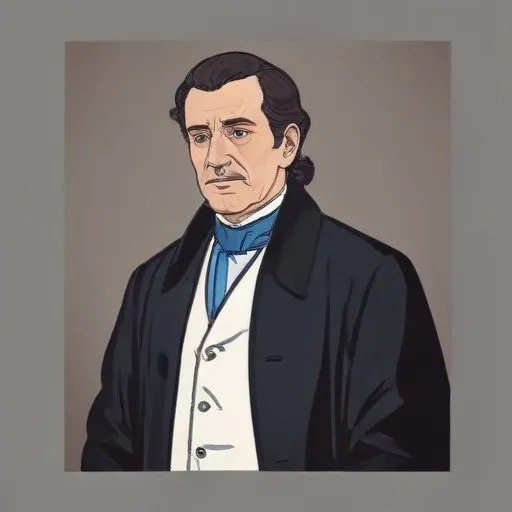
French physician who pioneered the use of mold to treat infections, predating Alexander Fleming's discovery of penicillin. He also served as a military doctor during World War I.
Ernest Duchesne, a French physician, is renowned for his groundbreaking discovery that certain molds can kill bacteria, a finding that predates Alexander Fleming's discovery of penicillin by 32 years. Despite his pioneering work, Duchesne's research remained largely unnoticed, overshadowed by Fleming's later breakthrough.
Ernest Duchesne was born on May 30, 1874, in Paris, France. He pursued his passion for medicine at the Military Health Service School of Lyons, where he enrolled in 1894. Duchesne's academic excellence earned him a doctorate degree in 1897, with a thesis that would change the course of medical history.
Duchesne's thesis, "Contribution à l'étude de la concurrence vitale chez les microorganismes: Antagonisme entre les moisissures et les microbes" (Contribution to the Study of Vital Competition in Microorganisms: Antagonism between Molds and Microbes), was the first to explore the therapeutic potential of molds due to their antimicrobial activity. In this seminal work, Duchesne proposed that bacteria and molds engage in a perpetual struggle for survival.
In a series of experiments, Duchesne treated cultures of Penicillium glaucum with media containing either Salmonella enterica subsp. enterica (typhoid fever) or Escherichia coli. Although the Penicillium succumbed to the bacteria, Duchesne hypothesized that the mold might have weakened the bacteria before its demise. He further injected guinea pigs with media containing bacteria and Penicillium glaucum, observing that the animals survived and developed immunity to the bacteria.
Duchesne's pioneering work led him to propose the use of media containing either bacteria or molds as a potential treatment for diseases. He speculated that molds might release toxins, similar to some bacteria, which could be harnessed to combat infections. This revolutionary idea, although ahead of its time, laid the groundwork for the development of antibiotics.
Despite the significance of his discovery, Duchesne's work remained largely unrecognized during his lifetime. It wasn't until the 1940s, decades after his death, that his contribution to the field of antibiotics was reevaluated and appreciated. Today, Duchesne is hailed as a pioneer in the discovery of antibiotics, and his groundbreaking research continues to inspire new generations of scientists and researchers.
Ernest Duchesne's story serves as a poignant reminder of the power of perseverance and innovation in the pursuit of scientific knowledge. Though his life was cut short by illness in 1912, his legacy lives on, inspiring future generations to continue exploring the frontiers of medical science.
Born in 1822
Developed vaccines for rabies and anthrax, and pioneered the germ theory of disease, revolutionizing our understanding of microbiology and disease prevention.
Born in 1843
A pioneering microbiologist and physician who discovered the bacteria that cause tuberculosis, cholera, and anthrax, revolutionizing the field of microbiology and saving countless lives.
Born in 1881
Discovered penicillin, a revolutionary antibiotic, and pioneered its use in medicine. This breakthrough has saved countless lives and transformed the field of healthcare.
Born in 1749
Developed the smallpox vaccine, revolutionizing disease prevention and saving countless lives.
Born in 1914
Developed the first inactivated poliovirus vaccine, leading to the near eradication of polio, and founded the Salk Institute for Biological Studies.
Born in 1906
A Polish-American physician and virologist who developed the oral polio vaccine, saving millions of lives and nearly eradicating the disease. His work has had a lasting impact on global public health.
Born in 1854
Developed the first vaccine against diphtheria and tetanus, revolutionizing the treatment of bacterial infections. Pioneered the field of immunology and saved countless lives.
Born in 1821
A pioneer in modern medicine, he founded the field of social medicine, emphasizing the importance of social and environmental factors on health, and made significant contributions to cellular pathology.
